The best things to do in Armenia are riding the Wings of Tatev, the world’s longest reversible cable car; visiting the Garni Temple and the rock-cut Geghard Monastery in one loop; catching Mount Ararat from Khor Virap; tasting indigenous Areni wine; and walking Yerevan’s Cascade and Republic Square. Below we rank around 20 highlights with real 2026 prices.
Armenia packs an unusual amount into a small country: 1,700-year-old churches, a Greco-Roman temple, one of the world’s highest alpine lakes, and a capital built for evening strolls. This roundup groups the highlights by type so you can build a route, and it says plainly what to prioritise on a first trip and what you can skip. Prices are in Armenian dram (AMD) with rough USD equivalents. Last verified: July 2026.
Which experiences should top a first Armenia trip?
If you only have three or four days, we would prioritise the eastern day trip (Garni, Symphony of Stones and Geghard), the southern run to Khor Virap for the Ararat view, and two full days in Yerevan for the Cascade, Republic Square and a brandy or wine tasting. Tatev is spectacular but sits about 250 km south, so it earns its place only if you have a full extra day or an overnight in Goris. First-timers consistently underrate how much of the pleasure here is simply eating and walking in Yerevan, and overrate trying to see everything. For more granular planning, see our Yerevan travel guide and the wider things to do category.
The monasteries and ancient sites: Armenia’s core
Armenia was the first nation to adopt Christianity as a state religion, in 301 AD, and its monasteries are the reason most people come. Entry to churches is almost always free; the costs are transport and the occasional temple ticket.
Garni Temple
Garni is the only standing Greco-Roman colonnaded temple in the former USSR, a 1st-century structure perched above a gorge about 40 km east of Yerevan. Entry is 1,500 AMD (roughly USD 4); it is open around 10:00 to 21:00 in summer and 10:00 to 17:00 in winter. Marshrutkas from the Gai statue stop cost roughly 300 to 600 AMD and take 45 to 60 minutes. Go early or late: mid-morning tour buses crowd the small site.
Symphony of Stones
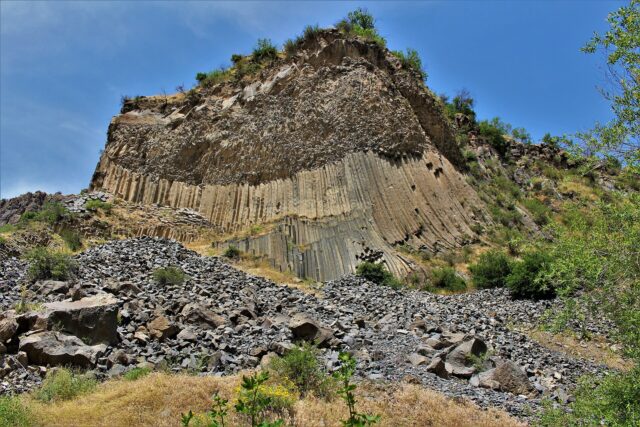
A short walk down into the Garni gorge brings you to the Symphony of Stones, a wall of hexagonal basalt columns formed by cooling lava. It is a free natural formation and, honestly, more memorable than the temple above it for many visitors. Wear proper shoes for the descent.
Geghard Monastery
Ten kilometres on from Garni, Geghard is a UNESCO-listed complex partly carved directly into the cliff, with chapels hewn from solid rock. Entry is free and it is open roughly 8:00 to 20:00. Pair it with Garni in a single 5-to-8-hour trip, running Garni, then Symphony of Stones, then Geghard. Many marshrutkas stop at Garni village, 4 km short, so a taxi or tour covers the last leg.
Khor Virap and the Ararat view
Khor Virap is the monastery you have seen in every Armenia photo, sitting on the plain about 35 to 40 km south of Yerevan with Mount Ararat filling the horizon behind it. Entry is free. The catch: Ararat now sits across the border in Turkey, about 20 km away, and it hides behind haze in summer. For a clear peak, come early morning between October and April. A marshrutka toward Ararat costs roughly 500 AMD and drops you about 1.5 km away; returns are awkward, so many people take a tour or taxi.
Noravank
In the Vayots Dzor region about 120 km southeast, Noravank rewards the drive with a 13th-century church set against sheer red cliffs, its famous two-storey chapel reached by a narrow external stone stair. Entry is free. It combines naturally with Areni wine village and, on a long day, with Khor Virap.
Etchmiadzin Cathedral
The Mother See at Vagharshapat, about 20 km west of Yerevan, is the spiritual centre of the Armenian Apostolic Church and one of the oldest state-built cathedrals anywhere, dated to AD 301 to 303. Here is the freshness angle most guides get wrong: Etchmiadzin reopened and was re-consecrated on 29 September 2024 after a six-year restoration. If you read that it is closed for renovation, that information is out of date. Entry is free, daily roughly 8:00 to 18:00 (seasonal), with the Treasury museum keeping shorter hours and possibly closing Mondays. Dress modestly.
Wings of Tatev and Tatev Monastery
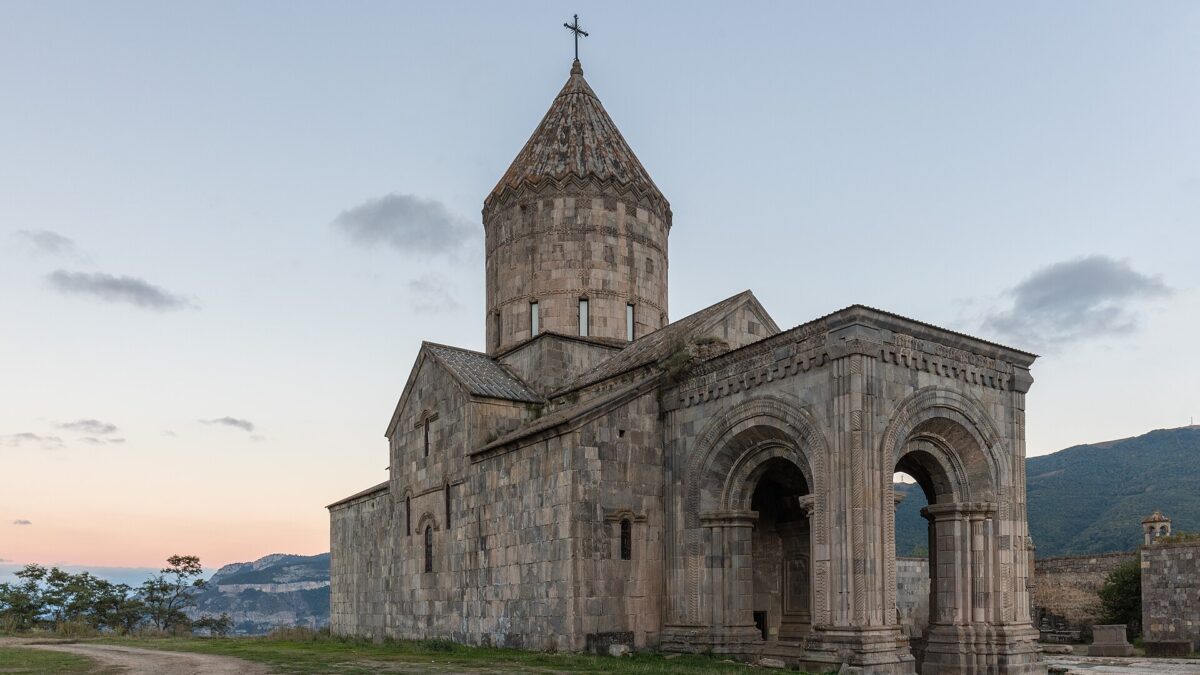
The Wings of Tatev is the longest reversible aerial tramway in the world, a 5.7 km ride of about 11 to 12 minutes each way from Halidzor to the medieval Tatev Monastery, high over a gorge. Ticket prices are genuinely inconsistent across sources, so budget a round-trip of roughly 6,500 to 9,000 AMD (about USD 18 to 25) for an adult and confirm on the official tatever.am ticket page. Seasonal hours run from 10:00 to 18:00 in winter up to 9:00 to 20:00 in high summer, and it typically closes Mondays outside peak season. It sits 4-plus hours south of Yerevan, so treat it as a long day tour or an overnight in Goris rather than a casual outing. Last verified: July 2026.
Sevanavank
The 9th-century Sevanavank monastery crowns a peninsula on Lake Sevan (it was an island until Soviet-era water levels dropped). Entry is free; there is a stair climb to the churches and a wide view over the blue lake. It pairs neatly with a Dilijan day.
Where should you go for nature and the outdoors?
Armenia is small but genuinely mountainous, and the north and the high lake country are where you slow down.
Lake Sevan
One of the largest high-altitude lakes in the world, Sevan sits at about 1,900 m roughly 65 km northeast of Yerevan, about an hour away. Marshrutkas from the Gai (Northern) station cost roughly 800 to 1,500 AMD. Swimming is realistic only in July and August, when the water reaches about 20 to 22°C and the beaches open. Come for the light and the monastery rather than a beach holiday.
Dilijan
Dilijan, inside Dilijan National Park, is the forested counterpoint to Armenia’s dry south. From the Gai station it is a 1.5-to-2-hour ride costing roughly 1,200 to 1,700 AMD. The draws are Parz Lake, the restored 13th-century Haghartsin Monastery, and easy walks such as the roughly 7 km Parz Lake to Goshavank trail. The Transcaucasian Trail runs straight through.
Hiking the Transcaucasian Trail
Serious walkers should build a day or two around the Transcaucasian Trail, a long-distance route that threads Dilijan and other regions. The shoulder seasons (late April to June, September to October) are ideal; August brings heat and afternoon storms in the mountains. September is the single best month for dry, clear walking and autumn colour.
Skiing at Tsaghkadzor
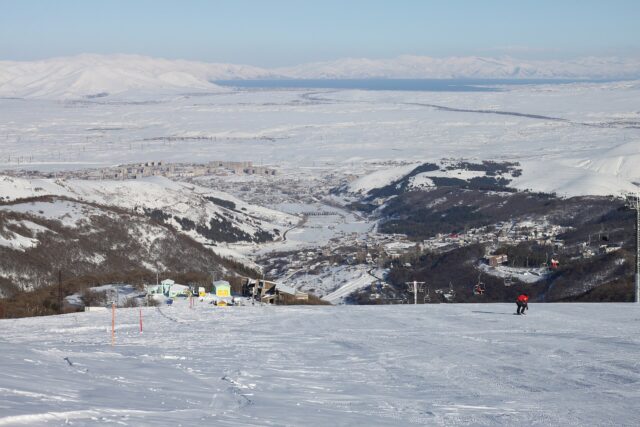
In winter, Tsaghkadzor is Armenia’s main ski resort, with a gondola and runs an easy drive from Yerevan. Winter temperatures hover around 0°C or below with reliable snow, and it is a genuine reason to visit between roughly December and March when much of the monastery circuit is cold and quiet.
What are the best things to do in Yerevan?
Yerevan is one of the world’s oldest continuously inhabited cities and an easy place to spend two or three days on foot. Fuller detail lives in our Yerevan travel guide.
Climb the Cascade Complex
The Cascade is a giant limestone stairway rising from the city centre, lined with the free Cafesjian sculpture garden and topped by a view toward Ararat on clear days. It costs nothing to climb the outdoor steps, and the terraced cafés and evening crowds make it Yerevan’s best free activity.
Republic Square
Republic Square is the pink-and-cream tufa heart of the city, ringed by Soviet-era government buildings. Time an evening here for the musical fountain show in the warm months. It is the natural place to start any walk into the surrounding café district.
Browse the Vernissage market
The open-air Vernissage market, busiest at weekends, is where to buy Armenian carpets, silver, duduks, khachkar carvings and old Soviet oddities. Prices are negotiable; it is the honest place to find souvenirs rather than airport tat.
Matenadaran
The Matenadaran is a repository and museum of ancient manuscripts, one of the largest collections of illuminated Armenian books in existence, sitting at the top of a grand avenue above the Cascade. Museum entry is modest (Yerevan museums generally run about 1,000 to 2,500 AMD), and it is the best single place to understand the unique Armenian alphabet, devised around 405 AD.
Tsitsernakaberd: the Armenian Genocide Memorial
On a hill above the city, Tsitsernakaberd commemorates the 1.5 million Armenians killed in the genocide of 1915. The outdoor memorial, with its 12 basalt slabs, eternal flame and 44 m spire, is open at any time and is free; the adjoining museum opens Tuesday to Sunday, roughly 11:00 to 16:00, closed Mondays (reconfirm at genocide-museum.am). This is a place of mourning, not a photo stop. Dress and behave with the quiet respect you would bring to any memorial to mass death.
Food and drink you should not leave without
Armenia’s food and wine culture is old and generous, and some of the best experiences are edible. This is where the country quietly outperforms its neighbours.
Tour the ARARAT brandy factory
The Yerevan Brandy Company, maker of ARARAT since 1887, runs a roughly 90-minute tour and tasting. Expect around 4,500 AMD for the basic tour up to about 10,000 AMD (roughly USD 27) for an extended tasting of 10-, 15- and 20-year samples. Book ahead. Note the rival NOY factory next door; the classic tour is ARARAT. Last verified: July 2026.
Taste Areni wine and the world’s oldest winery
Areni village, on the road to Noravank, is the home of the indigenous Areni grape and of the Areni-1 cave, which holds the oldest known winery on earth at around 6,100 years old, along with a 5,500-year-old leather shoe. Tastings at wineries such as Hin Areni and Trinity typically run a few thousand AMD. If you can, time your trip for the Areni Wine Festival in early October.
Eat khorovats, lavash and pasuts tolma
The national dish is khorovats, Armenian barbecue, and a plate runs roughly 3,500 to 8,000 AMD in Yerevan. Watch UNESCO-listed lavash bread being slapped onto the wall of a tonir oven. Vegetarians are well served here: the meat-free “pasuts” tradition means dishes like pasuts tolma (stuffed vine leaves without meat), spas soup and ghapama are everywhere, though it helps to say “pasuts” or “meatless” since some stocks use meat. A mid-range dinner sits around 5,000 to 10,000 AMD before alcohol.
Day-trip comparison: distances, prices and how to get there
These are the sights people most often try to reach from Yerevan. Public transport works for the near ones; the far south is better as a tour or a car trip.
| Site | From Yerevan | Entry | Getting there |
|---|---|---|---|
| Garni + Geghard | ~40 km | Garni 1,500 AMD; Geghard free | Marshrutka from Gai statue ~300-600 AMD |
| Khor Virap | ~35-40 km | Free | Marshrutka toward Ararat ~500 AMD + walk |
| Etchmiadzin | ~20 km | Free | Marshrutka from Sasuntsi Davit area |
| Lake Sevan | ~65 km | Free | Marshrutka from Gai/Northern ~800-1,500 AMD |
| Dilijan | ~1.5-2 hr | Free (monasteries) | Marshrutka from Gai/Northern ~1,200-1,700 AMD |
| Wings of Tatev | ~250 km | ~6,500-9,000 AMD round-trip | Day tour or overnight in Goris |
Last verified: July 2026. Fares are approximate and volatile; confirm locally.
Frequently Asked Questions
What is the number one thing to do in Armenia?
For a single defining experience, ride the Wings of Tatev, the world’s longest reversible cable car, over the Vorotan gorge to Tatev Monastery. If you cannot spare a day for the deep south, the Garni-and-Geghard loop east of Yerevan is the best half-day alternative.
How many days do you need to see the best of Armenia?
Four to five days covers the essentials: two days in Yerevan, one for the Garni-Geghard-Khor Virap sights, and one or two for either Lake Sevan and Dilijan in the north or Tatev in the south. A week lets you do all of it without rushing. See the destinations section to plan a route.
Do I need a visa to visit Armenia?
Most Western passport holders enter visa-free for up to 180 days a year. Some nationalities, including Indian passport holders, need an e-visa in advance, from 3,000 AMD (roughly USD 8) for 21 days, with travel insurance now mandatory. Full details are in our Armenia visa guide.
Is it safe to travel around Armenia?
Yerevan and the classic tourist route are safe, with very low street crime. The only real concern is the militarized eastern border with Azerbaijan, where several governments advise against travel within about 5 km. The Tatev area itself is a normal, popular destination. Recheck official advisories the week you travel.
When is the best time to visit Armenia?
Late April to June and September to October are the sweet spots. September is arguably the best single month: dry, mild, with autumn colour and the wine harvest. Summer is hot with afternoon mountain storms, and winter is for skiing at Tsaghkadzor.
Featured image: Diego Delso (CC BY-SA 4.0) via Wikimedia Commons