Yerevan is Armenia’s capital, a walkable pink-tuff city of roughly one million people built around Republic Square and the Cascade monument. Two full days cover the core sights on foot; a third lets you use the city as a base for day trips to Garni, Geghard, Khor Virap or Lake Sevan. Most travellers spend two to three days here.
The old town was rebuilt in the Soviet era from local volcanic tuff, which is why so many buildings glow rose-pink and apricot in the late sun. It is a low-stress city to arrive in: English is common in the centre, cards work almost everywhere, taxis are cheap through an app, and the walkable core means you rarely need transport at all. Below is how we’d structure a visit, what’s worth your time, what’s overrated, and the one arrival mistake that costs first-timers real money.
What is Yerevan and how do you get your bearings?
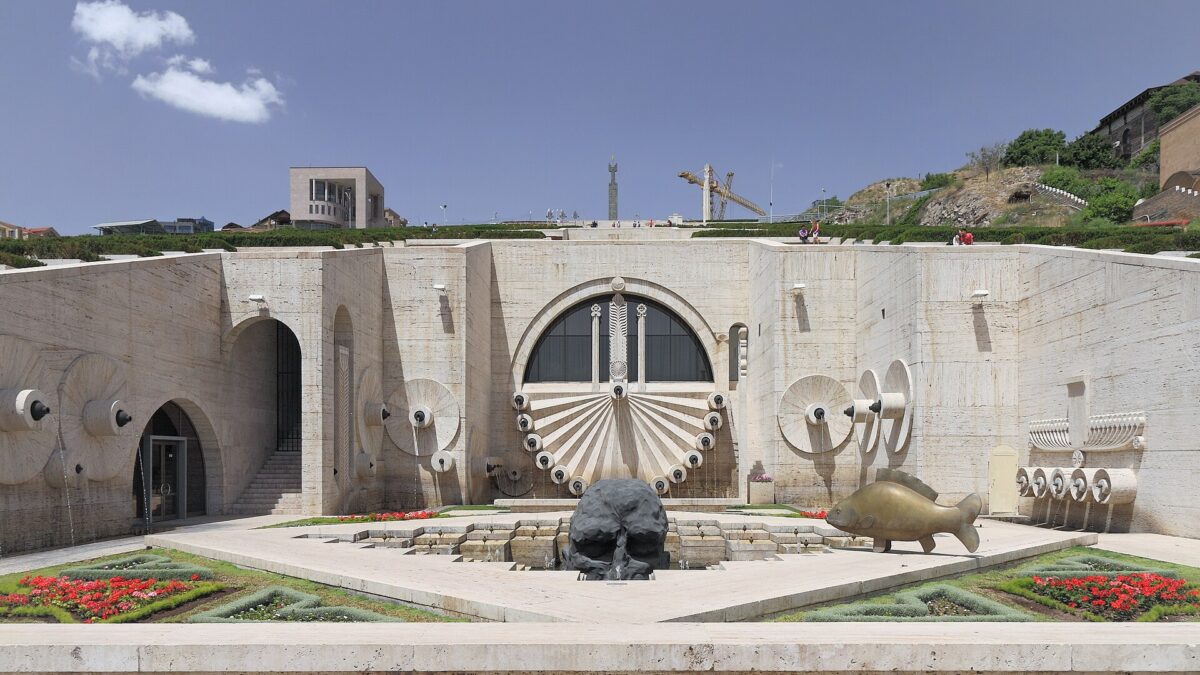
Orient yourself around three points and the rest falls into place. Republic Square (Hraparak) is the ceremonial centre: a ring of pink-and-cream government buildings, the History Museum, and singing fountains that run musical light shows on summer evenings. From the square, pedestrianised Northern Avenue runs to the Opera House, the real social heart of the city where locals stroll, meet and drink coffee. Just past the Opera stands the Cascade, a giant limestone stairway climbing the hillside, with the Cafesjian Center for the Arts built into its terraces and modern sculpture (including Botero pieces) in the garden below. Climb it, or ride the free indoor escalators up the inside, for the best free view in the city, and on a clear morning, Mount Ararat floating on the horizon.
What are the best things to do in Yerevan?
The core sights cluster tightly, which is why the city rewards walking. Here’s how we rank them.
- The Cascade & Cafesjian Center — the signature Yerevan experience, and free to climb. Go early or near sunset for the light and the Ararat view.
- Republic Square & the singing fountains — worth timing for a summer evening show; by day it’s a grand but quick stop.
- Matenadaran — the repository of ancient Armenian manuscripts at the top of Mashtots Avenue. A serious, genuinely unusual museum for anyone interested in books, faith or the Armenian alphabet.
- Vernissage market — a sprawling weekend open-air market (busiest Saturday and Sunday) for carpets, khachkar carvings, silver, duduks and Soviet bric-a-brac. The best souvenir hunting in the country.
- GUM Market — the covered food hall for spice pyramids, dried fruit, churchkhela and cheese, with vendors who push tastings. More authentic than touristy.
- History Museum of Armenia — on Republic Square, strong on Urartian bronzes and the deep pre-Christian past. Entry runs roughly 1,000–2,500 AMD like most Yerevan museums.
- ARARAT brandy tour — the Yerevan Brandy Company (est. 1887) runs tastings from around 4,500 AMD basic up to about 10,000 AMD (~USD 27) for older 10/15/20-year samples; roughly 90 minutes, and you should book ahead. Note the rival NOY factory sits next door — the classic tour is ARARAT.
- Tsitsernakaberd — the Armenian Genocide Memorial and Museum (covered below), best approached as a solemn, unhurried visit rather than a tick-box stop.
What’s overrated? Northern Avenue itself is pleasant but architecturally bland — treat it as a route to the Opera, not a destination. And you don’t need to pay for every museum; the Cascade, the squares and the markets carry the city on their own.
Visiting Tsitsernakaberd respectfully
The genocide memorial commemorates the estimated 1.5 million Armenians killed from 1915. Entry is free. The outdoor memorial — twelve leaning basalt slabs around an eternal flame, beside a 44-metre spire — is accessible at any time; the underground museum opens Tuesday to Sunday, roughly 11:00–16:00, closed Mondays (reconfirm at genocide-museum.am). This is a place of mourning, not a photo backdrop: dress modestly, keep quiet, and give it the time it deserves. Last verified: July 2026.
Where should you stay in Yerevan?
Base yourself in Kentron, the central district, ideally within walking distance of Republic Square or the Opera. Everything worth seeing is then on foot, and you’ll pay for it in convenience rather than long taxi rides. The trade-off is noise: the Opera and Saryan Street area is the nightlife hub, so light sleepers should look a couple of blocks off the main drag rather than directly above a wine bar.
Rough 2026 prices give you a hostel dorm bed around 5,000–8,000 AMD (~USD 14), a cheap hotel room from about 6,900 AMD (~USD 19), and a comfortable 3-star around 17,000 AMD (~USD 48). Staying central at the mid-range level is the sweet spot — you’re not commuting, and Yerevan’s real pleasure is stepping out of the door into it. Last verified: July 2026.
What should you eat and drink in Yerevan?
Armenian food is grill-forward and generous. Start with khorovats (barbecue, the national favourite), dolma/tolma (stuffed vine or cabbage leaves), lavash (the UNESCO-listed tonir-baked flatbread), ghapama (stuffed pumpkin) and gata (a sweet cake) to finish. For a sweet to carry, churchkhela — walnuts strung and dipped in grape must — is the classic, and quite distinct from the meat sujuk it’s sometimes confused with.
On cost: restaurant mains run roughly 1,500–8,000 AMD (~USD 4–22), a khorovats plate around 3,500–8,000 AMD, and a mid-range dinner for two lands near 5,000–10,000 AMD per head before alcohol. Coffee is a ritual here — an espresso or Armenian coffee runs about 500–1,000 AMD, and lingering over it is the point.
Vegetarian travellers, including Indian readers: Armenia is friendlier than its meat-heavy reputation suggests. There’s a strong Lenten “pasuts” tradition of meat-free cooking — pasuts tolma (bean-and-grain stuffed leaves), spas (a yogurt-and-wheat soup), lentil and bean dishes, grilled vegetables, and lavash with cheese and herbs. Yerevan also has dedicated vegetarian and vegan restaurants. One practical tip: say “pasuts” or “meatless” explicitly, because some broths and stuffings use meat stock even when the dish looks vegetable-based.
How do you get around Yerevan?
Mostly, you walk — the centre is compact and flat enough that the sights link up on foot. For longer hops, Yerevan has a small single-line metro and buses at a flat fare of about 100 AMD (~USD 0.27) per ride. When you want a door-to-door lift, use a taxi app rather than hailing on the street.
Two apps dominate: GG, the local favourite with quick central pickups, and Yandex Go, which has the bigger fleet and best navigation but surges aggressively in rain or snow. In-city rides typically cost 500–2,000 AMD, and the fare is shown before you confirm. Never take a street-hailed cab — tourists are routinely overcharged, and the app removes the haggling entirely. Last verified: July 2026.
How much does a taxi from Zvartnots airport cost?
A ride from Zvartnots (EVN) into the centre should cost roughly 2,900–5,000 AMD booked through the GG or Yandex Go app — not the 10,000–20,000 AMD the taxi-desk touts inside arrivals will quote you. This is the single most common way first-timers overpay in Armenia, and it’s entirely avoidable.
The airport sits about 13 km west of the centre, a 25-minute drive. Your cheapest option is Bus #201 (the Airport Express), which runs 07:30–21:30 roughly every 30 minutes to and from France Square, takes 30–40 minutes and costs 300 AMD cash on board — there’s no night service. If you land late, or have luggage and a hotel to reach, open the app on the airport Wi-Fi and book a car; ignore the men offering “taxi” as you exit. Grab a Viva-MTS or Ucom SIM at the arrivals kiosk first if you want data (passport needed). Zvartnots still runs a single terminal in 2026 — a second is announced but not built. Last verified: July 2026.
Can you use Yerevan as a base for day trips?
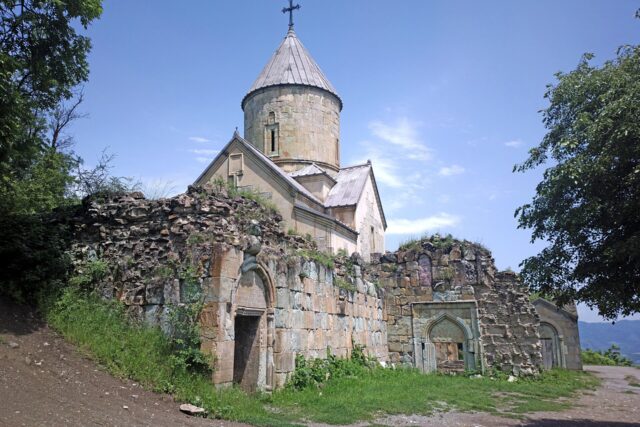
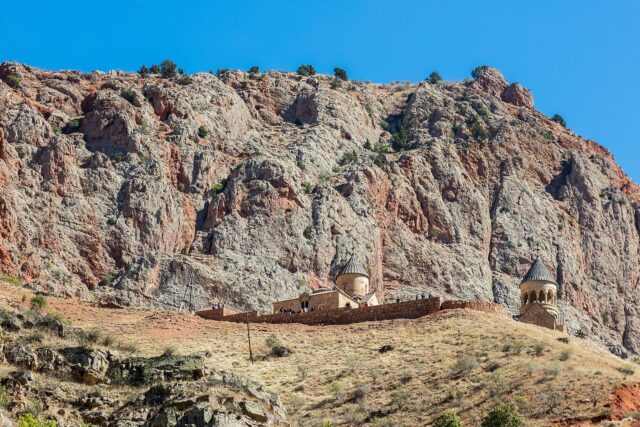
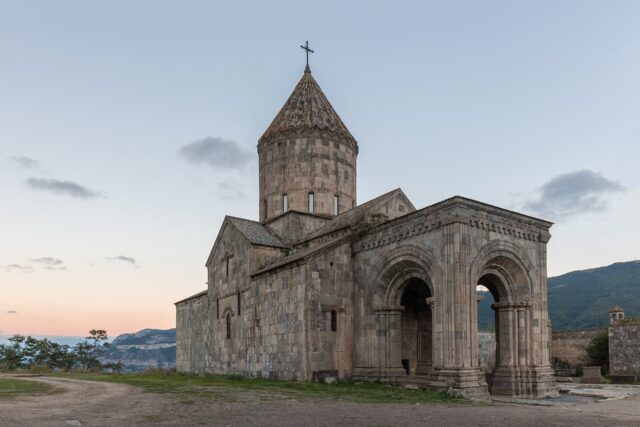
Yes — this is Yerevan’s biggest practical advantage. Armenia’s headline sights sit within a two-hour drive, so you can sleep in the same central bed every night and still see monasteries, a Greco-Roman temple and an alpine lake. The four we’d prioritise:
| Day trip | Distance | Why go |
|---|---|---|
| Garni & Geghard | ~40 km E | The only standing Greco-Roman temple in the former USSR (Garni, entry 1,500 AMD), the rock-cut UNESCO monastery of Geghard (free), and the basalt “Symphony of Stones” gorge. Done together in one trip. |
| Khor Virap | ~35–40 km S | Free monastery with the iconic view of Mount Ararat, clearest early morning and Oct–Apr. The image most people picture when they think of Armenia. |
| Echmiadzin | ~20 km W | The Mother See of the Armenian Church, reopened and re-consecrated on 29 Sept 2024 after a six-year restoration — many older guides wrongly still call it closed. Free entry, modest dress. |
| Lake Sevan & Sevanavank | ~65 km NE | A high-altitude alpine lake with a 9th-century monastery on a peninsula. Swimming is realistic only in July–August; pairs well with Dilijan. |
Garni/Geghard run on informal buses from the Gai statue stop (~300–600 AMD), but connections are fiddly and the last leg to Geghard often isn’t covered — for a smooth day, a shared day tour (~USD 25–50) or a GG car is usually worth it. For a fuller breakdown, see our things to do hub and the pillar on the best things to do in Armenia.
A realistic 2-3 day Yerevan plan
Here’s how we’d sequence it without rushing.
- Day 1 — the city on foot: Republic Square and the History Museum, up Mashtots Avenue to the Matenadaran, then across to the Cascade for late-afternoon light and the Ararat view. Dinner and coffee around the Opera. If it’s a summer evening, catch the singing fountains back at Republic Square.
- Day 2 — markets, memory and brandy: Vernissage (if it’s a weekend) and GUM Market in the morning, Tsitsernakaberd in the early afternoon for a quiet, respectful visit, then a booked ARARAT brandy tour to end the day.
- Day 3 — day trip: Garni, the Symphony of Stones and Geghard together, or Khor Virap early for the clearest Ararat. Back in Yerevan for a final dinner.
Have longer? Swap Day 3 for Lake Sevan and Dilijan, or fold Yerevan into a wider loop. Before you book anything, check that you can actually enter the country — the rules differ sharply by nationality, and Indian passport holders in particular must arrange an e-visa in advance. Our Armenia visa guide and destinations hub cover the rest.
Frequently Asked Questions
How many days do you need in Yerevan?
Two days cover the central sights comfortably on foot — Republic Square, the Cascade, the Matenadaran, the markets and Tsitsernakaberd. Add a third day to use the city as a base for a day trip to Garni and Geghard, Khor Virap or Lake Sevan. Most visitors spend two to three days.
Is Yerevan safe for tourists?
Yerevan and the classic tourist route are safe, with low street crime (Numbeo ranks the city among the safer capitals globally). The only real concern is the militarised Armenia–Azerbaijan border in the far east and south, well away from the capital and main routes. Because the regional situation is volatile, recheck your government’s travel advisory the week you travel. Last verified: July 2026.
How do you get from Zvartnots airport to central Yerevan?
Bus #201 runs 07:30–21:30, roughly every 30 minutes, to France Square for 300 AMD cash on board. Otherwise book a taxi in the GG or Yandex Go app for about 2,900–5,000 AMD — never accept the 10,000–20,000 AMD quoted by the desk touts in arrivals. The drive is about 25 minutes.
Is Yerevan expensive?
No, by European standards it’s inexpensive. A hostel dorm runs about 5,000–8,000 AMD, a 3-star hotel around 17,000 AMD, a restaurant main roughly 1,500–8,000 AMD, coffee 500–1,000 AMD and a city taxi ride 500–2,000 AMD. Cards work almost everywhere in the centre, though you should carry AMD cash for markets and day trips.
Can you drink the coffee and eat vegetarian easily in Yerevan?
Yes on both. Coffee culture is central, with Armenian coffee and espresso from around 500–1,000 AMD. Vegetarians are well served through the Lenten “pasuts” tradition — pasuts tolma, spas, bean and lentil dishes, grilled vegetables — plus dedicated veg and vegan restaurants. Ask for “pasuts” or “meatless” to be sure, as some stocks use meat.
Featured image: Marcin Konsek (CC BY-SA 4.0) via Wikimedia Commons
Sources: For up-to-date official guidance, see Armenia’s official tourism board (armenia.travel). Last verified: July 2026.