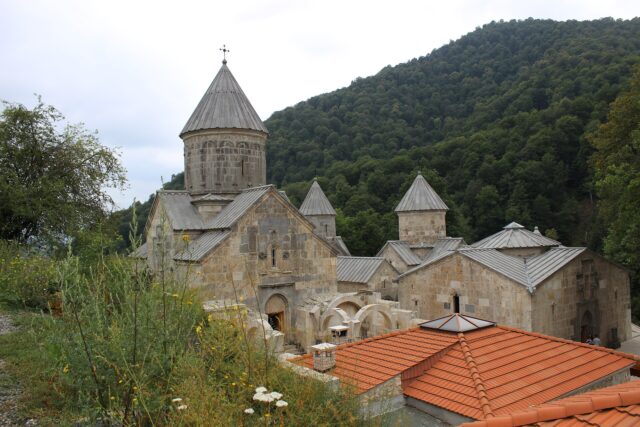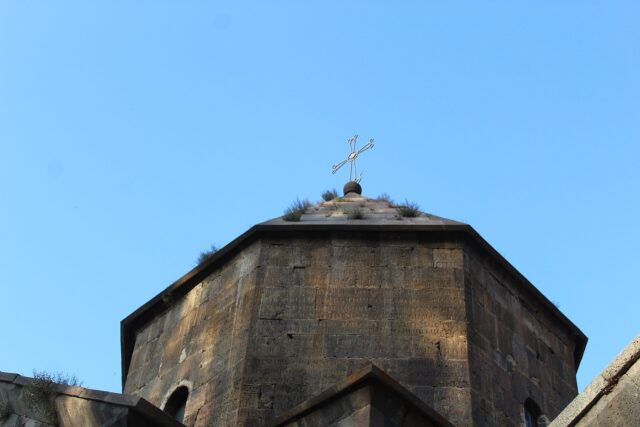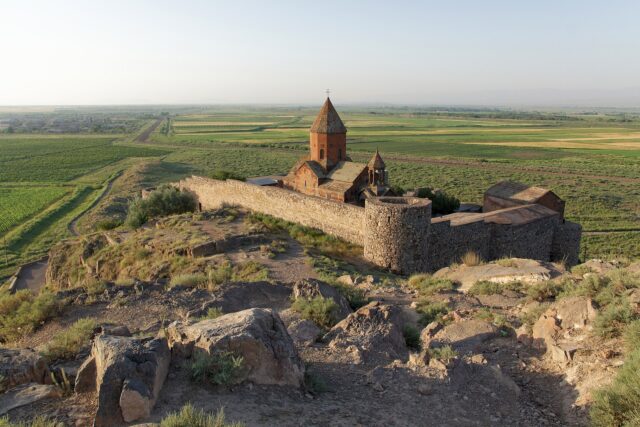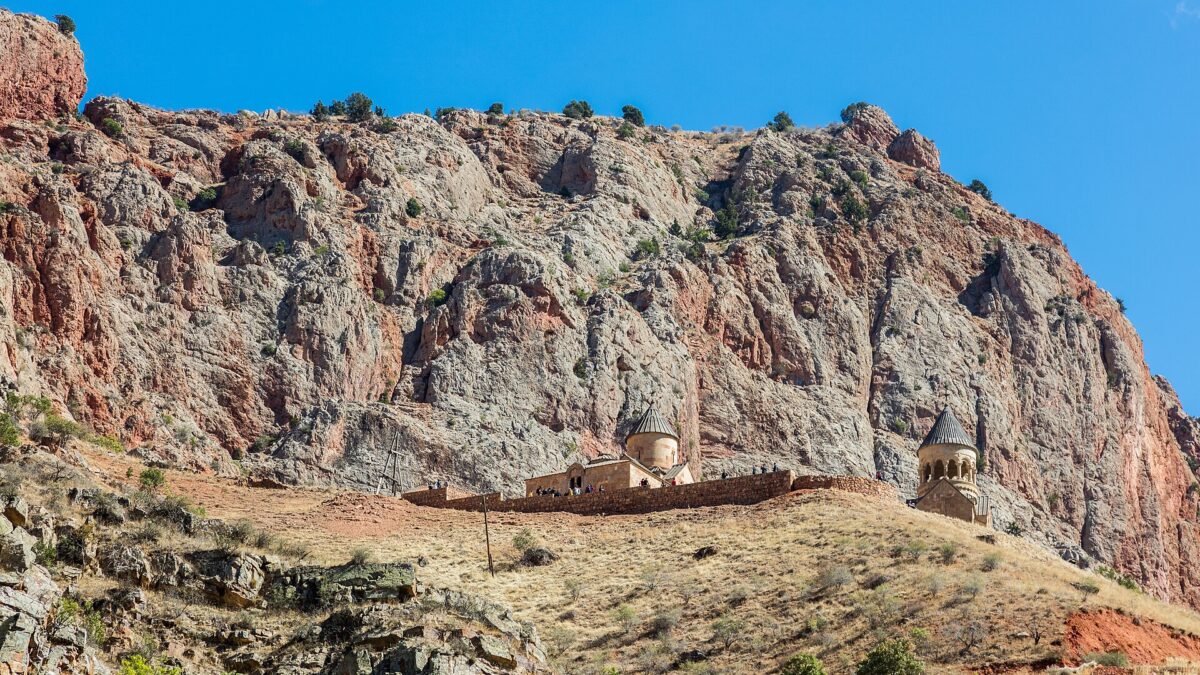
Noravank is a 13th-century Armenian monastery set deep in the Amaghu gorge of Vayots Dzor, roughly 120 km (about a two-hour drive) south-east of Yerevan. Its cluster of honey-coloured churches stands against sheer red and orange cliffs, and its most famous building, the Surb Astvatsatsin church, carries a narrow external stone staircase that projects straight out of the front wall with no rail, taking you up to a tiny second-floor chapel. Entry is free, and the site pairs naturally with the Areni wine village and the Areni-1 cave on the same southern route.
What follows is a practical, research-led guide to visiting: how to get there, what makes the architecture genuinely unusual, how to climb the famous staircase without a scare, when the canyon looks its best, and what else to fold into the day. All facts here are cross-checked against Armenia’s official tourism board and are stamped with a verification date at the end.
What is Noravank and why does it matter?
Noravank (“new monastery” in Armenian) was founded in the 12th–13th centuries and became the spiritual seat and burial ground of the Orbelian princely family, who ruled Syunik and Vayots Dzor in the medieval period. The complex holds three main structures: the church of Surb Karapet (St John the Baptist), the small chapel of Surb Grigor beside it, and the two-storey Surb Astvatsatsin (Holy Mother of God) church that dominates the site.
Two things set Noravank apart from Armenia’s many mountain monasteries. The first is the setting: the buildings sit at the head of a narrow gorge, and in low sun the surrounding cliffs turn the same warm terracotta as the stone the churches are built from, so architecture and landscape read as one material. The second is the concentration of high-quality medieval carving, much of it the work of one remarkable figure.
Momik, the sculptor-architect
Much of what draws art historians to Noravank is tied to Momik, a sculptor, architect and manuscript illuminator active in the late 13th and early 14th centuries. He is credited with designing the Surb Astvatsatsin church (completed in the early 1300s) and with carving several of the site’s finest khachkars — the intricately worked Armenian cross-stones. Look above the doorways of Surb Astvatsatsin for the carved relief panels: one shows God the Father, another Christ flanked by the apostles Peter and Paul. This kind of figurative religious relief is comparatively rare in Armenian church decoration, which is part of why the site is so studied.
The double-staircase church: what to expect
Surb Astvatsatsin, sometimes called Burtelashen after Prince Burtel Orbelian who funded it, is the building everyone photographs. It is effectively two churches stacked vertically: a ground-floor family mausoleum and an upper memorial chapel. There is no internal stair between the floors. Instead, two flights of narrow stone steps cantilever directly out of the west façade — thin slabs jutting from the wall — climbing up and inward to the small doorway of the upper chapel.
The design is as much sculpture as engineering. From the ground the steps look almost decorative, framing the carved reliefs above the lower door. Up close you realise how shallow and exposed they are.
Climbing it safely
You are usually allowed to climb, and plenty of visitors do, but treat it with respect:
- The steps are narrow, worn smooth, and have no handrail or edge protection. Face the wall and take them slowly; many people find coming back down harder than going up. Access to the upper chapel is sometimes restricted or closed off for conservation or safety, so check for signage or ask a caretaker on the day rather than assuming you can climb.
- Wear shoes with grip. Smooth soles on smooth medieval stone are the main hazard.
- Avoid the climb in rain, frost or strong wind — the stone gets slick and there is nothing to hold.
- It is not suitable for small children, anyone unsteady on their feet, or those uneasy with heights and exposure. The photograph from the base is just as good.
- Give way to people coming the other direction rather than passing on the steps; there is no room to do it safely.
The upper chapel itself is tiny and plain — the reason to go up is the view back down over the complex and the gorge, and the experience of the stair. If in doubt, skip it. No view is worth a fall on unguarded 700-year-old steps.
How do you get to Noravank from Yerevan?
Noravank sits up a side gorge off the main Yerevan–Goris highway (the M2), in Vayots Dzor province. Because it is tucked away from the main road, public transport does not reach the monastery itself, which shapes how most people visit.
- Organised day tour — by far the most common option. Southern day tours from Yerevan typically bundle Noravank with Khor Virap and the Areni wine village, and sometimes the Areni-1 cave. Group day tours from Yerevan generally run in the region of USD 25–50 per person; confirm the exact itinerary and whether entry stops and tastings are included when you book.
- Private car or taxi — hiring a driver for the day gives you the flexibility to linger for the light and add the wineries. Rental cars are also available in Yerevan (roughly USD 25–40/day for an economy car), and the drive south is scenic and on good main road until the final gorge turn-off.
- Public transport — marshrutkas heading toward Yeghegnadzor or Goris run along the highway and pass Areni, but none turn up the gorge to Noravank, and there is no scheduled service for that last stretch. Doing it purely by minibus is impractical for a day trip; a tour or car is the realistic choice.
The final approach is memorable in its own right: the road leaves the highway and threads up a tightening canyon between towering red walls before the monastery appears at the top. Build in time simply to stop and look on the way in.
The red canyon and the best time to visit
The cliffs are the reason to time your visit carefully. Because the rock is reddish, it comes alive when the sun is low and warm rather than high and flat.
- Best season: autumn, especially late September and October, when the light is golden, the air is clear, and the Vayots Dzor vineyards are in harvest. September is widely regarded as Armenia’s single best travel month. Late spring (May–June) is the other strong window, with green hillsides and wildflowers.
- Best time of day: early morning or the last couple of hours before sunset, when the cliffs glow and the harsh midday shadows are gone. Tour buses tend to arrive mid-morning to midday, so an early start or a late private visit buys you both better light and fewer people.
- Summer: perfectly visitable but hot and hazier, with flatter light and the biggest crowds. August in particular can be very warm.
- Winter: quiet and atmospheric with possible snow, but the gorge road can be icy and the staircase is genuinely unsafe when frozen — admire it from below.
What to combine with Noravank
Noravank works best as part of a full southern day rather than a single stop. The obvious add-ons are close by:
Areni wine village and Areni-1 cave
The village of Areni, back down on the highway, is the heart of Armenian wine country and the home of the indigenous Areni grape. Several wineries and family cellars offer tastings; prices vary but typically run to a few thousand dram. Just outside the village is the Areni-1 cave, where archaeologists uncovered the world’s oldest known winery — a wine-pressing installation dated to roughly 6,100 years ago — along with a remarkably preserved leather shoe about 5,500 years old, the oldest known. If your visit lands in early October, the annual Areni Wine Festival takes over the village.
Khor Virap and Jermuk
Most tours combine Noravank and Areni with Khor Virap monastery (free), famous for its close-up view of Mount Ararat, which lies on the same road south of Yerevan. If you have more time or an overnight, the spa town of Jermuk — known for its mineral springs and waterfall — is further along in Vayots Dzor and makes a natural extension.
Practical notes and etiquette
- Entry: free. There is no ticket booth for the monastery. Verify any tour or transport prices separately, as those change.
- Dress: Noravank is an active religious site. Cover shoulders and knees; women may wish to carry a scarf. Behave quietly if a service is underway.
- Facilities: there is a restaurant near the site and basic amenities, but bring water, especially in summer heat. Shade is limited around the churches.
- Time needed: allow at least 45–60 minutes at the monastery itself to see all three buildings, the khachkars and the reliefs, plus stops for the canyon on the drive in.
- Photography: the classic shot is the full façade of Surb Astvatsatsin with the twin staircases and the red cliff behind. Early or late light makes the difference.
Last verified: September 2026.
Sources
- Armenia Travel — official national tourism portal (armenia.travel)
- Armenia Travel — Noravank Monastery
Frequently asked questions
How much does it cost to visit Noravank Monastery?
Entry to Noravank is free — there is no ticket for the monastery itself. Your main costs are getting there: a group day tour from Yerevan usually runs about USD 25–50 per person, or you can hire a private car/taxi or self-drive. Any wine tastings in nearby Areni are extra (typically a few thousand dram). Last verified: September 2026.
How far is Noravank from Yerevan and how do I get there?
Noravank is roughly 120 km south-east of Yerevan in Vayots Dzor, about a two-hour drive. There is no public transport up the gorge to the monastery, so most visitors come on an organised southern day tour (often combined with Khor Virap and Areni) or by private car or taxi.
Can you climb the famous staircase at Noravank?
Yes, visitors are usually permitted to climb the external cantilevered stone stairs of the Surb Astvatsatsin church to the upper chapel. The steps are narrow, worn and have no handrail, so climb slowly facing the wall, wear grippy shoes, and avoid it in rain, frost or wind. It is not suitable for small children or anyone unsteady or uneasy with heights.
What is the best time of year to visit Noravank?
Autumn, especially late September and October, is ideal: the low golden light makes the red cliffs glow, the air is clear, and the local vineyards are in harvest. Late spring (May–June) is the other strong window. For the best light and fewer crowds, arrive early morning or in the last hours before sunset rather than midday.
Who built Noravank and why is its architecture special?
Noravank was the seat and burial site of the medieval Orbelian princes. Its standout building, the two-storey Surb Astvatsatsin church, was designed by the sculptor-architect Momik in the early 14th century and funded by Prince Burtel Orbelian. Momik also carved several of the site’s finest khachkars and the rare figurative reliefs above the doorways.
What can I combine with a trip to Noravank?
Noravank pairs naturally with the Areni wine village and the Areni-1 cave — home to the world’s oldest known winery (about 6,100 years old) and oldest leather shoe. Most tours also include Khor Virap monastery with its Mount Ararat view, and the spa town of Jermuk makes a good extension if you have more time.
Featured image: Diego Delso, CC BY-SA 4.0 — via Wikimedia Commons.