Armenia’s currency is the Armenian dram (AMD, symbol ֏). In 2026 one US dollar buys roughly 370–385 dram, though the rate moves daily, so treat any figure here as approximate and check the live number before you go. Cards work almost everywhere in Yerevan, but you should still carry cash: the moment you leave the capital, the countryside runs on dram notes.
That single split — card-friendly capital, cash-only countryside — is the thing most first-time visitors get wrong. Below is the practical detail: where to pull dram out, where to change foreign notes, what a day actually costs, and the small tricks that stop you leaking money to bad exchange rates and card fees.
What currency does Armenia use?
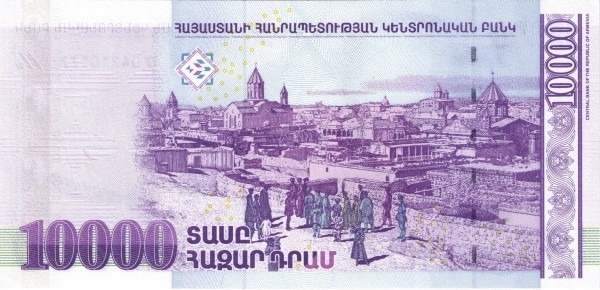
The only legal tender is the Armenian dram (AMD). Prices in shops, restaurants and on marshrutka (minibus) fares are quoted in dram, and you should expect to pay in dram everywhere outside a handful of tourist-facing hotels and tour operators that may quote in dollars. Notes come in 1,000, 2,000, 5,000, 10,000, 20,000 and 50,000 dram; coins exist for smaller amounts but you will rarely handle them.
As a rough mental conversion for 2026, think of 1,000 dram as a little under USD 3. One euro is worth roughly 389 dram and one Indian rupee roughly 3.85 dram — again, approximate and drifting. Because the dram is not traded much outside the region, do not bother buying it at home; you will get a poor rate. Arrive with dollars or euros and convert on the ground.
Cash or card in Armenia?
Both, deliberately split by where you are and what you are buying.
- Card is fine in Yerevan for hotels, sit-down restaurants, supermarkets, malls, larger shops, brandy and wine tours, and most museums. Visa and Mastercard are the safe bets; American Express is patchy.
- Cash is essential outside the capital and for the small everyday things everywhere: marshrutka and shared-taxi fares (drivers take cash), village guesthouses, roadside fruit and lavash, small family cafes, monastery donation boxes, tips, and market stalls. Many rural spots simply have no card terminal.
A workable rule: keep enough dram on you to cover a full day of small purchases and any planned trip out of Yerevan, and lean on your card for the big-ticket items in the city. Never assume a place outside Yerevan takes cards — ask first, or you will be caught short.
Using ATMs in Armenia
ATMs are the easiest way to get dram, and they are plentiful in Yerevan and in regional towns like Gyumri, Vanadzor, Dilijan and Goris. Major banks whose machines you will see repeatedly include Ameriabank, Acba Bank and Converse Bank, among others. They dispense dram, and many also let you withdraw US dollars.
ATM tips that save money
- Fees are two-sided. Many Armenian banks charge no fee of their own on a withdrawal, but your home bank may still add a foreign-transaction or out-of-network charge. Check your own bank’s card terms before you travel — that is usually where the cost hides.
- Withdrawal limits vary by machine. A single withdrawal is often capped somewhere in the region of roughly 100,000–300,000 dram (about USD 270–810), depending on the bank and your own card limit. If you need a large sum, expect to do it over more than one transaction, and to fewer, larger withdrawals to cut per-transaction fees.
- Decline “conversion” at the screen. When the ATM offers to charge you in your home currency instead of dram — dynamic currency conversion — always choose to be charged in Armenian dram. Letting the machine convert bakes in a worse rate. Let your own bank do the conversion instead.
- Use bank-branch ATMs in daylight where you can, and tell your bank you are travelling so a foreign withdrawal is not flagged and frozen.
Where to exchange currency
Armenia is genuinely good for cash exchange. Dedicated exchange offices — you will see clusters of them around central Yerevan and inside shopping centres — typically give better rates than hotels or the airport, often with little or no commission and clearly posted buy/sell boards. Compare a couple of nearby windows; the spread is usually small but it costs nothing to check.
US dollars and euros are the easiest to change and attract the best rates, and Russian roubles are also widely handled given the region’s ties. Bring clean, undamaged notes — torn or heavily marked bills are sometimes refused. Keep small denominations of dram after exchanging, because breaking a 20,000 note for a 100-dram bus fare is not always possible.
A note on the rate itself: the official reference rate is set and published by the Central Bank of Armenia (cba.am). Exchange offices price around it with a margin, so the CBA figure is a useful sanity check on whether a window’s board is fair. A common pattern is to change a modest amount on arrival for immediate needs, then exchange the bulk once you have compared a few central windows and know what a fair rate looks like.
Paying by card without losing money
Contactless and chip-and-PIN card payments are normal in Yerevan, and tap-to-pay from a phone works in many city businesses too. The catch is the same one that trips people up at the ATM: when a shop or restaurant terminal asks whether you want to pay in your home currency or in Armenian dram, always pick dram. Being offered your own currency feels convenient, but it is dynamic currency conversion and the built-in rate is consistently worse than what your bank would give you. Choosing dram every time is the single easiest way to stop small losses adding up across a trip.
A few more card habits worth keeping: carry a backup card in case one is declined or eaten by a machine, keep a small cash reserve for the day a terminal is “not working” (it happens), and avoid entering your PIN where someone can see it. If your card is contactless, using tap rather than inserting the card reduces the number of times you expose your PIN in public.
How much does a day in Armenia cost?
Armenia is inexpensive by European standards. Excluding flights, a rough per-person daily budget looks like this:
| Travel style | Per day (approx) | What it covers |
|---|---|---|
| Budget / backpacker | ~USD 16–24 (≈6,000–9,000 AMD) | Hostel dorm, street food, public transport |
| Mid-range | ~USD 38+ (≈14,000 AMD) | 3-star hotel, restaurant meals, paid sights |
| Higher-end | USD 70+ (≈26,000 AMD+) | Better hotels, private tours, taxis |
To make those bands concrete, here are typical Yerevan prices in 2026 (approximate, and dram is the primary number since the dollar figure drifts with the rate):
| Item | Approx cost |
|---|---|
| Hostel dorm bed | ~5,000–8,000 AMD (~USD 14) |
| Cheap hotel room | ~6,900 AMD (~USD 19) |
| 3-star hotel room | ~17,000 AMD (~USD 48) |
| Meal at an inexpensive restaurant | ~3,800 AMD (~USD 11) |
| Fast-food combo | ~2,900 AMD |
| City public transport ride | 100 AMD (~USD 0.27) |
| Coffee | ~500–1,000 AMD |
| Museum entry | ~1,000–2,500 AMD (many monasteries free) |
Two things keep costs down that visitors underestimate: public transport is almost trivially cheap (a city ride is 100 dram), and many of the country’s headline sights — Geghard, Khor Virap, Etchmiadzin and other monasteries — charge no entry fee at all. Your money mostly goes on accommodation, food and getting between towns.
What nobody tells you about money in Armenia
A few small things save real friction on the ground. First, break your big notes early. A 20,000 dram bill is awkward for a bus conductor, a village cafe or a market seller, so ask exchange offices and supermarkets for a mix of denominations and hoard your 1,000 and 500 dram notes. Second, plan cash before you leave Yerevan: the capital is dense with ATMs and card terminals, but as you head toward the monasteries and mountain towns both get scarcer, and the last thing you want is to reach a cash-only guesthouse with an empty wallet. Third, keep receipts and check your app: with two rates floating around (exchange office and card), it is worth a quick glance at your banking app after the first day to confirm your card is converting at a fair rate and not stacking on surprise fees.
One reassuring point: Armenia is a low street-crime country by regional standards, so carrying a reasonable amount of dram is not the risk it might be elsewhere. Normal precautions apply — split your cash between a wallet and a second pocket, don’t flash a thick roll of notes — but you do not need to treat everyday cash-handling as a security ordeal.
Tipping and small-money etiquette
Tipping is appreciated but modest and not rigidly expected. In Yerevan restaurants, rounding up or leaving around 10% is a normal thank-you for good service; check the bill first, because some places already add a service charge, in which case an extra tip is optional. For taxis booked through an app the fare is set, so tipping is not required; for guides and drivers on a full-day tour, a small cash tip in dram is a kind gesture. Keep a stack of 100, 500 and 1,000 dram notes for tips, bus fares and small vendors — the everyday economy runs on them.
A simple money plan for your trip
- Arrive with a modest amount of USD or EUR cash as a buffer; don’t buy dram before you fly.
- On day one, change a little cash at a central Yerevan exchange office and pull the rest from a bank ATM (choosing to be charged in dram).
- Use your card for hotels and city restaurants; keep cash for transport, villages and day trips.
- Top up dram before heading to the regions — rural ATMs exist but are fewer, and card terminals are rarer still.
- Tell your bank you’re travelling, and check its foreign-withdrawal fee before you rely on ATMs.
Get that rhythm right and money in Armenia is refreshingly low-stress: a stable, card-friendly capital, cheap transport, plenty of free sights, and easy cash conversion when you need it.
Last verified: September 2026. Rates and prices are point-in-time and change — reconfirm the live figures before you travel.
Sources: Central Bank of Armenia (cba.am) for the official reference exchange rate; armenia.travel, the official tourism portal, for general visitor information.
Frequently asked questions
What currency is used in Armenia?
The Armenian dram (AMD, symbol ֏). It is the only legal tender. In 2026 one US dollar is worth roughly 370–385 dram, but the rate moves daily, so check a live figure before you travel.
Can I use my credit card in Armenia?
Yes, in Yerevan. Visa and Mastercard are widely accepted at hotels, restaurants, supermarkets and larger shops. Outside the capital, and for small purchases and transport everywhere, you need cash — many rural places have no card terminal.
Are ATMs easy to find in Armenia?
Yes. ATMs are common across Yerevan and in regional towns, run by banks such as Ameriabank, Acba and Converse. They dispense dram and often dollars. Many Armenian banks charge no fee, but your home bank may, so check your card terms first.
Should I exchange money before arriving in Armenia?
No. The dram is hard to buy abroad at a fair rate. Bring US dollars or euros and change them at exchange offices in Yerevan, which offer good rates with little or no commission. Roubles are also easily exchanged.
How do I avoid extra charges when paying by card or using an ATM?
Always choose to be charged in Armenian dram, not your home currency, when a machine or card terminal offers to convert for you. This dynamic currency conversion uses a worse rate. Let your own bank handle the conversion instead.
How much money do I need per day in Armenia?
Roughly USD 16–24 a day for backpackers, around USD 38+ for mid-range travel, and USD 70+ for higher-end trips, excluding flights. Public transport is very cheap and many monasteries are free, which keeps daily costs low.
Featured image: Central Bank of Armenia, Public domain — via Wikimedia Commons.