Yes, Armenia works well for Indian travellers, but there is one rule to get right first: an ordinary Indian passport needs an e-visa arranged before you fly (there is no visa-on-arrival), and travel insurance is mandatory. Flights run via the Gulf from roughly ₹25,000 one-way, daily costs are low, and vegetarian food is easy to find. This hub answers the India-specific questions and links to our detailed guides for depth.
Last verified: July 2026.
Do Indians need a visa for Armenia?
Yes. Holders of an ordinary Indian passport are not visa-free and cannot get a visa on arrival at any Armenian checkpoint or at Zvartnots Airport. You must apply for an e-visa in advance through the official portal evisa.mfa.am, or get a sticker visa from the embassy.
The fees are modest:
- 21-day single entry: AMD 3,000 (roughly ₹650)
- 120-day single entry: AMD 15,000 (roughly ₹3,400)
Since November 2024, travel insurance is compulsory for every e-visa applicant. Along with your passport and photo, you will usually need either a valid visa or residence permit from a major country, or a return ticket plus an invitation and proof of funds. Processing takes up to about three business days, so apply 7–10 days ahead. The only exception is Indian diplomatic passports, which enter visa-free for up to 30 days.
A common source of confusion for Indian travellers is the difference between Armenia and Georgia: Indians can get an e-visa or (for some) easier entry to Georgia, but Armenia has no such shortcut, so do not assume the rules are the same for both legs of a Caucasus trip. One more warning: the temporary 2026 exemption you may read about (for holders of US, EU or Gulf residence permits) expired on 1 July 2026 and never covered ordinary Indian tourists anyway. Ignore any blog claiming Indians can turn up without a visa. For the full breakdown and the visa-free country list, see our Armenia visa guide.
How to reach Armenia from India?
There are no direct flights from India to Yerevan in 2026. Every route connects through a Gulf hub, most commonly Sharjah, Doha or Dubai, with one stop and a total journey of roughly 8–12 hours from Delhi.
Air Arabia is the most-used carrier on the Delhi–Yerevan route, connecting via Sharjah; other options fly via Doha (shorter connections) or Dubai. One-way fares from Delhi start around ₹25,000, and return fares via Sharjah average near ₹50,000, though prices swing with season, with the summer peak dearest and shoulder months cheaper (Source: momondo; Air Arabia). Treat all fares as approximate.
Practical tips for Indian flyers:
- Delhi has the widest choice; travellers from Mumbai, Bengaluru or other metros usually route through the same Gulf hubs, so compare a self-connect via Sharjah/Dubai against a through-ticket.
- Book the visa before the ticket if you can, or at least keep proof of a return flight and hotel, since the e-visa application can ask for them.
- Fares are cheapest in the shoulder months and spike around Indian holiday periods and the Gulf-transit summer peak, so flexible dates save real money.
- Zvartnots (EVN) sits about 13 km west of central Yerevan. Skip the airport taxi touts quoting 10,000–20,000 AMD and book a GG or Yandex Go app ride (about 2,900–5,000 AMD, roughly ₹750–1,300), or take Airport Express bus #201 to France Square for just 300 AMD (about ₹78).
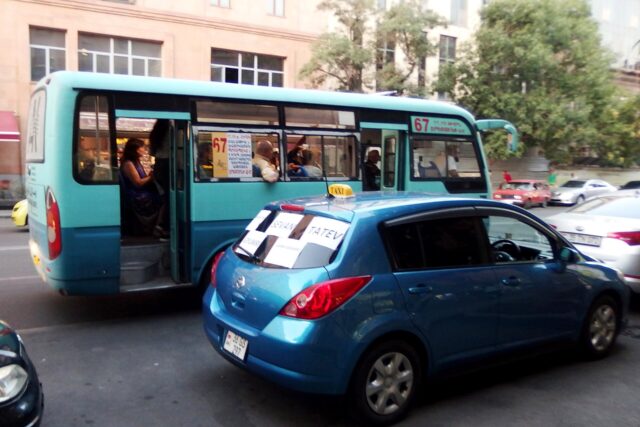
Many Indians pair Armenia with neighbouring Georgia by land. For the marshrutka, shared-taxi and train options once you arrive, read how to get around Armenia.
Is Armenia cheap for Indian tourists?
By European standards, yes, Armenia is genuinely affordable, though not as rock-bottom as some parts of India. Excluding flights, a rough daily budget in rupees looks like this (1 INR is about 3.85 AMD in mid-2026):
| Travel style | Per day (AMD) | Per day (INR, approx) | What it covers |
|---|---|---|---|
| Budget / backpacker | 6,000–9,000 | ₹1,550–2,350 | Hostel dorm, street food, public transport |
| Mid-range | ~14,000 | ~₹3,650 | 3-star hotel, restaurant meals, paid sights |
| Higher-end | 26,000+ | ₹6,750+ | Better hotels, private tours, taxis |
Sample Yerevan prices: a hostel dorm runs 5,000–8,000 AMD (about ₹1,300–2,100), an inexpensive restaurant meal around 3,800 AMD (roughly ₹990), a plate of khorovats (Armenian barbecue) 3,500–8,000 AMD, a city bus ride 100 AMD (about ₹26), and many monasteries are free to enter. Cards (Visa and Mastercard) work fine across Yerevan, but the countryside is cash-based, so carry dram and use the many fee-free ATMs in the capital before heading out. USD or EUR cash is easy to exchange at good rates; there is little point carrying rupees to convert. For a full breakdown with a sample multi-day total, see our Armenia travel cost and budget guide.
Is Armenia vegetarian-friendly for Indians?
More than most travellers expect. Armenia has a strong meat-free tradition called “pasuts” (Lenten) cooking, which gives you naturally vegetarian dishes: pasuts tolma (stuffed vine leaves with beans and grains, no meat), spas (a yogurt-and-wheat soup), lentil and bean stews, grilled vegetables, and lavash flatbread with cheese and fresh greens. Yerevan also has dedicated vegetarian and vegan restaurants.
One habit to keep: some soups and fillings use meat stock, so say “pasuts” or “without meat” when ordering. Our full vegetarian food in Armenia guide lists specific dishes and where to eat.
If you want familiar flavours, Yerevan has a growing cluster of Indian restaurants, several praised by Indian diners: Indian Mehak, Mihul Indian Restaurant, and India Palace, the last on Amiryan Street near Republic Square, all serving curries, biryani and tandoori (Source: Tripadvisor; Trip101). These are concentrated in central Yerevan, so plan a familiar meal there rather than expecting Indian food in regional towns. Jains and strict vegetarians will still find self-catering, fruit markets and pasuts dishes the safest bet outside these restaurants, and it helps to learn that “banjari” is not a local term, so describe your needs simply as no meat, no egg, no fish.
How do Indians get a SIM card in Armenia?
Buy a local SIM the moment you land. Three operators run in Armenia; for tourists the simplest deal is Viva-MTS “Tourist Unlim”, around 2,500 AMD (roughly ₹650) for 15 days of unlimited data plus local minutes and some international minutes. Ucom is a strong value alternative with 5G. Kiosks in the Zvartnots arrivals hall sell SIMs (carry your passport), and all three operators offer eSIM via QR code if your phone supports it. Global eSIM apps like Airalo work too, usually at a higher per-GB price.
Is Armenia safe for Indian travellers?
Yerevan and the classic tourist route, including Garni, Geghard, Lake Sevan, Dilijan, Khor Virap and the Tatev cable car, are safe, with low street crime. The one real caveat is the militarised Armenia–Azerbaijan border, well away from where tourists go.
As of March 2026, the UK FCDO advises against travel within 5 km of the eastern Armenia–Azerbaijan border and along the M16/H26 Ijevan–Noyemberyan road; the US keeps Armenia at Level 2 with specific eastern zones to avoid in Gegharkunik and Syunik (Source: gov.uk). The land border with Azerbaijan is closed, and Nagorno-Karabakh is not accessible from Armenia, so ignore any itinerary that lists it as an Armenian stop. Because the peace process is still evolving, recheck advisories the week you travel. Our honest is Armenia safe for tourists guide covers the detail.
When is the best time for Indians to visit Armenia?
Aim for the shoulder seasons, late April to June or September to October, when the weather is mild and dry. September is the single best month: clear skies, autumn colours and the wine harvest. This also suits Indian travellers dodging the Gulf-summer heat on layovers.
Summer (July–August) is peak hiking season but Yerevan gets very hot, with August storms in the afternoons, close to Indian summer conditions. Winter is cold, often around 0°C or below, with skiing at Tsaghkadzor. A useful India-specific point: Diwali and the October festival season line up nicely with Armenia’s best weather. See our month-by-month best time to visit Armenia guide to plan around festivals.
Is Armenia good for Indian tourists overall?
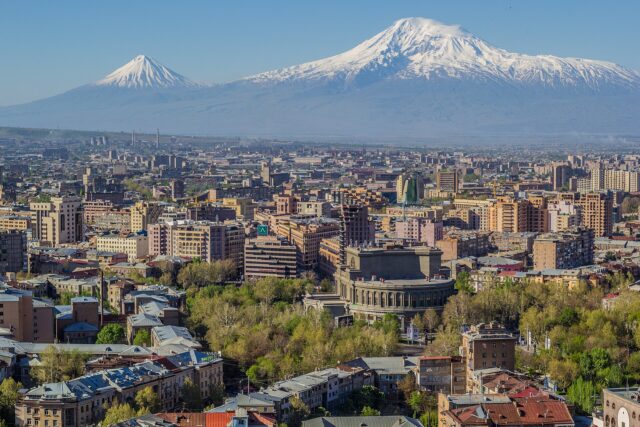
For a short-haul, budget-friendly and culturally rich trip, it holds up well. Indian arrivals have grown fast, with tourism bodies naming India among Armenia’s most dynamic growth markets in 2026, driven by affordability, simpler travel logistics and rising visibility (Source: Travel And Tour World). You get ancient monasteries, Mount Ararat views, Caucasus mountains and a walkable capital, at prices far below Western Europe.
Armenia also appeals to a range of Indian travellers: budget backpackers, couples wanting a quiet European-feel break without European prices, and families who value the easy vegetarian food. English is common in Yerevan hotels and tourist spots, though Russian is more widely spoken and English thins out in villages, so a translation app earns its keep on day trips.
The honest trade-offs: the visa must be sorted in advance, there is no direct flight so budget a Gulf layover, and outside Yerevan cash and a translation app help. Weigh those against the low costs and easy vegetarian food, and Armenia is a strong pick for a first trip to the Caucasus. To start planning your days, browse our roundup of the best things to do in Armenia.
Featured image: Serouj Ourishian (CC BY 4.0) via Wikimedia Commons