Armenia’s main public holidays are New Year (31 December to 2 January), Armenian Christmas on 6 January, Army Day (28 January), Women’s Day (8 March), Genocide Remembrance Day (24 April), Labour Day (1 May), Victory and Peace Day (9 May), First Republic Day (28 May), Constitution Day (5 July) and Independence Day (21 September). For most travellers the practical effect is small, with one big exception: the New Year period is a near-total shutdown of banks, offices and many shops that lasts into early January, so plan food, cash and bookings around it.
None of these dates should keep you away. Museums, monasteries, cafes and taxi apps mostly carry on, and public transport runs on a reduced schedule on the quieter holidays. But knowing which days are solemn, which are festive, and which close the banks will save you a wasted morning at a locked door. Here is the full calendar, what actually shuts, and the two days worth building your plans around.
What are Armenia’s official public holidays?
Armenia observes a set of fixed-date national holidays plus a couple of movable religious feasts. On the fixed public holidays, government offices and banks close and many businesses take the day off; shops and hospitality in Yerevan are more flexible and often stay open. The table below is the traveller’s version of the calendar.
| Date | Holiday | What it means for you |
|---|---|---|
| 31 Dec – 2 Jan | New Year | The biggest celebration of the year. Extended shutdown — see below. |
| 6 January | Christmas & Theophany | Armenian Christmas (not 25 December). Church services; a family day. |
| 28 January | Army Day | Military parades and flags; normal for tourists. |
| 8 March | Women’s Day | Widely marked; flowers everywhere. Restaurants busy. |
| 7 April | Motherhood & Beauty Day | A second women’s celebration; not a day off, but festive. |
| Movable (spring) | Easter (Zatik) | Movable Christian feast; date changes each year. |
| 24 April | Genocide Remembrance Day | A solemn national day of mourning. See guidance below. |
| 1 May | Labour Day | Public holiday; offices and banks closed. |
| 9 May | Victory & Peace Day | WWII commemoration; ceremonies and public events. |
| 28 May | First Republic Day | Marks the 1918 republic; public holiday. |
| 5 July | Constitution Day | Public holiday; offices and banks closed. |
| Movable (July) | Vardavar | Water-throwing festival — movable, 98 days after Easter. |
| 21 September | Independence Day | Marks 1991 independence; fireworks and city events in Yerevan. |
Why is New Year the one holiday to plan around?
New Year, not Christmas, is the peak of the Armenian festive calendar, and it is the single holiday that can genuinely disrupt a trip. Celebrations run from 31 December through 1 and 2 January, and the wind-down realistically stretches into the first week of January. Families cook enormous spreads, visit each other for days, and most of the country simply stops working.
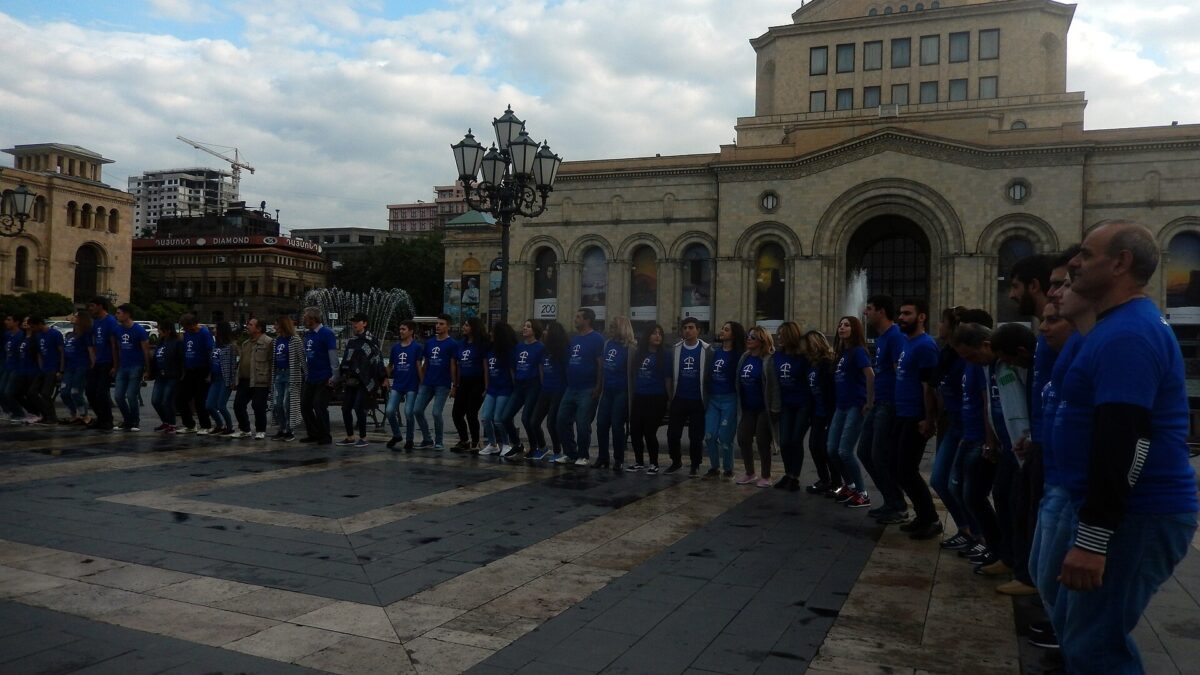
In practical terms: banks and government offices close, many independent shops and smaller restaurants shut for several days, and even some hotels run skeleton staff. Yerevan’s Republic Square becomes the focus of the celebration, with a decorated tree, lights and crowds. It is a wonderful time to be in the capital if you plan for it, and a frustrating one if you assume everything runs as normal.
If you travel around New Year, our advice is simple: book accommodation and any tours well in advance, withdraw enough cash before 31 December because ATMs can run dry and bank branches are shut, and confirm your hotel serves food or that you know which restaurants stay open. Day trips outside Yerevan are harder in this window, as marshrutka (minibus) schedules thin out and some drivers take the days off. If you want a working, business-as-usual Armenia, the first week of January is the one stretch to avoid.
Armenian Christmas is 6 January, not 25 December
The Armenian Apostolic Church celebrates Christmas and the Baptism of Christ together as one feast, Theophany, on 6 January. This is a genuine point of confusion for visitors used to a 25 December Christmas. On 25 December, Armenia carries on as an ordinary working day; the religious holiday comes almost two weeks later.
The 6 January feast is quieter and more spiritual than the boisterous New Year that precedes it. Churches hold Divine Liturgy and a water-blessing service, and it is a family day at home. For travellers it is a lovely, low-key day to attend a service at a working church or monastery, but expect a calmer city and some closures. It falls inside the broader New Year-to-Christmas holiday stretch, so the general “first week of January is slow” rule applies.
How to handle 24 April, Genocide Remembrance Day
24 April is the most solemn day in Armenia’s calendar. It commemorates the victims of the Armenian Genocide of 1915, and it is a national day of mourning rather than a festive holiday. This is not a day to treat as a sightseeing opportunity in the ordinary sense; it deserves quiet respect from visitors.
On this day, hundreds of thousands of people walk to the Tsitsernakaberd memorial on the hill above Yerevan to lay flowers around the eternal flame. The procession is continuous and dignified, and many businesses close or scale back. If you visit the memorial on 24 April, dress modestly, keep your voice down, do not treat the flame or the mourners as a photo backdrop, and follow the crowd’s quiet pace. It can be a deeply moving thing to witness, but only in a spirit of respect. The rest of the country observes the day soberly; nightlife and celebrations are paused out of respect.
What actually closes on a public holiday?
Outside the New Year period, the impact of a public holiday on a traveller is modest. Here is the honest breakdown:
- Closed: banks, government offices, post offices, and many corporate businesses. Bank branches are the ones you will notice — plan your currency exchange and any paperwork around them.
- Usually open: monasteries and churches (often busier, as holidays draw worshippers), major museums, cafes and restaurants in Yerevan, supermarkets and convenience stores, and the GG and Yandex Go taxi apps.
- Reduced: intercity marshrutkas and shared taxis often run fewer departures on public holidays, so a day trip may need an earlier start or a booked tour.
- Museum note: many Armenian museums close on Mondays regardless of holidays. Tsitsernakaberd’s museum, for example, is closed Mondays; always reconfirm hours before you go.
ATMs stay online and cards work normally in Yerevan on holidays, so you are rarely stuck for money outside the New Year shutdown. In the countryside, which is more cash-based, carry enough dram (AMD) so a closed rural bank never becomes a problem.
Movable feasts: Easter and Vardavar
Two important dates move every year, so never trust a fixed date you see for them. Easter (Zatik) is calculated on the Christian liturgical calendar and falls in spring; it anchors several other observances. Vardavar, Armenia’s beloved water-throwing festival, lands 98 days after Easter, which puts it in July. On Vardavar, people of all ages douse each other with water in the streets — no one is exempt, tourists included, so on that day expect to get soaked and keep your phone in a waterproof pouch.
Because these dates shift, we deliberately do not publish a specific 2026 or 2027 date here; confirm the current year’s date from an official source close to your trip. If a water festival appeals, our Vardavar guide covers what to expect, and our best time to visit Armenia guide sets the holidays in the wider context of weather and seasons.
Which holidays are worth timing your trip around?
If you want to experience Armenia at its most festive, three moments stand out. New Year and early January give you the full family-holiday atmosphere in a lit-up Yerevan — magical, but plan hard around the closures. Vardavar in July is pure joy and completely participatory. Independence Day on 21 September brings fireworks and city events to Yerevan, and it happens to land in September, which is widely regarded as the best month to visit anyway.
Conversely, if your priority is a smooth logistics-first trip — banks open, full transport schedules, everything running — steer clear of the New Year week. For a sombre and historically significant experience, 24 April is unmatched, but go only if you are prepared to observe it respectfully rather than as a tourist attraction. Winter travellers should also read our Armenia in winter guide, since the New Year holidays sit right in the coldest, snowiest stretch of the year.
Last verified: September 2026. Public holiday dates and business closures can change, and movable feasts differ each year. Confirm the current calendar before you travel.
Sources
- armenia.travel — official Armenia tourism portal
- gov.am — Government of Armenia (official holiday listings)
Frequently asked questions
Is Christmas celebrated on 25 December in Armenia?
No. The Armenian Apostolic Church celebrates Christmas together with Theophany on 6 January, so 25 December is an ordinary working day. The 6 January feast is a family and church day, quieter than the New Year celebrations that come before it.
What is closed during the Armenian New Year holiday?
From 31 December into the first week of January, banks, government offices and many shops and smaller restaurants close, and intercity transport thins out. It is the biggest shutdown of the year. Withdraw cash beforehand, book accommodation and tours in advance, and confirm where you can eat.
Can I still visit Armenia on 24 April?
Yes, but 24 April is Genocide Remembrance Day, a solemn national day of mourning, not a festive holiday. Many people walk to the Tsitsernakaberd memorial to lay flowers. Visit respectfully: dress modestly, stay quiet, and do not treat the memorial or mourners as a photo opportunity.
Do shops and restaurants close on Armenian public holidays?
Outside the New Year period, most cafes, restaurants and shops in Yerevan stay open on public holidays, and taxi apps and ATMs work normally. What closes reliably are banks and government offices. Intercity marshrutkas may run fewer departures, so plan day trips with an earlier start.
When is Vardavar and why does the date change?
Vardavar is a movable feast that falls 98 days after Easter, placing it in July. Because Easter’s date shifts each year, Vardavar’s does too, so confirm the current year’s date from an official source. It is a nationwide water-throwing festival, and visitors are fair game to get soaked.
Are banks open on public holidays in Armenia?
No. Banks and government offices close on official public holidays. ATMs stay online and cards work in Yerevan, so you can still get cash, but exchange money and handle any bank paperwork before a holiday, especially in the cash-based countryside.
Featured image: Armineaghayan, CC BY-SA 4.0 — via Wikimedia Commons.