A two-week Armenia and Georgia trip splits cleanly: spend about a week in Armenia (Yerevan plus the southern monasteries and Lake Sevan or Dilijan), then drive north and cross the border at Bagratashen, pausing at Debed Canyon on the way, and finish with roughly a week in Georgia (Tbilisi as a base plus a Kazbegi mountain day). One overland hop links the two.
The two countries share a land border and a well-worn traveller route, so pairing them is the standard move rather than an ambitious one. This guide keeps Armenia in detail (our home turf) and treats Georgia at a higher level, with sources cited for the northern leg. Last verified: July 2026 — reconfirm visa rules and border conditions the week you travel.
What does a 2-week Armenia and Georgia route look like?
Go south-to-north: land in Yerevan, work outward on day trips, then travel up through Lori toward the Georgian border. It suits the geography — Armenia’s headline sights (Khor Virap, Garni, Geghard, the southern monasteries) cluster around Yerevan, and the road north to Georgia passes the Debed Canyon UNESCO monasteries, so you sightsee your way to the crossing instead of backtracking.
You could reverse it and start in Tbilisi; flight prices and where you find a cheaper long-haul ticket usually decide the direction. We’d lean toward starting in Yerevan for one reason: Armenia’s day-trip logistics reward a settled base early, while Georgia’s Kazbegi run is an easy add-on once you’re in Tbilisi.
Day-by-day overview
| Days | Base | Focus |
|---|---|---|
| 1–2 | Yerevan | Arrive, Republic Square, Cascade, Genocide Memorial, brandy tour |
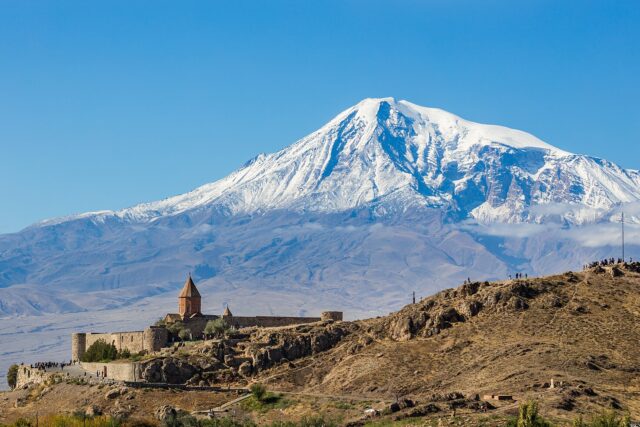
| 3 | Yerevan | Southern day trip: Khor Virap (Ararat view) + Noravank + Areni wine |
| 4 | Yerevan | Garni Temple, Symphony of Stones, Geghard Monastery |
| 5 | Sevan / Dilijan | Lake Sevan + Sevanavank, overnight in Dilijan National Park |
| 6 | Dilijan → Debed | Haghartsin, then north into Lori toward the canyon |
| 7 | Debed Canyon → border | Sanahin + Haghpat, cross at Bagratashen/Sadakhlo to Georgia |
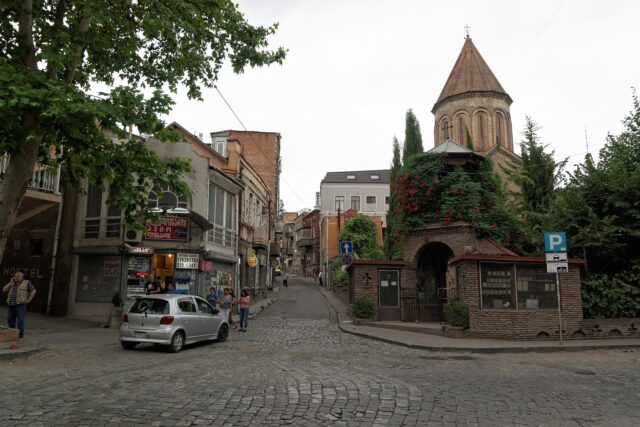
| 8–9 | Tbilisi | Old Town, sulphur baths, Narikala, Rustaveli Avenue |
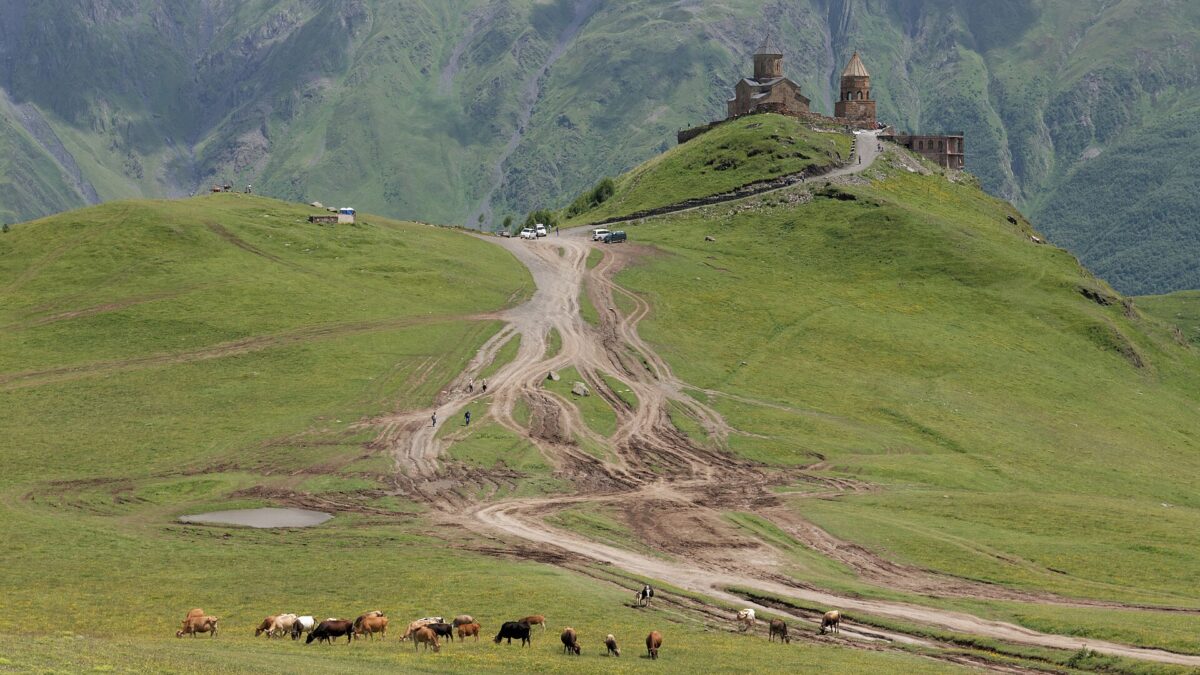
| 10 | Tbilisi | Kazbegi day trip: Ananuri, Gudauri, Gergeti Trinity Church |
| 11–12 | Tbilisi region | Kakheti wine country or Mtskheta and Uplistsikhe |
| 13–14 | Tbilisi | Slack, spare weather day, fly out |
How should you spend the Armenia week?
Base yourself in Yerevan for the first four or five nights and radiate outward. The capital’s day trips fan out in different directions, so a fixed base beats packing and repacking. Give the city itself a day and a half: Republic Square, the Cascade complex, the sobering Tsitsernakaberd Genocide Memorial (free; museum closed Mondays), and, if you like the idea, a tour and tasting at the ARARAT Yerevan Brandy Company (roughly 4,500–10,000 AMD / about USD 12–27, book ahead).
Save a morning for the southern loop. Khor Virap sits about 40 km south with the classic Mount Ararat view (free entry; the peak is clearest early morning and October–April, hazy in summer), and it pairs naturally with the red-cliff Noravank monastery and the Areni wine village, home to a cave holding the world’s oldest known winery. Another day covers the eastern trio done as one trip: the 1st-century Garni Temple (entry 1,500 AMD, about USD 4), the basalt columns of the Symphony of Stones, and the rock-cut Geghard Monastery (free). Order them Garni first, then Geghard, and you dodge the mid-morning tour-bus crush.
Marshrutkas (minibuses) run these routes cheaply but on their own schedule; for the southern sights specifically, a day tour or a GG/Yandex Go taxi often saves a frustrating wait for the return leg. Budget realistically: mid-range travel runs around 14,000 AMD (about USD 38) per person per day, more once you add tours and taxis.
A couple of practical notes that generic itineraries skip. English is common in Yerevan — hotels, younger people, tourist spots — but thins out fast in regional towns, so a phrasebook or translation app earns its keep once you leave the capital. Vegetarian travellers are well served: Armenia has a genuine meat-free “pasuts” tradition (pasuts tolma, spas soup, lentil and bean dishes, lavash with cheese and greens), though it’s worth saying “pasuts” or “meatless” explicitly, since some stocks use meat. And skip the taxi touts at Zvartnots airport who quote 10,000–20,000 AMD; book a GG or Yandex Go ride from the app for roughly 2,900–5,000 AMD, or take the 300 AMD Airport Express bus #201 to France Square.
Working north toward the border
Around day five, shift north instead of returning to Yerevan each night. Lake Sevan (about 65 km northeast, roughly an hour) and its peninsula monastery Sevanavank make a good first stop; swimming is realistic only in July and August at this high-altitude lake. Push on to Dilijan, the forested town in Dilijan National Park sometimes called Armenian Switzerland, for Parz Lake, the restored Haghartsin Monastery, and a night in the trees. The Transcaucasian Trail runs through here, and the easy Parz Lake to Goshavank walk (about 7 km) is a good leg-stretch before the next travel day. From Dilijan you’re already pointed the right way, and the marshrutkas to Sevan and Dilijan leave from Yerevan’s Gai (Northern) station if you’re piecing the route together on public transport.
How do you cross from Armenia to Georgia?
The land border is at Bagratashen on the Armenian side and Sadakhlo on the Georgian side, and you clear passport control on foot with your luggage. Three main options run Yerevan–Tbilisi:
- Marshrutka — roughly 7,000–9,000 AMD (about USD 20–25), around 6 hours, departing from Yerevan’s Kilikia Central Bus Station.
- Shared taxi — roughly USD 30–40, about 5–6 hours, leaves when it fills (around four passengers).
- Overnight train — daily in summer, every other day off-season (an odd/even date rule — verify the calendar); roughly USD 18–35 for third class up to USD 65–75 for first, book ahead in summer.
Here’s the routing tip that ties the trip together: rather than take a direct Yerevan–Tbilisi vehicle, break the northbound journey at the Debed Canyon in Lori. The UNESCO-listed monasteries of Sanahin and Haghpat sit right on the road north, so you visit them the day you cross instead of losing a separate day-trip to reach them. From the canyon it’s a short run to Bagratashen. A private driver or a pre-arranged transfer makes this stop-and-cross feasible; a straight-through marshrutka will not detour for you. If you’d rather not arrange a driver, the alternative is to treat Debed as a proper overnight in Alaverdi, visit Sanahin and Haghpat at leisure, and pick up onward transport to the border the next morning — slower, but it turns a rushed pass-through into a genuine stop. Either way, keep some Armenian dram on hand until you cross, since you’ll want small cash for the monasteries and for the walk through no-man’s-land.
How should you spend the Georgia week?
Base in Tbilisi. The Old Town, the sulphur bathhouses of Abanotubani, the Narikala fortress reached by cable car, and the cafes along Rustaveli Avenue easily fill two unhurried days. Tbilisi is compact, walkable, and cheaper than most European capitals, which makes it a comfortable place to slow down after a week of Armenian day trips.
The one Georgian excursion we’d protect is Kazbegi (Stepantsminda). Standard full-day tours from Tbilisi run about USD 29 per person and take roughly 12 hours, taking in Ananuri fortress on the Zhinvali reservoir, the Russia–Georgia Friendship Monument at Gudauri, and the climb to Gergeti Trinity Church beneath Mount Kazbek. Note the seasonal catch: from late November to mid-April the authorities sometimes close the mountain road for safety, so it is not guaranteed in deep winter. [source]
With the remaining days you have room to choose: the Kakheti wine region east of Tbilisi, or the ancient capital Mtskheta paired with the cave town of Uplistsikhe. Keep one day genuinely loose — a spare weather day and a buffer before your flight out. If you’d rather add coast or a second city, Kutaisi and Batumi in western Georgia are the usual candidates, though they pull you away from the Kazbegi corridor and need their own travel time.
Visas, money and practicalities
The two countries have separate visa systems — sort them independently. Many Western passports enter both visa-free. For Indian passport holders the important fact is that Armenia is not visa-free and has no visa-on-arrival: you need an e-visa in advance from evisa.mfa.am (21-day single entry about AMD 3,000 / USD 8; 120-day about AMD 15,000 / USD 38), and travel insurance is mandatory. [source] Georgia is handled separately: most Indian travellers need a Georgian e-visa from evisa.gov.ge, roughly USD 20 with about 5–7 working days processing, unless they hold a qualifying valid visa or residence permit from a major country, and since January 2026 Georgia also requires travel insurance. [source] Rules shift — reconfirm both on the official portals before you book.
On money, Armenia uses the dram (AMD; roughly 370–385 to the USD in 2026) and Georgia uses the lari. Cards work fine in both capitals; the Armenian countryside is cash-based, so carry AMD for the monasteries and marshrutkas. Late April to June and September to October are the best windows for the combined trip, with September the standout for dry weather and autumn colour — and, importantly, an open Kazbegi road.
One safety note for Armenia: the classic tourist route and everything in this itinerary sits well clear of the militarised Armenia–Azerbaijan border in the far east and south. That border zone is the only real concern and is nowhere near Yerevan, the Debed Canyon or the Georgian crossing. Check current advisories the week you go.
For deeper detail on any leg, see our guides to getting from Yerevan to Tbilisi, the Debed Canyon monasteries, Lake Sevan and Dilijan, plus the full Armenia visa guide. More routes live in our itineraries section.
Featured image: Vyacheslav Argenberg (CC BY 4.0) via Wikimedia Commons