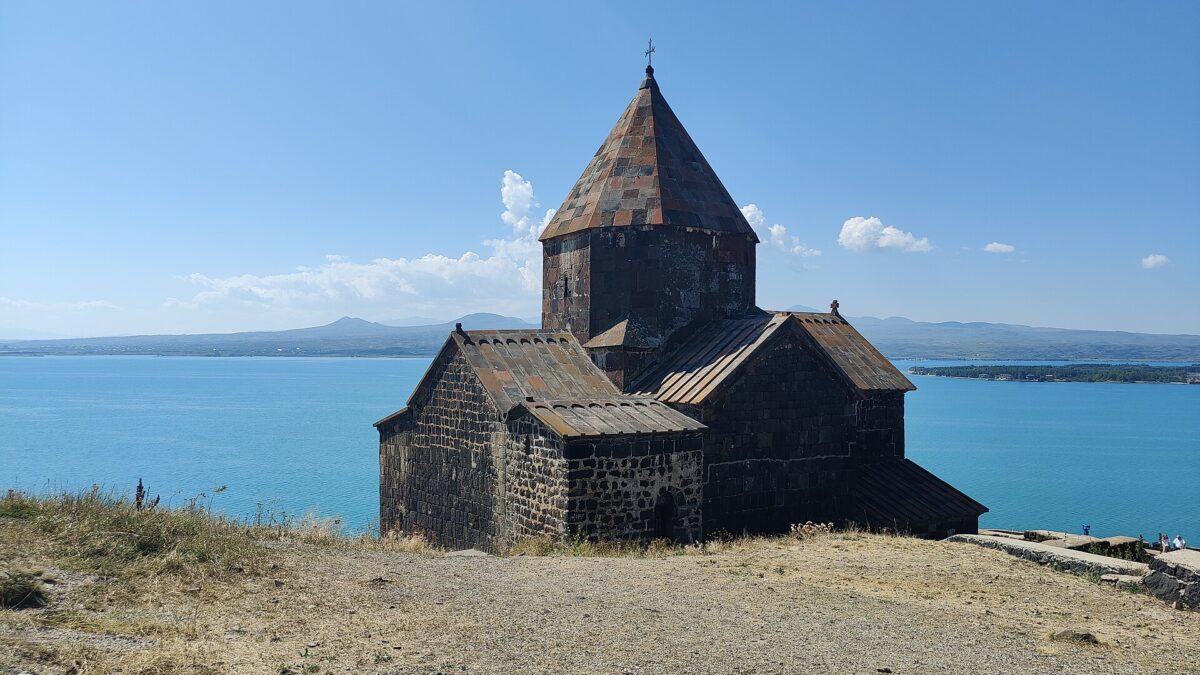
Lake Sevan is Armenia’s largest lake, a high-altitude expanse of water sitting at roughly 1,900 metres above sea level, about 65 km northeast of Yerevan and reachable in around an hour. Most visitors come for one afternoon: climb the stairs to the 9th-century Sevanavank monastery on its peninsula, take in the wide blue view, swim in high summer, and often pair the trip with nearby Dilijan.
It is the kind of stop that works best when you know what to expect. The water is colder than the postcard blue suggests, the swimming window is short, and the monastery climb is the real headline. Below is our honest, research-led breakdown of what to do, when to go, and how to get there. Last verified: July 2026.
What is there to do at Lake Sevan?
The lake is a short-visit destination rather than a resort you settle into for days. The core things to do cluster around the Sevan peninsula on the northwest shore, which is where the marshrutkas, the monastery, and most of the seasonal beaches sit.
- Climb to Sevanavank monastery — the signature sight, a stair climb to two medieval churches with a panoramic lake view.
- Swim or paddle — realistic only in July and August, when the surface warms to roughly 20–22°C.
- Eat by the water — lakeside spots serve grilled fish and Armenian standards through the summer season.
- Combine with Dilijan — the forested “Armenian Switzerland” is close enough to fold into the same day.
That is genuinely most of it. Sevan rewards a half-day, not a fortnight, which is exactly why it pairs so well with a second stop.
What is Sevanavank monastery and how do you visit it?
Sevanavank is a 9th-century monastery complex that sits on the Sevan peninsula, reached by a flight of stone steps from the car park below. Entry is free, and it is open-air enough that there are no fixed ticket hours to plan around — you simply walk up.
Here is the detail most guides skip: this was originally an island monastery. During the Soviet era the lake’s level was deliberately dropped for irrigation and hydro power, and the falling water eventually joined the island to the mainland, turning it into today’s peninsula. That backstory is part of why the setting feels the way it does — you are standing on ground that used to be surrounded by water.
The two surviving churches are modest in size but atmospheric, and the payoff is really the vantage point: the climb delivers a broad sweep across the lake that you do not get from the shore. It is a short, steepish set of stairs rather than a hike, but wear something with grip and give yourself a few minutes at the top. If medieval churches are the thread pulling you around Armenia, Sevanavank fits naturally into a wider loop covered in our best monasteries in Armenia guide.
Can you swim in Lake Sevan?
Yes, but the honest swimming season is narrow. Sevan is a high-altitude lake at around 1,900 metres, so it stays cold for most of the year. Realistically, comfortable swimming is a July-and-August affair, when the surface warms to roughly 20–22°C. Beaches and their facilities are seasonal too, broadly open from around June to August.
Our editorial call: if swimming is a priority for you, plan your Sevan visit for July or August and don’t expect Mediterranean warmth even then — this is a mountain lake, and the water reads as bracing rather than balmy. Outside those peak weeks the beach infrastructure thins out or closes, and the lake becomes a place you look at rather than get into.
None of that makes a shoulder-season visit pointless. In spring or autumn the monastery, the views, and the drive are all still there — you are simply trading the swim for clearer, quieter conditions. How you weigh that depends on your dates, which is worth reading against our month-by-month best time to visit Armenia breakdown before you commit.
What are the beaches like?
Sevan’s beaches are a summer phenomenon. From roughly June to August the peninsula and nearby shore see seasonal beach setups — spots to sit, swim, and grab food — that pack up once the warm weather goes. They are lake beaches, not tropical sand, and the appeal is the setting and the swim rather than luxury facilities.
Because the season is short and the crowds concentrate on hot summer weekends, this is a place where your timing changes the experience more than at most Armenian sights. A July weekday is calm; a peak-summer Sunday brings Yerevan’s own weekenders out to the water. If you want the beach day rather than the monastery-and-move-on version, aim for high summer and, ideally, a weekday.
When is the best time to visit Lake Sevan?
The best time to visit Lake Sevan depends entirely on what you want from it. For swimming and the full beach scene, July and August are the only realistic months. For the monastery, the views, and a mild, uncrowded visit, the wider late-spring-to-early-autumn window works well.
| If you want… | Go… | Why |
|---|---|---|
| To swim and use the beaches | July–August | Water warms to ~20–22°C; beach facilities open ~June–August |
| The monastery and views, fewer people | Late spring / early autumn | Mild, quieter; swim season closed but the setting is all still there |
| To avoid the summer weekend crush | Any weekday | Peak-summer weekends draw local crowds to the peninsula |
One practical note: Sevan’s altitude means the air can be cooler and breezier than Yerevan even in summer, so a light layer earns its place in the bag. Armenia’s broader seasonal rhythm — including why September is often the country’s single best travel month — is worth reading before you lock in dates.
How do you get to Lake Sevan from Yerevan?
Lake Sevan is about 65 km northeast of Yerevan, roughly an hour by road. The cheapest way is a marshrutka (shared minibus), which runs frequently — often around hourly — for roughly 800–1,500 AMD. The journey takes anywhere from about 45 minutes to 1.5 hours depending on stops and traffic.
Marshrutkas toward Sevan are most commonly cited as leaving from the Gai (Northern) bus station in the northeast of the city, which handles routes heading north and northeast including Sevan, Dilijan, and Vanadzor. One honest caveat: Yerevan’s station-to-region mapping is reported inconsistently across sources, so departure points can shift. Confirm your departure station and time locally the day before — ask your accommodation or check at the station itself rather than relying on a single online listing.
A few more practicalities:
- Getting to the monastery. Marshrutkas drop you at or near Sevan town, and Sevanavank on the peninsula is a short taxi ride from there — the minibus doesn’t usually deliver you to the church steps.
- Marshrutka etiquette. These minibuses often leave when full and you pay the driver in cash, so carry small AMD notes.
- Shared taxi or private car. Faster and more flexible, at a higher price — worth it if you’re pairing Sevan with Dilijan or travelling as a group.
- Organised day tour. The simplest option if you’d rather not juggle connections, and common for Sevan-plus-Dilijan combinations.
For the full mechanics of minibuses, taxi apps, and which station serves what, see our day trips from Yerevan guide, which lays out transport for each easy escape from the capital.
Should you eat the Sevan trout?
Sevan’s signature dish is ishkhan, the local lake trout, and you’ll see it on menus all along the shore. It’s the traditional taste-of-the-lake experience — but there’s a catch worth knowing before you order.
Ishkhan is a threatened species, and its wild population in the lake has come under serious pressure. Plenty of conservation-minded travellers choose to skip it for that reason. Our honest steer: if you’d like to try lake fish, ask whether what’s on the plate is farmed rather than wild-caught, and if you’re at all uncertain, there’s no shortage of other Armenian dishes to enjoy lakeside instead. It’s a small choice, but an easy one to make thoughtfully.
Where does Lake Sevan fit in an Armenia itinerary?
Sevan is a classic day trip from Yerevan rather than an overnight base, and it earns its place by pairing beautifully with Dilijan. The two sit close together on the same northeastern route, and the contrast is the appeal: Sevan’s wide open water and monastery, then Dilijan’s forested valleys and quieter, greener pace.
A natural version of the day runs Yerevan to Sevan in the morning for the monastery climb (and a swim if it’s high summer), lunch by the lake, then on to Dilijan for the afternoon before heading back. On a longer trip, Sevan slots neatly into the north-and-east leg of a wider Armenia loop.
If you’re building your days out from the capital, start with our Yerevan travel guide for the base, then browse the wider destinations section to see how Sevan connects to the rest of the country.
Is Lake Sevan worth visiting?
For most itineraries, yes — with the right expectations. The peninsula climb to Sevanavank and the view from the top are the genuine highlight, and reaching it is cheap, quick, and easy from Yerevan. Treat it as a half-day, ideally combined with Dilijan, and it’s one of the more rewarding easy trips in the country.
Where it can underwhelm is if you arrive expecting a warm-water beach holiday outside high summer, or a full day’s worth of things to do on the peninsula alone. Go for the monastery, the setting, and the drive; add the swim only if your dates land in July or August; and pair it with a second stop. On those terms, Sevan is an easy recommendation.
Featured image: Anastasiya Lvova (CC BY-SA 4.0) via Wikimedia Commons
Sources: Cross-check current details with Armenia’s official tourism board (armenia.travel). Last verified: July 2026.