The taraz is the traditional Armenian folk costume — the layered, embroidered dress once worn across the Armenian highlands and now seen mainly at weddings, on folk-dance ensembles, and at cultural festivals. There was never one single national outfit: the taraz changed from region to region, so a woman’s dress from the Lake Van area looked distinct from one worn in Syunik or Artsakh. What they shared was a common grammar — layered garments, a silver belt, a coin-trimmed headdress, and dense embroidery whose colours carried meaning.
If you are reading about Armenian culture before a trip, the taraz is worth understanding because you will meet it in real places: in the textile halls of Yerevan’s museums, on stage at a dance performance, and increasingly in photo studios that dress visitors in reproduction costumes. This guide explains what the taraz actually is, how it differed by region, what its colours and silverwork meant, and where you can see or wear one today.
What is the taraz?
Taraz (տարազ) is the general Armenian word for traditional attire — the everyday and festive clothing worn before Western dress replaced it through the late 19th and 20th centuries. Rather than a costume, think of it as a full system of layers built up on the body, differing by sex, age, marital status, wealth, and home region.
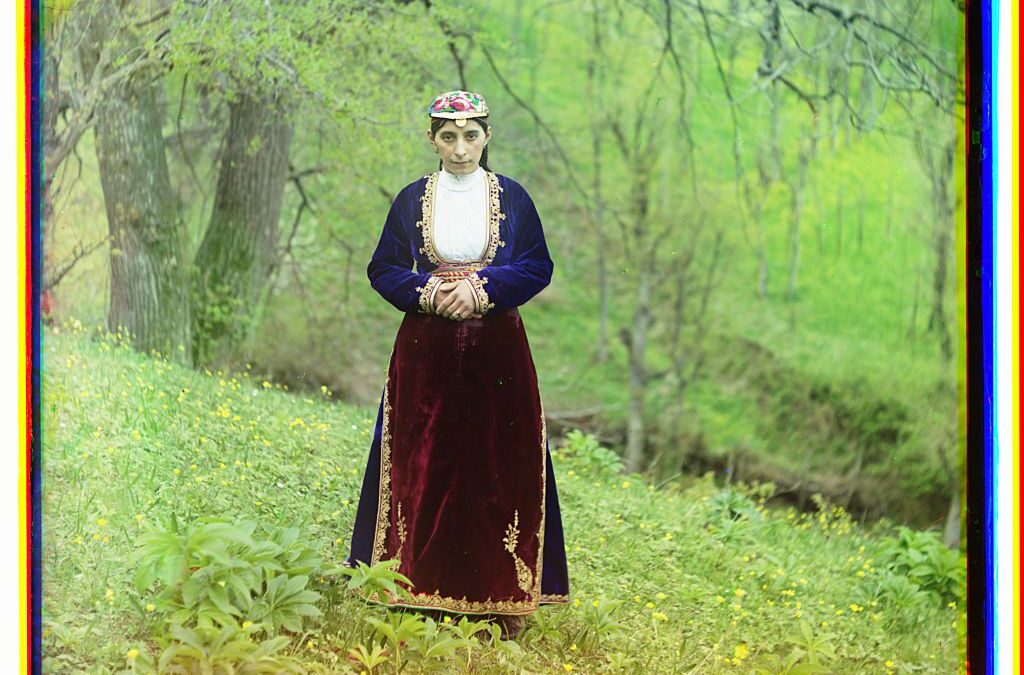
For women, the typical build was a long shirt or chemise worn next to the skin, a long dress or gown over it, a fitted open-fronted coat (often called an arkhalukh) on top, and an apron at the front. The waist was cinched with a belt — for well-off families, a wide silver belt with worked plaques and a large clasp. The outfit was finished with a headdress, and the whole ensemble was covered in embroidery at the cuffs, hem, chest and apron.
Men’s taraz was simpler but followed the same layered logic: a shirt, wide trousers, a fitted coat or vest, and a sash or belt wound at the waist, with regional variation in the cut and in headgear. Because the costume was hand-made at home — spun, woven, dyed and embroidered by women — it belongs to the same living textile tradition as the Armenian carpet and rug, and many of the same motifs and dyes cross over between clothing and weaving.
Here is the core women’s ensemble at a glance, so the layers are easier to picture when you see one in a museum case:
| Layer | What it is | Role |
|---|---|---|
| Inner shirt / chemise | Long undergarment worn next to the skin | Base layer, often with embroidered cuffs |
| Long dress / gown | The main dress worn over the shirt | The visible body of the costume |
| Arkhalukh (outer coat) | Fitted, open-fronted coat | Shapes the waist; shows the dress beneath |
| Apron | Decorated front panel at the waist | Practical and heavily embroidered |
| Silver belt | Worked metal belt with a large clasp | Marks the waist and displays family wealth |
| Headdress | Cap, scarf and veil, often coin-trimmed | Signals marital status and prosperity |
The headdress: coins, veils and status
The headdress is the part travellers notice first. Women’s headwear ranged from a padded or towered cap to a scarf-and-veil arrangement, and it did far more than keep the head covered — it signalled whether a woman was married and how prosperous her household was. Wealthier costumes added rows of coins, silver ornaments, and fine chains at the temples and forehead, so the headdress doubled as portable family wealth. A married woman’s head-covering also followed customs about which parts of the face and hair could be shown, which is why so many old photographs show the lower face lightly veiled.
How did the taraz differ by region?
Because historic Armenia stretched across a wide highland, the taraz split into regional styles. A broad and useful split is between Eastern Armenian costume (roughly today’s Republic of Armenia and Artsakh, historically under Persian and then Russian influence) and Western Armenian costume (the Armenian communities of eastern Anatolia, in what is now Turkey). Within those, individual districts kept their own cut, colour palette and embroidery.
- Vaspurakan (Lake Van region, Western Armenia): known for richly embroidered dresses and elaborate headwear; a heartland of Armenian folk textile art.
- Syunik and Artsakh (south-eastern / eastern highlands): Eastern-Armenian styles, often with the fitted arkhalukh coat, a prominent silver belt, and darker or deeper-toned cloth.
- Marash / Cilicia (south-western communities): home of the famous Marash embroidery, a distinctive interlaced stitch prized well beyond clothing.
Museums group surviving costumes this way, and it is the clearest way for a visitor to read the differences. If you look at two taraz side by side, the giveaways are usually the shape of the headdress, the colour of the ground cloth, and the embroidery style at the chest and cuffs.
What do the colours and embroidery mean?
Colour in the taraz was symbolic, not just decorative. The two most consistently cited meanings are that red stood for life, energy and blood, and blue for heaven, the sky and calm. Other colours carried their own associations — white with purity, and gold or yellow with light and grain. Red is especially prominent in bridal and festive dress, which is why so many Armenian wedding costumes read as strongly red-and-gold.
Embroidery did similar work. Motifs drawn from nature — pomegranates, grapevines, birds, stylised trees of life — recur across Armenian textiles and carry ideas of fertility, abundance and protection. The pomegranate in particular is a broad Armenian symbol of fertility and good fortune that shows up in dress, carpets and jewellery alike. The silver belt and coin ornaments added a second layer of meaning: they displayed a family’s standing and were part of a bride’s wealth.
The link to Armenian textile craft
None of this was factory work. The taraz was the visible edge of a household craft tradition — the same skills that produced Armenia’s celebrated rugs and the fine needle-lace and embroidery for which regions like Van and Marash were known. That is why costume, carpet and lace are usually displayed together in Armenian museums, and why the revival of the taraz today overlaps with a wider revival of Armenian handicraft.
Where can travellers see the taraz today?
You do not have to hunt for the taraz — it is woven into public cultural life, and several places in and around Yerevan show it well.
- History Museum of Armenia, Yerevan (Republic Square): the national collection, with ethnographic halls holding original costumes, silver belts, jewellery and textiles from across the historic regions. This is the single best place to see authentic, dated pieces rather than reproductions.
- Folk-dance ensembles and concerts: Armenia’s state and folk dance companies perform in full regional taraz, and this is where you see the costume as it was meant to be — in motion. Look for performances tied to festivals or at Yerevan’s concert venues.
- Weddings and holidays: couples increasingly marry in taraz or include it in the celebration, and you will see it at cultural holidays and city festivals through the warmer months.
- Photo and dress-up experiences: studios in Yerevan and at some tourist sites offer sessions where you can wear a reproduction taraz for photographs — a respectful, popular way to engage with the costume without buying an antique.
The taraz also connects naturally to the rest of Armenia’s cultural story — its unique alphabet, its identity as the first nation to adopt Christianity, and the plaintive sound of the duduk — so it fits well into any culture-focused day in Yerevan. For a fuller list of cultural experiences, see our guide to the best things to do in Armenia.
Can you buy or wear a taraz?
Yes, in a few honest ways. Contemporary Armenian designers have revived the taraz, producing modern dresses and bridalwear that borrow its embroidery, silhouette and colour rather than copying a museum piece exactly — you will find these in Yerevan boutiques and at craft fairs. Reproduction costumes are made for dance groups, weddings and photo studios. Genuine antique costumes and old silver belts do turn up in antique shops and at Yerevan’s Vernissage open-air market, but they are collector items, can be expensive, and older pieces may be subject to cultural-property export rules — check before buying anything you intend to take out of the country.
A word on respect: the taraz is living heritage, not a novelty. Wearing a reproduction for a photo shoot or a folk event is welcomed; treat genuine antique pieces, and the traditions attached to bridal and religious dress, with the seriousness Armenians give them.
Practical notes for visitors
- Best single stop: the History Museum of Armenia on Republic Square, central and easy to combine with a Yerevan walking day.
- Best way to see it live: a folk-dance performance or a cultural festival, where the costume moves as intended.
- To wear one: book a taraz photo session rather than buying an antique.
- Buying craft: Vernissage market (weekends are busiest) for textiles, silver and reproductions — bargain politely and ask about export rules for old items.
Understanding the taraz gives you a lens for the rest of the country: once you can read its colours, silver and embroidery, you start seeing the same visual language in Armenia’s carpets, churches and museum collections.
Last verified: September 2026.
Sources
- Armenia Travel (official tourism portal, armenia.travel) — Armenian culture and traditions
- History Museum of Armenia (historymuseum.am) — ethnographic and costume collections
Frequently asked questions
What is the Armenian taraz?
The taraz is the traditional Armenian folk costume: a layered, embroidered outfit that varied by region. For women it typically meant a long dress, a fitted open-fronted coat, an apron, a silver belt, and a coin-trimmed headdress. It is worn today at weddings, on folk-dance ensembles, and at cultural festivals.
Why does the taraz look different from region to region?
Historic Armenia spread across a wide highland, so each district kept its own cut, cloth colour and embroidery. A broad split is between Eastern Armenian styles (today’s Republic of Armenia and Artsakh) and Western Armenian styles (communities in eastern Anatolia). Regions such as Vaspurakan (Lake Van), Syunik and Marash each had recognisable variations.
What do the colours of the taraz mean?
Colour was symbolic. Red generally stood for life, energy and blood; blue for heaven and the sky. Embroidery motifs drawn from nature, such as the pomegranate and the tree of life, carried ideas of fertility, abundance and protection. Red and gold dominate festive and bridal dress.
Where can I see the taraz in Armenia?
The History Museum of Armenia on Republic Square in Yerevan holds original costumes, silver belts and jewellery from across the historic regions. You can also see the taraz in motion at folk-dance performances and cultural festivals, and increasingly at weddings.
Can tourists wear or buy a taraz?
Yes. Photo studios in Yerevan and at some sites offer sessions where you can wear a reproduction taraz. Contemporary designers sell modern pieces inspired by it, and reproductions are made for dance and weddings. Genuine antiques appear at Yerevan’s Vernissage market but can be costly and may be subject to cultural-property export rules, so check before buying.
Featured image: The Library of Congress, No restrictions — via Wikimedia Commons.