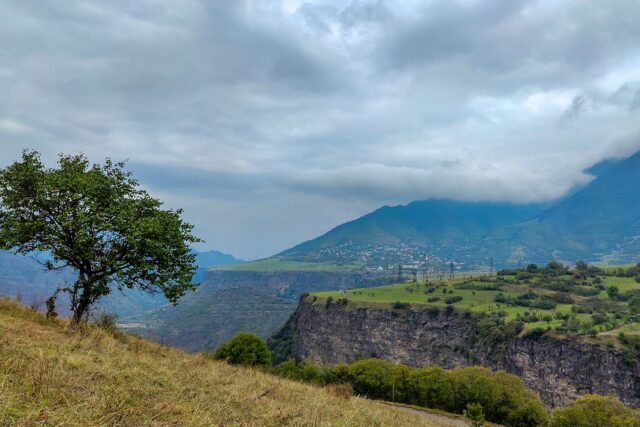
The best day trips from Yerevan are Garni Temple paired with Geghard Monastery (~40 km east), Khor Virap for its Mount Ararat view (~40 km south), Echmiadzin Cathedral (~20 km west), and Lake Sevan with Dilijan (~65 km northeast). Most fill half a day; each is reachable by marshrutka (minibus), a booked taxi, or an organised tour. For a short stay, prioritise Garni + Geghard.
Yerevan sits close enough to Armenia’s headline sights that you can base yourself in the capital for a week and never repeat a day. What trips people up is not distance but logistics: several of these places are easy to reach and awkward to leave, because return marshrutkas thin out in the afternoon or drop you a few kilometres short of the monastery gate. Below we break down each trip with the specifics that decide between going independently and booking a driver, plus a comparison table and our honest call on what to skip if time is tight. Prices are approximate and volatile. Last verified: July 2026 — confirm fares and hours locally before you set out.
How day trips from Yerevan actually work
Two systems carry most travellers: marshrutkas and taxi apps. Marshrutkas are shared minibuses that are cheap, often leave only when full, and take cash paid to the driver. They are the budget backbone but run on informal, shifting schedules — a route that leaves hourly in the morning may dry up by mid-afternoon. Taxi apps (GG is the local favourite; Yandex Go has the bigger fleet and better navigation) are reliable for shorter hops and let you agree a fare in-app before booking, which spares you the tourist markup of a street hail. For the harder-to-reach monasteries, a hired taxi for the day or a group tour (roughly $25–50 per person) is often the sensible choice rather than a false economy.
One warning that applies to every trip below: Yerevan’s departure points conflict between sources. The city has several hubs — Kilikia Central Bus Station near Sasuntsi Davit metro, the Gai (Northern) station in the northeast, informal stops near the Gai statue and Raykom (Mercury) market, and the Sasuntsi Davit area — and different guides assign the same route to different ones. Confirm your exact departure point locally the day before, ideally with your accommodation.
Garni Temple and Geghard Monastery: the classic pairing
This is the trip to do if you only have time for one. Garni and Geghard sit about 40 km east of Yerevan, roughly 10 km apart, and are almost always combined into a single half-to-full day (about 5–8 hours). The natural order is Garni Temple, then a walk or short drive to the Symphony of Stones, then on to Geghard.
Garni Temple is a 1st-century Greco-Roman colonnaded temple — the only standing one left in the former Soviet Union. Entry is 1,500 AMD (~$4), open roughly 10:00–21:00 in summer and 10:00–17:00 in winter. Below it in the gorge, the Symphony of Stones is a wall of hexagonal basalt columns, a free natural formation worth the short detour. Geghard Monastery, partly carved directly into the cliff, is a UNESCO site with free entry, open around 8:00–20:00.
The practical catch: many marshrutkas from the Gai statue / Raykom stop terminate at Garni village, about 4 km short of Geghard. The fare is only ~300–600 AMD and the ride is 45–60 minutes, but covering that last leg to Geghard means grabbing a local taxi from Garni, and getting back to Yerevan in the afternoon can be a wait. This is exactly why most visitors book a driver or a tour for this route — the saving on public transport is small, and the time cost of a stranded afternoon is real.
Khor Virap: the Mount Ararat viewpoint
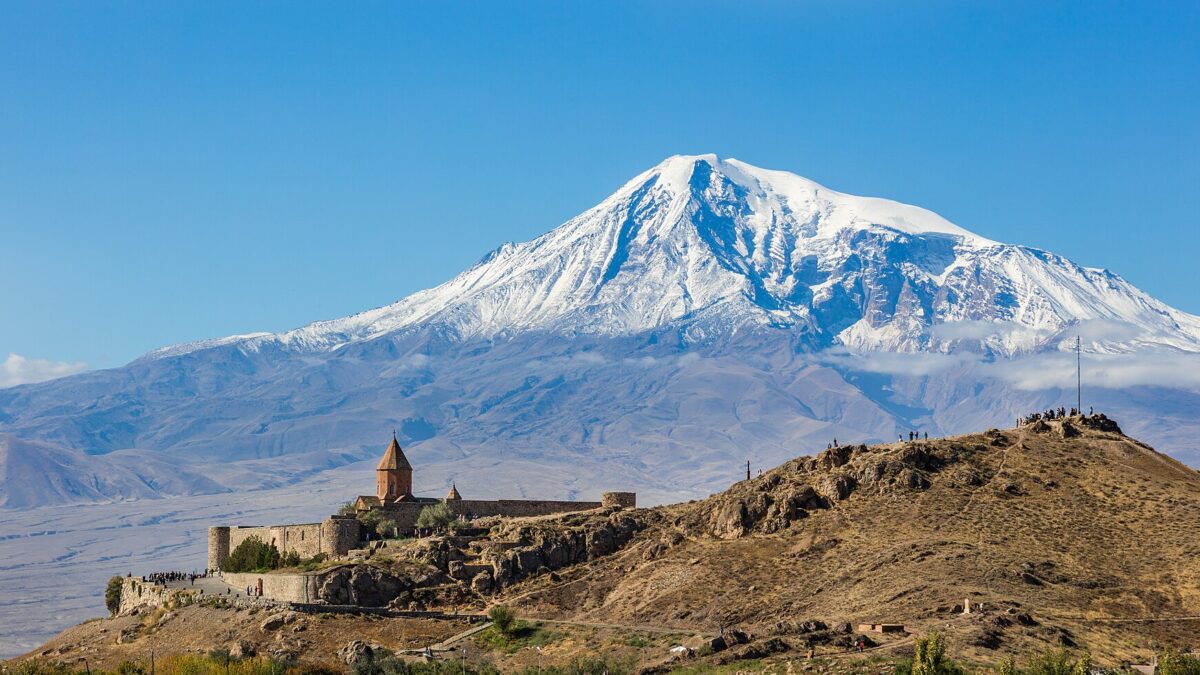
Khor Virap is a working monastery about 35–40 km south of Yerevan (~50 minutes), and its real draw is the view: it sits almost directly beneath Mount Ararat, the snow-capped biblical peak that lies about 20 km away across the closed border in Turkey. Entry is free.
Timing matters more here than anywhere else on this list. The clearest Ararat views come early in the morning and in the October–April window; by summer afternoons the mountain often hazes over and disappears. Go at dawn if you can. By marshrutka you take a service heading toward Ararat from the Sasuntsi Davit area for roughly 400 AMD, but departures are limited (commonly around 09:00, 11:00 and 14:00) and you may face a walk of a kilometre or so from the drop-off to the monastery. The return is awkward enough that a hired taxi or a tour is the norm rather than the exception — worth weighing against the low fare.
Echmiadzin: the spiritual heart, freshly reopened
Etchmiadzin Cathedral in Vagharshapat, about 20 km west of Yerevan, is the Mother See of the Armenian Apostolic Church. It was built in AD 301–303, tied to Armenia becoming the first nation to adopt Christianity as its state religion, and is often described as the oldest state-built cathedral in the world.
Here is the detail many competitor guides get wrong: the cathedral reopened and was re-consecrated on 29 September 2024 after a six-year restoration. If you read that it is “closed for renovation,” that information is out of date. Entry is free, hours are roughly daily 8:00–18:00 (seasonal), and the Treasury museum keeps shorter hours and may close on Mondays. Dress modestly. Echmiadzin is the closest of these trips and pairs naturally with the ruins of Zvartnots on the way back toward the city.
Lake Sevan and Dilijan: mountains, water and forest
Lake Sevan lies about 65 km northeast of Yerevan, roughly an hour by marshrutka from the Gai / Northern station for around 800–1,500 AMD. The signature stop is Sevanavank, a 9th-century monastery perched on a peninsula — once an island, until a Soviet-era drop in the lake level joined it to the shore. Entry is free; reaching the churches means climbing a flight of stairs, and Sevanavank itself is a short taxi from Sevan town. This is a high-altitude lake at around 1,900 m, so swimming is realistically a July–August affair when the water reaches ~20–22°C and the beaches open.
Sevan pairs well with Dilijan, the forested resort town in Dilijan National Park sometimes called “Armenian Switzerland.” A marshrutka from the same Gai / Northern station runs ~1,200–1,700 AMD and takes 1.5–2 hours, leaving every 60–90 minutes. Dilijan gives you Parz Lake, the restored 13th-century Haghartsin Monastery, and forest hikes such as the Parz Lake to Goshavank trail. Combining both in one day by public transport is ambitious; a car or a tour makes the pairing comfortable.
Noravank and Areni: the longer southern day
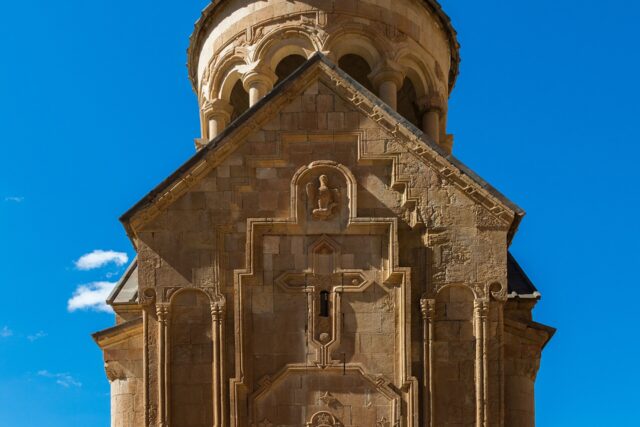
Further out, Noravank is a 13th-century monastery about 120 km southeast in Vayots Dzor, set against a dramatic red-cliff gorge — its famous two-storey church has an external stone staircase clinging to the facade. Entry is free. It is usually combined with Areni, the wine village named for Armenia’s indigenous Areni grape and home to the Areni-1 cave, the world’s oldest known winery (~6,100 years old), which also produced the oldest known leather shoe. Tastings at local wineries typically run a few thousand AMD, and the Areni Wine Festival falls in early October. This is a full day out and best done by car or organised tour rather than pieced together on minibuses.
Can you visit Tatev as a day trip?
Honestly, not comfortably. Tatev Monastery and the Wings of Tatev cable car — the world’s longest reversible aerial tramway at 5.7 km, about 11–12 minutes each way — sit roughly 250 km and 4+ hours south of Yerevan. There is no direct marshrutka: public routes run to Goris, then it is a taxi to the Halidzor cable-car station. A round-trip cable-car ticket is roughly 6,500–9,000 AMD (~$18–25) (sources conflict — confirm on the official tatever.am ticket page), and the car is generally closed Mondays outside peak summer. You can do it as a very long organised day tour, but an overnight in Goris is the calmer, more rewarding way. Treat Tatev as its own trip, not a quick outing.
Day trips from Yerevan compared
| Destination | Distance | Marshrutka fare | Time (one way) | Honest note |
|---|---|---|---|---|
| Garni + Geghard | ~40 km E | ~300–600 AMD | 45–60 min | Many minibuses stop 4 km short of Geghard; tour/taxi common |
| Khor Virap | ~35–40 km S | ~400 AMD | ~50 min | Limited departures, awkward return; go early for Ararat |
| Echmiadzin | ~20 km W | marshrutka from Sasuntsi Davit area | ~30–40 min | Reopened Sept 2024; closest and easiest |
| Lake Sevan | ~65 km NE | ~800–1,500 AMD | ~1 hr | Swimming realistic Jul–Aug; pairs with Dilijan |
| Dilijan | ~90 km NE | ~1,200–1,700 AMD | 1.5–2 hr | Forest hikes; every 60–90 min |
| Noravank + Areni | ~120 km SE | no easy direct route | ~2 hr+ | Full day; car or tour |
| Tatev | ~250 km S | via Goris, then taxi | 4+ hr | Long day-tour or overnight, not a quick trip |
Fares approximate and volatile — present as ranges and confirm locally. Last verified: July 2026.
DIY marshrutka, hired taxi, or organised tour?
Each has a clear best use. Marshrutkas win on price and are perfectly sensible for the easy, well-served runs — Echmiadzin, or Sevan if you are flexible about timing. The trade-off is uncertainty: informal schedules, thinning afternoon returns, and drop-offs short of the gate. A hired taxi for the day (booked through GG or Yandex, or arranged via your hotel) makes the most sense for Garni + Geghard and Khor Virap, where the return timing is the real problem; splitting the cost between three or four people often beats a per-person tour price. Organised tours earn their keep on the long or multi-stop days — Noravank + Areni, or Tatev — where you would otherwise lose hours solving transport and where a guide adds context. Our rule of thumb: go independent when the route is short and frequent, and pay for a driver the moment the return leg gets fiddly.
Which day trip should you prioritise?
If you have one free day, choose Garni and Geghard — two very different sights (a pagan temple and a cliff-carved monastery), a natural wonder in between, and a short drive from the city. With a second day, take Khor Virap early in the morning for the Ararat view, ideally in autumn or winter when the peak is clearest. A third day belongs to Lake Sevan and Dilijan for a change of scenery from stone to water and forest. Echmiadzin is the easy add-on, close enough to combine with a slow afternoon. Save Noravank, Areni and Tatev for when you have longer, a car, or a dedicated tour. For where these fit into a full trip, see our Armenia itineraries, and browse the regions in our destinations guides.
A few practicalities carry across all of these. Carry cash in dram — the countryside is largely cash-only and marshrutka drivers will not take cards. Check the season: Ararat views and lake swimming are weather-dependent, and our guide to the best time to visit Armenia covers the month-by-month detail. Yerevan itself deserves proper time between trips, which we cover in the Yerevan travel guide. And if border-region safety is on your mind, note that every trip on this list sits well inside the safe, standard tourist zone — the honest picture is in our Armenia safety guide.
Featured image: Diego Delso (CC BY-SA 4.0) via Wikimedia Commons