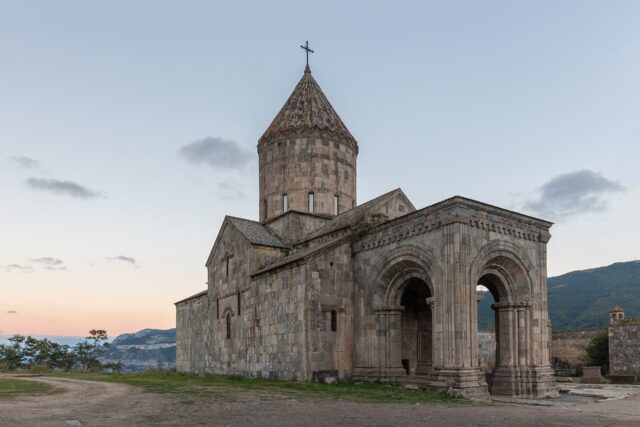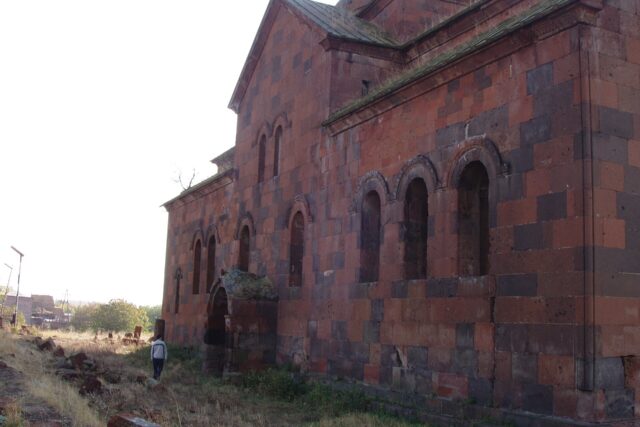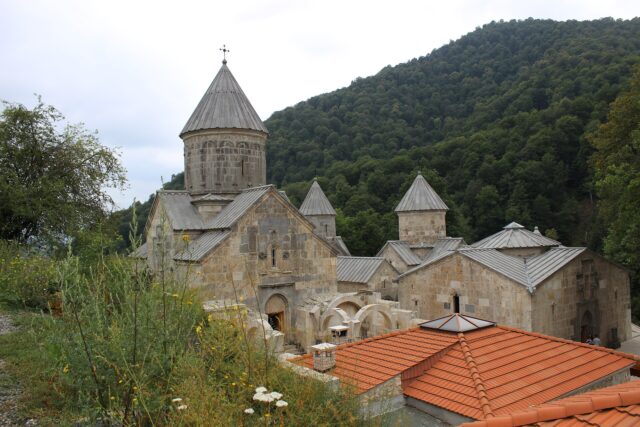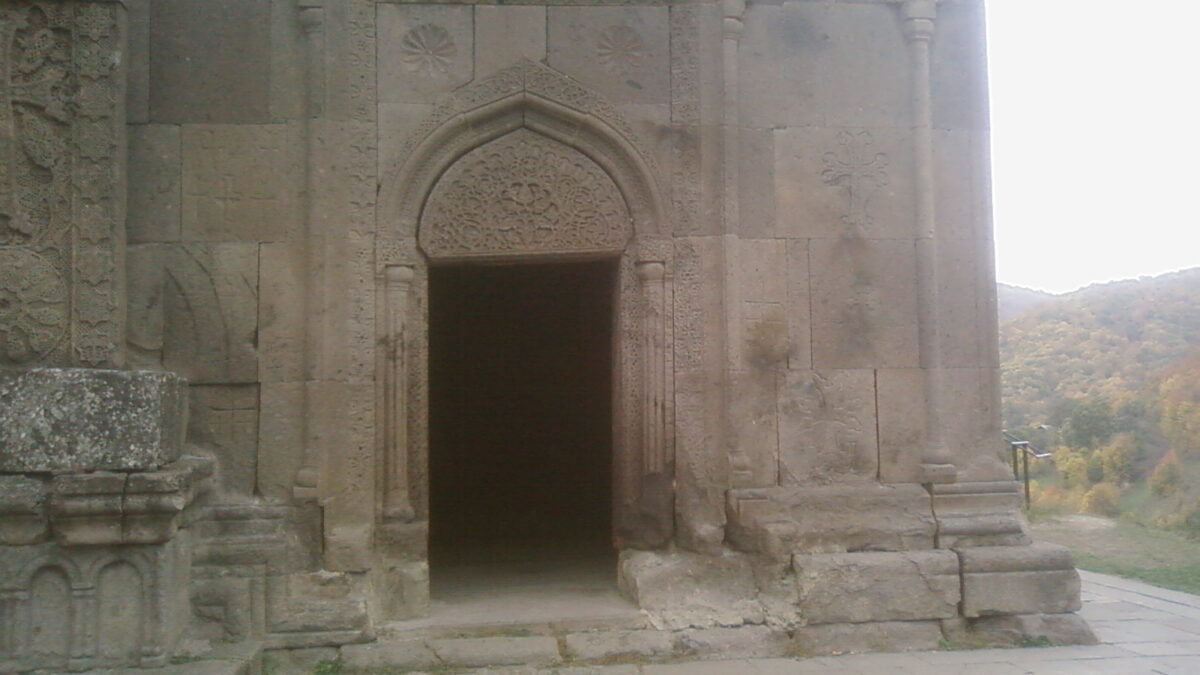
Goshavank is a medieval Armenian monastery in the village of Gosh, roughly 20 kilometres east of Dilijan in the forested Tavush region. Founded around 1188 by the scholar and lawmaker Mkhitar Gosh, it grew into a monastery, a school and a scriptorium, and it is best known today for a single object: an astonishingly fine khachkar (cross-stone) carved in 1291 by a master named Poghos, so intricately worked that it is often called the needle-carved khachkar. Entry is free.
If you are already visiting Dilijan, Parz Lake or nearby Haghartsin Monastery, Goshavank is easy to fold into the same day and rewards the detour with quiet, a walkable complex, and stonework that repays close looking. Here is what it is, why it matters, and how to reach it.
What is Goshavank Monastery?
Goshavank is a compact complex of churches, a bell tower and a two-storey library-and-school building, set in the village of Gosh in Dilijan National Park. It was built to replace an earlier monastery, Getik, that stood nearby until an earthquake destroyed it in the late 12th century. The community relocated and started again on this site around 1188, and the settlement that grew up around it was eventually renamed Gosh after its founder.
Unlike the mountain-locked or cliff-perched monasteries elsewhere in Armenia, Goshavank sits low, right at the edge of a small village, with green hills rising behind it. That setting makes it unusually approachable: you can walk the whole complex in under an hour, and there is no ticket gate to slow you down.
Who was Mkhitar Gosh?
Mkhitar Gosh (c. 1130s-1213) was one of medieval Armenia’s most important scholars, a churchman, teacher and writer. He is remembered above all for compiling the Datastanagirk, a written code of law that became one of the earliest and most influential legal texts in the Armenian tradition and was consulted well beyond Armenia’s borders in later centuries. He also wrote fables and theological works, and he taught at the monastery he founded, which functioned as a genuine centre of learning. Gosh died in 1213 and is buried in a small chapel beside the complex, which is part of what gives the site its weight: this is not only a church but the working home of a major medieval thinker.
The famous 1291 khachkar by Poghos
The single most celebrated thing at Goshavank is a khachkar dated 1291 and signed by a carver named Poghos. Khachkars are Armenia’s characteristic cross-stones, upright stone slabs carved with a central cross and dense ornament, and the craft is recognised by UNESCO as intangible cultural heritage. Even by that high standard, Poghos’s stone stands out. The surface is worked so finely, with interlacing lace-like patterns around the cross, that visitors and scholars alike describe it as looking embroidered or needle-carved rather than chiselled.
It is usually pointed out as one of the finest surviving khachkars in the country, and it is the detail worth slowing down for: get close, and let your eye follow how the master kept the ornament crisp and unbroken across the whole face of the stone. Poghos is credited with more than one khachkar here, so look for the pairing rather than a single stone.
It helps to know how to read a khachkar before you stand in front of it. The form is consistent across Armenia: a central cross, often rising from a rosette or disc that stands for the sun or eternity, set into a rectangular field and framed by bands of interlace, vegetal scrolls and geometric knots. What separates a routine cross-stone from a masterwork is the density and precision of that surrounding carving, and how deeply the stone is undercut so the pattern seems to float free of the background. On Poghos’s stone, that undercutting and the fineness of the interlace are what earn the needle comparison. There is no need to rush it; a khachkar is meant to be studied close up, not photographed from ten steps back.
The buildings: what you actually see
The complex is small but layered, and each structure had a purpose. Walking it in order helps it make sense:
- Surb Astvatsatsin (Holy Mother of God): the main church, built in the 1190s, the largest structure and the heart of the site.
- Surb Grigor and Surb Grigor Lusavorich: smaller churches and a chapel added over the following decades, clustered close to the main church.
- The two-storey library and school building: this served as the scriptorium and academy, where manuscripts were copied and students taught. Its upper level is reached by an external stone stair, and a bell tower rises above it, a distinctive silhouette for the complex.
- Mkhitar Gosh’s tomb chapel: a modest structure set a little apart from the main cluster, marking the founder’s burial place.
Because the buildings sit so close together, you get a strong sense of a self-contained medieval institution: worship, learning and book-making within a few steps of each other. That combination of church, school and scriptorium is exactly what made places like Goshavank the universities of their age. Under Mkhitar Gosh and his successors the academy taught theology, philosophy and the copying of manuscripts, and it kept the intellectual life of the region going through a turbulent period. When you stand in the small courtyard, it is worth remembering that this quiet village site was once a busy seat of scholarship, not only a place of prayer.
A note on the name
The settlement was first known as Nor Getik, meaning New Getik, because the community had moved here after their original Getik monastery was ruined. Over time the village and the monastery both took the name of their founder, becoming Gosh and Goshavank. Small as it is, that naming tells you how closely the place is bound to one man’s memory, which is unusual even among Armenia’s many monasteries.
How to get to Goshavank from Dilijan
Goshavank is in the village of Gosh, about 20 kilometres east of Dilijan, off the road that also serves Haghartsin. There is no convenient scheduled public transport that drops you at the monastery door, so most independent visitors reach it one of these ways:
- Taxi or hired car from Dilijan: the simplest option. Use a taxi app or arrange a driver in town; the drive from Dilijan is short. Agreeing to wait-and-return is common for village monasteries where onward transport is thin.
- Day tour from Yerevan or Dilijan: many tours pair Goshavank with Haghartsin and Parz Lake, which is the most efficient way to see all three without your own vehicle.
- On foot, for hikers: a walking route of roughly 7 kilometres links Parz Lake and Goshavank through Dilijan National Park, and the long-distance Transcaucasian Trail passes through this area. This is a genuinely scenic way to arrive if you have the time and legs for it.
Reaching Dilijan itself first is straightforward: marshrutkas from Yerevan’s Gai (Northern) station run to Dilijan roughly every 60-90 minutes and cost around 1,200-1,700 AMD for a journey of about 1.5-2 hours. Fares are approximate and change, so confirm locally. See our Dilijan travel guide for getting there and where to base yourself.
What it costs and when to go
Entry to Goshavank is free, as it is at most working Armenian monasteries; you would only pay for transport or a guide. There is no official ticket to check, but for the latest visitor information it is worth checking the national tourism portal, armenia.travel, before you set out.
Late spring through early autumn is the most reliable window for this part of Tavush: roads are clear, the forest is at its best, and September in particular brings dry, golden weather across Armenia. Winter is quieter and can be snowy on the approach, so if you visit in the cold months, allow extra time and check road conditions. As at any active church, dress modestly and keep your voice down inside.
Combining Goshavank with Haghartsin and Parz Lake
Goshavank works best as one stop on a Dilijan loop rather than a destination on its own. The natural trio is:
- Haghartsin Monastery – a beautifully restored 13th-century complex in the forest, and the other headline monastery of the Dilijan area. See our Haghartsin guide for the full picture.
- Parz Lake – a small forest lake popular for a walk or a lakeside break, and the trailhead for the walking route to Goshavank.
- Dilijan old town – the restored Sharambeyan street and the surrounding national park, easy to fold in at either end of the day.
Done together, these fill a comfortable day out of Dilijan. If you are building a longer route, this cluster pairs naturally with Lake Sevan on the way to or from Yerevan. Our day trips from Yerevan guide lays out how the northern circuit fits together.
Is Goshavank worth visiting?
Honestly, if you only have time for one monastery near Dilijan, Haghartsin is the more immediately dramatic and better-restored draw. Goshavank’s appeal is quieter and more specific: the extraordinary Poghos khachkar, the direct link to Mkhitar Gosh and his law code, and the calm of a village complex that rarely feels crowded. If you have any interest in Armenian stone-carving or medieval history, that combination makes it well worth the short trip, and pairing it with Haghartsin means you do not have to choose.
Last verified: September 2026.
Sources
- armenia.travel – official tourism portal of Armenia (attractions and visitor information)
Frequently asked questions
Where is Goshavank Monastery?
Goshavank is in the village of Gosh in Armenia’s Tavush region, about 20 kilometres east of Dilijan and close to Haghartsin Monastery. It sits within Dilijan National Park.
Who founded Goshavank and when?
It was founded around 1188 by the scholar and lawmaker Mkhitar Gosh, after an earthquake destroyed the earlier Getik monastery nearby. Gosh compiled the Datastanagirk, an influential medieval Armenian law code, and is buried in a chapel beside the complex.
What is Goshavank famous for?
It is best known for an exceptionally fine khachkar (cross-stone) carved in 1291 by a master named Poghos. Its lace-like ornament is so detailed it is often called the needle-carved khachkar, and it is considered one of the finest in Armenia.
How much does it cost to visit Goshavank?
Entry is free, as at most working Armenian monasteries. You would only pay for transport or an optional guide. For current visitor details, check the official portal armenia.travel. Last verified: September 2026.
How do I get to Goshavank from Dilijan?
The easiest way is a short taxi or hired-car ride from Dilijan, about 20 kilometres east. Many day tours combine it with Haghartsin and Parz Lake, and hikers can walk a roughly 7-kilometre trail from Parz Lake to Goshavank through the national park.
Can I combine Goshavank with Haghartsin Monastery?
Yes. Goshavank, Haghartsin Monastery and Parz Lake sit close together near Dilijan and are commonly visited on the same day, either by car, on a day tour, or partly on foot.
Featured image: Soghomon Matevosyan, CC BY-SA 4.0 — via Wikimedia Commons.