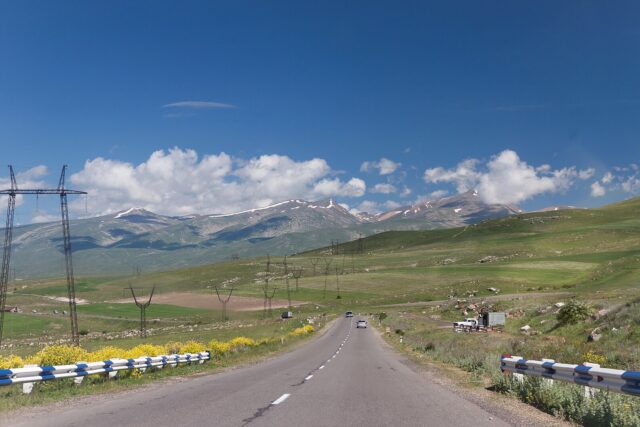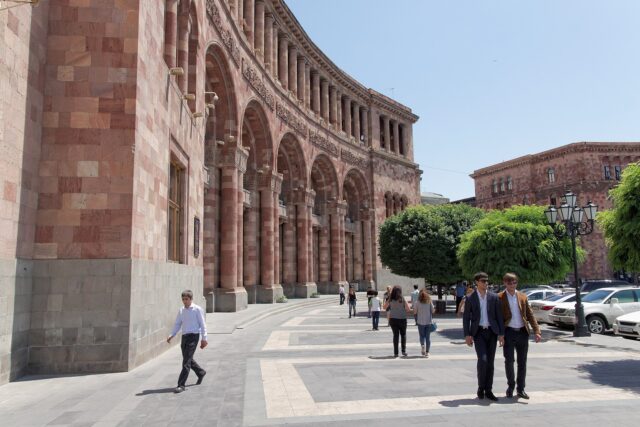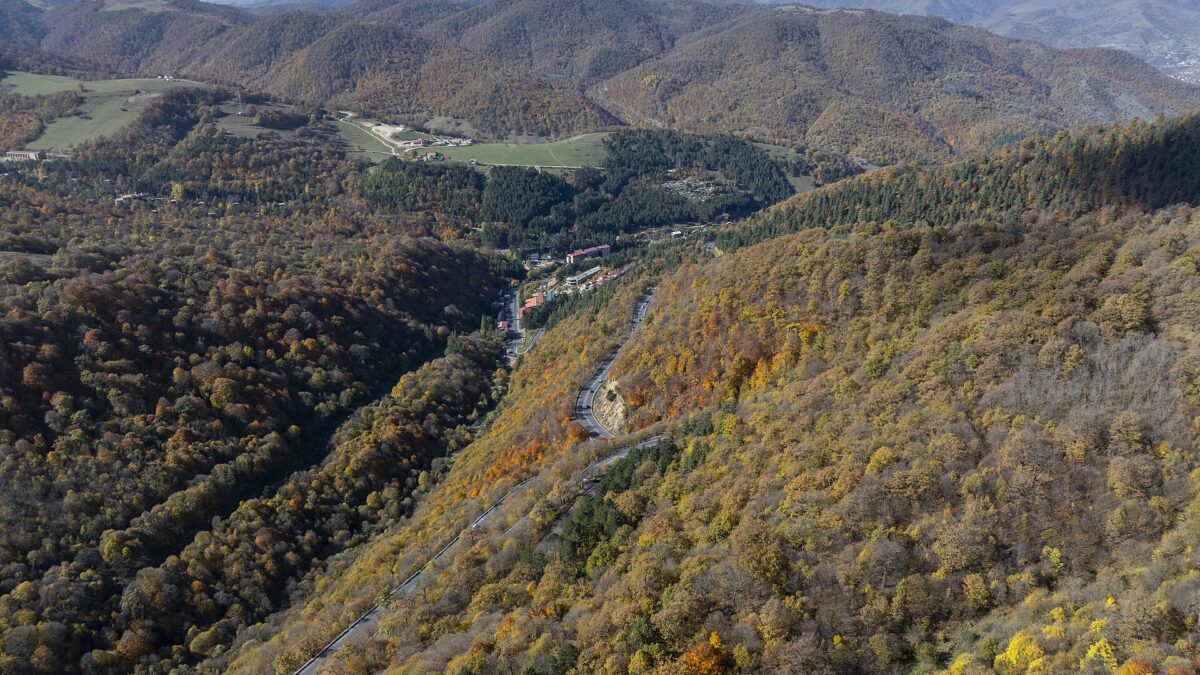
For most trips, pack comfortable walking shoes, layers, high-SPF sunscreen, a refillable water bottle, and clothes that cover your shoulders and knees for monasteries. The season decides the rest: Armenia has hot, dry summers (Yerevan can push past 35C), genuinely cold, snowy winters, and big day-to-night temperature swings once you gain altitude around Lake Sevan, Dilijan, or Tatev. Nail the season and the layers, and the rest of the list is small.
This is a research-led guide built around Armenia’s actual climate and church etiquette rather than a generic one-size list. Below you’ll find what changes by season, exactly what the monastery dress code means in practice, the electronics and paperwork worth carrying, and a compact checklist you can copy before you zip the bag.
What should you pack for Armenia, whatever the season?
A short list of items earns its place on every trip, then the season adds to it. Start with these:
- Comfortable, broken-in walking shoes. Yerevan has long stone-paved stretches, and almost every monastery involves uneven steps, cobbles, or a short climb (Sevanavank sits at the top of a stair, Geghard is partly carved into rock). Sandals alone won’t cut it for sightseeing days.
- A layer that covers shoulders and knees. This does double duty as sun cover and as your monastery outfit (see the dress-code section below).
- High-SPF sunscreen and sunglasses. Armenia is sunny and sits at altitude, so UV is strong even when the air feels mild. Yerevan is around 1,000 m and the Sevan basin around 1,900 m, where the sun bites harder than the temperature suggests.
- A refillable water bottle. Yerevan’s tap water is generally considered safe to drink, and the city is dotted with pulpulaks – free public drinking fountains – so a refillable bottle saves money and plastic. If your stomach is sensitive, stick to bottled water, which is cheap and everywhere.
- A power bank and a Type C/F plug adapter. Armenia runs on 230V, 50Hz with European-style Type C and Type F sockets, the same as most of continental Europe. UK and US plugs need an adapter.
- A little cash in Armenian dram. Cards work fine across Yerevan, but the countryside – marshrutka drivers, village cafes, small monastery-town shops – runs on cash. Carry some AMD before you leave the capital.
How does packing change by season in Armenia?
Armenia has a continental climate, which means the seasons are distinct and the gap between a summer afternoon and a winter night is enormous. What you pack should follow the calendar more than anything else.
Spring (April to June): layers and a rain shell
Spring is one of the best windows to visit – green hills, wildflowers, roughly 5-20C – but it swings. Mornings can be crisp and afternoons warm, so pack for both.
- Light layers: t-shirts plus a fleece or light sweater, and a packable rain jacket. Spring showers are common.
- Long trousers and one warm layer for cooler evenings and higher ground like Dilijan.
- Closed walking shoes; trails can still be muddy in April and May.
Summer (July to August): heat gear plus a warm layer for altitude
Yerevan summers are hot and dry, regularly in the high 20s to mid-30s and hotter still in August, which is the peak of the heat and brings afternoon thunderstorms. Yet the same week you swelter in the capital, an evening by Lake Sevan can feel cold. Pack for both extremes.
- Breathable, light-coloured clothing, a sun hat, and extra sunscreen for the strong summer UV.
- A swimsuit if you’re heading to Lake Sevan – swimming is realistic only in July and August, when the high-altitude water reaches around 20-22C.
- One warm layer regardless. Evenings at Sevan, Dilijan, and Tatev are noticeably cooler than Yerevan, and mountain nights can surprise you.
- A small umbrella or rain shell for August’s afternoon storms.
Autumn (September to October): the easy season
Autumn is mild, dry, and golden, and September is widely rated the single best month to visit (it also lines up with the wine harvest). Packing is straightforward.
- Layers again: warm days, cool mornings and evenings. A light jacket handles most of it.
- A slightly warmer layer for late October, when nights get chilly, especially in the highlands.
- Comfortable shoes for the long, pleasant sightseeing days this season is made for.
Winter (November to March): serious cold and snow
Armenian winters are cold. Yerevan sits around 0C or below in January and it snows, while ski areas like Tsaghkadzor get proper snow cover. This is the one season where under-packing has consequences.
- A warm insulated coat, hat, gloves, and a scarf. Thermal base layers if you feel the cold.
- Waterproof boots with grip – pavements and monastery steps ice over.
- Warm socks and a thicker mid-layer. Interiors are heated, so dress in layers you can shed indoors.
- If you’re skiing Tsaghkadzor, you can rent gear on-site, so there’s no need to fly with skis.
What is the dress code for Armenian monasteries?
Armenia’s monasteries and churches are active places of worship, and modest dress is expected: cover your shoulders and knees. It’s a courtesy rather than a ticketed rule, but it matters at the country’s most-visited sites – Geghard, Tatev, Khor Virap, Noravank, Sevanavank, and Etchmiadzin Cathedral.
What that looks like in practice:
- Everyone: no bare shoulders and no shorts or short skirts above the knee inside churches. Trousers or a below-the-knee skirt or dress are safe.
- Women: a lightweight scarf is very useful – it can cover your head inside a church (appreciated, though not always strictly required) and drape over bare shoulders. A single scarf packs to nothing and solves both.
- A wrap or shawl in your day bag is the easy fix on a hot summer day when you’re otherwise in a t-shirt and shorts. Throw it on at the entrance, take it off after.
Armenia’s official tourism board (armenia.travel) frames church visits around respectful, modest conduct, so treat covered shoulders and knees as the baseline and you’ll be fine everywhere.
Practical essentials: electronics, documents, and health
Beyond clothes, a handful of practical items make the trip smoother.
Electronics and connectivity
- Phone with offline maps downloaded (Google Maps or Maps.me), plus a translation app – English is common in Yerevan but limited in regional towns.
- A local SIM or eSIM. You can buy one at the Viva-MTS or Ucom kiosks in Zvartnots arrivals with your passport. Viva-MTS sells a “TOURIST UNLIM” package for roughly 2,500 AMD (about 6.50 USD) for 15 days of unlimited data. Bring an unlocked phone.
- Power bank for long day trips, and your Type C/F adapter as noted above.
Documents
- Passport, plus a printed or offline copy of your e-visa if your nationality needs one (check armenia.travel or the official portal evisa.mfa.am before you fly).
- Travel insurance details. Insurance is mandatory for all e-visa applicants, so if you needed an e-visa you’ll already have a policy – carry the document.
- A card plus a backup card, and some starter cash in dram.
Health and comfort
- Any prescription medicines in their original packaging, plus a small kit: painkillers, plasters, rehydration salts.
- Reusable water bottle, lip balm, and hand sanitiser for long marshrutka and day-trip days.
- A daypack for day trips – you’ll want your hands free on monastery steps and trails.
What not to over-pack (and one thing people forget)
A few honest calls to keep the bag light. You don’t need formal wear – Yerevan’s restaurants and bars are relaxed and smart-casual at most. You don’t need to fly with a huge stock of toiletries; Yerevan pharmacies and supermarkets are well stocked. And you don’t need heavy hiking boots unless you’re actually tackling the Transcaucasian Trail – grippy trainers cover the standard monastery-and-town circuit.
The thing people forget most often is that one warm layer, even in high summer. Travellers pack for a 35C Yerevan afternoon and then shiver at Sevan or on a Tatev evening. Pack the light fleece; you’ll use it.
A second easy miss is footwear for the terrain rather than the weather. Even on a warm, dry summer day, the surface underfoot at a monastery is often worn stone, gravel, or a rock-cut interior that stays cool and slightly slick. Grippy soles matter more than the forecast. And if your itinerary mixes city days with a day trip or two, a light daypack you can carry alongside a larger case keeps the heavy luggage at the hotel while you’re out at Garni, Geghard, or Khor Virap.
One more practical note on timing your list: because Armenia’s seasons are so distinct, packing well really is a question of matching the calendar to the altitude of where you’re going, not just the region. A trip that stays in and around Yerevan needs far less warm gear than the same dates spent in the northern forests or the far south. Build the list around your actual route.
Armenia packing checklist
| Category | Always pack | Add by season |
|---|---|---|
| Footwear | Comfortable walking shoes | Winter: waterproof boots with grip; Summer: sandals for downtime |
| Clothing | Shoulder/knee-covering layer, versatile top and bottoms | Spring/Autumn: fleece + rain shell; Summer: sun hat, swimsuit; Winter: coat, thermals, hat, gloves, scarf |
| Monastery | Scarf or shawl / wrap | Summer: keep it in the day bag for hot days |
| Sun and health | High-SPF sunscreen, sunglasses, refillable bottle, small medkit | Summer: extra sunscreen, lip balm |
| Electronics | Phone, offline maps, power bank, Type C/F adapter | Winter: spare battery (cold drains faster) |
| Documents/money | Passport, e-visa copy, insurance, cards + AMD cash | – |
Reading around this trip? See our guides on the best time to visit Armenia, the Armenia visa rules, getting an Armenian SIM card and internet, the best monasteries in Armenia, and what to expect if you’re travelling to Armenia in winter.
Last verified: September 2026.
Sources
- armenia.travel – official tourism board (climate, seasons, church etiquette)
- evisa.mfa.am – official e-visa portal (visa and mandatory-insurance requirements)
Frequently asked questions
What should women wear to monasteries in Armenia?
Cover your shoulders and knees – trousers or a below-the-knee skirt or dress, and a top that isn’t sleeveless. A lightweight scarf is the most useful item: it can cover your head inside a church (appreciated at active places of worship) and drape over bare shoulders on a hot day. Pack one scarf and you’re set for every monastery.
Do I need warm clothes for Armenia in summer?
Yes, one warm layer, even in July and August. Yerevan can top 35C, but evenings at higher-altitude spots like Lake Sevan (around 1,900 m), Dilijan, and Tatev are markedly cooler, and mountain nights get cold. A light fleece or sweater covers it without weighing down your bag.
What kind of power adapter do I need for Armenia?
Armenia uses 230V, 50Hz electricity with European-style Type C and Type F sockets, the same as most of continental Europe. Travellers from the UK, US, or other regions need a plug adapter; those coming from the EU generally do not.
Can I drink the tap water in Armenia?
Yerevan’s tap water is generally considered safe to drink, and the city has many pulpulaks – free public drinking fountains – so a refillable bottle is worth packing. If your stomach is sensitive, bottled water is cheap and sold everywhere.
What shoes should I pack for Armenia?
Comfortable, broken-in walking shoes or grippy trainers. Yerevan has long stone-paved stretches and almost every monastery involves uneven steps or a short climb. You only need proper hiking boots if you plan serious trails like the Transcaucasian Trail; in winter, swap in waterproof boots with grip for icy steps.
When is swimming season at Lake Sevan?
Realistically July and August, when the high-altitude lake water reaches roughly 20-22C. If you’re visiting in that window, pack a swimsuit; outside it, the water is too cold for comfortable swimming.
Featured image: Xelgen, CC BY-SA 4.0 — via Wikimedia Commons.