Lavash is a thin, soft Armenian flatbread baked in a tonir, a conical clay oven set into the ground. Made from just flour, water and salt, the dough is stretched paper-thin and slapped onto the oven’s blazing wall, where it bakes in under a minute. UNESCO inscribed the Armenian lavash tradition on its Intangible Cultural Heritage list in 2014.
It is the everyday bread of Armenia and a lot more besides: the wrapper for a khorovats skewer, the plate for cheese and herbs, the ceremonial cloth draped over a bride and groom. If you eat your way through Armenia and pay attention, lavash turns up at almost every table. Here is what it actually is, how it is baked, why it carries the weight it does, and where a traveller can watch it happen.
What is lavash?
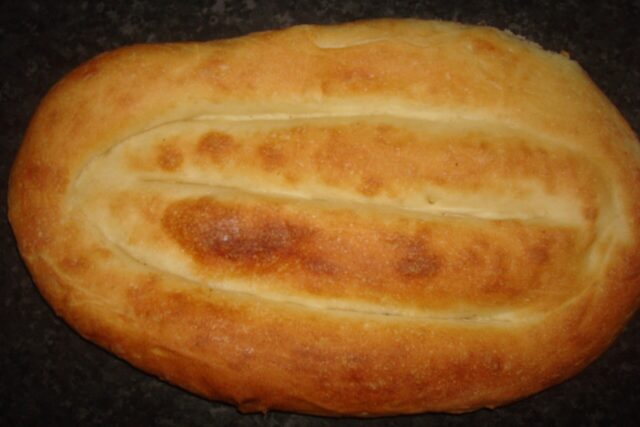
Lavash is an unleavened flatbread of wheat flour, water and salt, rolled into large thin oval or rectangular sheets and baked against the hot interior wall of a tonir. Fresh from the oven it is soft and pliable, freckled with dark blisters from the flame, with a faint smoky smell. The sheets are big, often a metre long, and thin enough to fold, roll or tear by hand.
Texture depends on age. Eaten within a day or two it stays supple and foldable. Left out, it dries into brittle, cracker-like sheets that keep for weeks or months, then softens again with a sprinkle of water. That dual life, soft bread now and preserved staple later, is central to why lavash matters in Armenian households and why it earned formal cultural recognition rather than being treated as ordinary bread.
For the wider context of where it sits on the Armenian table, see our Armenian food guide.
How is lavash made in a tonir?
The dough could not be simpler: flour, water, sometimes a little salt, kneaded and left to rest, then divided into balls. Each ball is rolled out thin, then stretched further over a padded oval cushion. The baker presses that cushion, dough side down, against the searing wall of the tonir. The sheet sticks, bakes for roughly thirty seconds to a minute, and is peeled off with a hook or bare fingers. According to UNESCO’s inscription record, this is exactly the method the listing describes, dough “stretched over a special oval cushion that is then slapped against the wall of a traditional conical clay oven.”
The tonir itself is the key piece. It is a clay-lined pit oven, narrower at the top, fired with wood or, traditionally, dung and brushwood. The heat radiates off the curved walls, which is why the dough can cook so fast and pick up its blistered, faintly charred character. The same oven also grills meat and cooks other dishes, so a village tonir is a workhorse, not a single-purpose bread oven.
That smoky, blistered finish is the reason tonir-baked lavash tastes different from the flat, uniform machine-made sheets sold in plastic packs. Industrial lavash exists and is perfectly usable, but it is baked on hot metal, not clay, and it lacks the char and the aroma. If you have only ever had the supermarket version, the fresh-from-the-oven sheet is a different bread, and worth seeking out.
Traditionally the baking is women’s work, and communal. UNESCO notes that preparation is usually carried out by a small group of women and “requires great effort, coordination, experience and special skills,” while men build the ovens and make the cushions. In a village session, several women roll, stretch and bake together and turn out enough bread to last the household for weeks. That teamwork is part of what was recognised, not just the loaf.
Rolling steps at a glance
- Knead a plain dough of flour, water and salt; rest it, then portion into balls.
- Roll each ball out thin, then stretch it over a padded oval cushion.
- Slap the cushion against the hot inner wall of the tonir.
- Bake 30 to 60 seconds until blistered and lightly charred.
- Peel off, stack, and either eat fresh or dry for storage.
Is lavash UNESCO heritage?
Yes. In November 2014, at the ninth session of the intergovernmental committee in Paris, UNESCO inscribed “Lavash, the preparation, meaning and appearance of traditional bread as an expression of culture in Armenia” on the Representative List of the Intangible Cultural Heritage of Humanity. The inscription is Armenia-specific and focuses on the whole living practice, the making, the meaning and the role of the bread, not merely the recipe. Source: UNESCO ich.unesco.org. Last verified: July 2026.
One point worth stating plainly, because it gets muddled online. There is a second, separate UNESCO listing from 2016, “Flatbread making and sharing culture: Lavash, Katyrma, Jupka, Yufka,” a multinational nomination by Azerbaijan, Iran, Kazakhstan, Kyrgyzstan and Turkey (UNESCO listing 01181). Thin flatbread baked on a hot surface is genuinely shared across the region, and that 2016 entry reflects that shared culture. Armenia’s 2014 inscription is its own, earlier, distinct listing. Both exist; they are not in competition on paper, whatever the arguments about origin look like on social media. We would treat lavash as a regional tradition with deep Armenian roots and leave the flag-planting to others.
What role does lavash play in Armenian culture?
Beyond daily eating, lavash carries ceremony. At weddings it is draped over the shoulders of the newlyweds as they enter the family home, a gesture UNESCO records as meant “to bring fertility and prosperity.” Bread and salt offered to a guest is the standard shorthand for Armenian hospitality, and lavash is usually the bread in that gesture. It also appears at births, funerals and religious holidays, the everyday object that marks the big moments.
Its long shelf life shaped rural life for centuries. Households would bake in bulk, dry the sheets, and stack them for the cold months. Dried lavash keeps for a long stretch, commonly cited at up to several months when stored properly, and comes back to life when you sprinkle it with water, wrap it briefly in cloth, and let it soften. That made it a practical winter and travel food long before refrigeration, and it is still baked in big batches in many villages.
The communal baking is a social engine too. Women gathering at the tonir pass the skill to daughters and granddaughters, which is precisely the kind of living transmission the UNESCO framework tries to safeguard. Lose the gathering and you lose the craft, not just a bread.
What do you eat with lavash?
Almost everything. The classic quick meal is lavash rolled around fresh cheese, usually a salty white cheese, with a handful of tarragon, basil or other herbs, and this is a reliable vegetarian option we flag in our vegetarian food in Armenia guide. At a barbecue, lavash is the wrapper for khorovats, the grilled meat pulled straight off the skewer into a sheet of bread with onions and herbs. It also lines and lids dishes, gets torn into soups, and serves as an edible plate.
| Pairing | What it is |
|---|---|
| Lavash + cheese + herbs | The everyday snack; fold and eat, no cooking needed |
| Lavash-wrapped khorovats | Grilled meat rolled in bread with onion and greens |
| Lavash with soup or stew | Torn and dipped, or used to scoop |
| Dried lavash, rehydrated | Sprinkled with water to soften, then used as fresh |
A drink helps. Armenian reds from the Areni grape stand up well to grilled meat wrapped in lavash, covered in our Armenian wine guide.
Where can you see lavash being baked?
The most reliable place is a village guesthouse or a tourist restaurant with a working tonir, several around Yerevan and in the regions run bakings as part of the experience, sometimes letting guests slap a sheet onto the wall themselves. Garni village, on the popular day trip east of the capital, is one common spot to watch it done near the temple. Restaurants in and around Yerevan with an in-house tonir will often bake in view of the dining room.
Our honest advice: a staged bakery demo laid on for tour buses is fine and photogenic, but the real thing is a family or village session, less polished, more crowded, and far more memorable. If you are staying in a rural guesthouse and someone mentions a baking day, ask to watch. That is worth more than any scheduled show. For planning around it, see our Yerevan travel guide and best things to do in Armenia.
One practical note for shoppers: fresh lavash is sold everywhere, in bakeries, markets and supermarkets, usually cheap and by the sheet. Buy it the day you want to eat it soft, or buy dried sheets to keep. It is one of the easiest, most affordable tastes of Armenia to try.
Featured image: Ji-Elle (CC BY-SA 4.0) via Wikimedia Commons