Armenian food centres on khorovats (charcoal barbecue, the national favourite), dolma or tolma (spiced filling wrapped in vine or cabbage leaves), and lavash, the thin flatbread baked on the wall of a clay tonir oven. Try gata (a sweet cake), spas (a yogurt soup) and grilled trout early. Expect big, meat-forward plates, plus cheese, herbs and bread with almost everything.
That is the short version. Below is the longer, more useful one: what each dish actually is, what it costs at a Yerevan restaurant in 2026, which ones to order first, which are an acquired taste, and how a vegetarian eats well here without a fight. Armenian cooking rewards curiosity but does not chase novelty. It is old, regional and built around bread, fire and the seasons.
What is the national dish of Armenia?
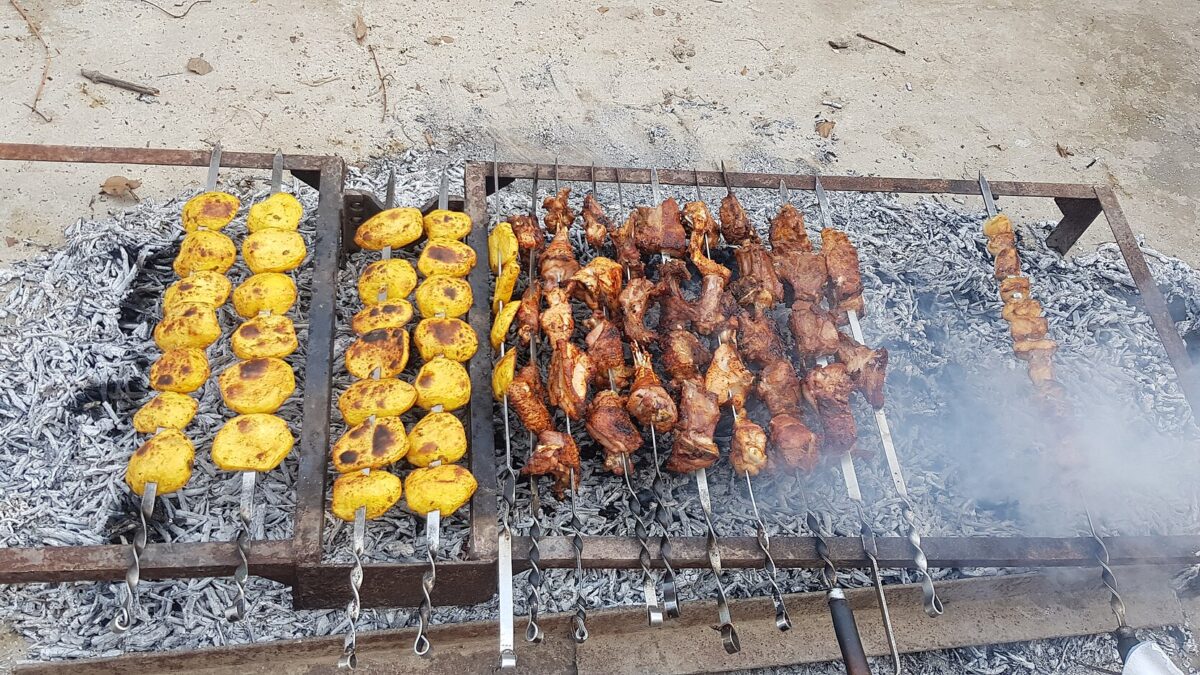
Khorovats, Armenia’s barbecue, is the closest thing to a national dish. Pork, lamb or chicken is marinated, skewered and grilled over vine cuttings or charcoal, then often piled onto lavash with grilled tomatoes, peppers and raw onion. It is the centre of most celebrations and Sunday gatherings, and Armenians argue over whose family does it best the way other countries argue over football.
Order it at a proper sit-down place rather than a fast-food counter. A khorovats plate in Yerevan runs roughly 3,500–8,000 AMD (about $10–22) depending on the cut and the restaurant. Ask for it wrapped in warm lavash if the menu allows; the bread soaks up the juices and that is the point. This is the first thing we would tell anyone to eat in Armenia.
Dolma and tolma: stuffed leaves worth the wait
Dolma (also spelled tolma) is minced meat, rice and herbs rolled in grape or cabbage leaves and simmered slowly. It is homely, sour-savoury and usually served with a garlic-yogurt sauce called matsun. There is also a well-known meat-free version, pasuts tolma, made with beans, lentils, chickpeas, cracked wheat and dried vegetables, traditionally eaten during Lent. It travels better than the meat kind and is genuinely one of the best vegetarian dishes in the country.
Expect to pay somewhere in the 1,500–4,000 AMD range for a plate. If you only try one stuffed dish, make it dolma, and if you are vegetarian, say the word “pasuts” clearly so you get the bean version rather than the meat one.
What is lavash, and why does UNESCO care?
Lavash is a thin, soft flatbread slapped onto the searing inner wall of a tonir (a buried clay oven) and peeled off seconds later. It is the daily bread of Armenia and turns up under kebabs, around cheese and herbs, and as an edible wrapper at every table. In 2014, UNESCO added lavash to its list of Intangible Cultural Heritage, recognising the bread and the communal baking tradition around it, not just the recipe.
You will rarely pay for lavash directly; it comes with the meal or costs a few hundred dram. Watch it being made if you get the chance, usually at village restaurants and some Yerevan spots with an open tonir. Fresh off the oven wall, folded around a little cheese and tarragon, it needs nothing else.
Soups and slow dishes: harissa, spas, khash
Armenia’s slow, warming dishes tell you a lot about its winters. Harissa is a thick porridge of shredded chicken or lamb cooked down with wheat for hours until it turns creamy and comforting, tied to religious feast days and to the memory of hard times. Spas is a tangy soup of matsun (fermented yogurt) and wheat, often served warm and, importantly, made without meat, which makes it a reliable vegetarian order.
Then there is khash: a winter broth of boiled cow’s feet and tripe, eaten early in the morning with garlic, dried lavash and a shot of vodka. It is a genuine cultural ritual, and it is an acquired taste. We would not send a first-time visitor to khash on day one; try it if you are curious and the season is right (deep winter), but do not feel you have failed Armenian cuisine if you skip it.
Ghapama and the festive table
Ghapama is a whole pumpkin hollowed out, stuffed with rice, dried fruit, nuts and honey, then baked until the shell is soft enough to scoop. It is festive, a little theatrical, and sweet enough to sit between a main and a dessert. There is even a folk song about it. You are most likely to meet ghapama around autumn and winter holidays, and in its standard form it is meat-free, so it doubles as a striking vegetarian centrepiece.
Armenian sweets: gata, churchkhela and sweet sujukh
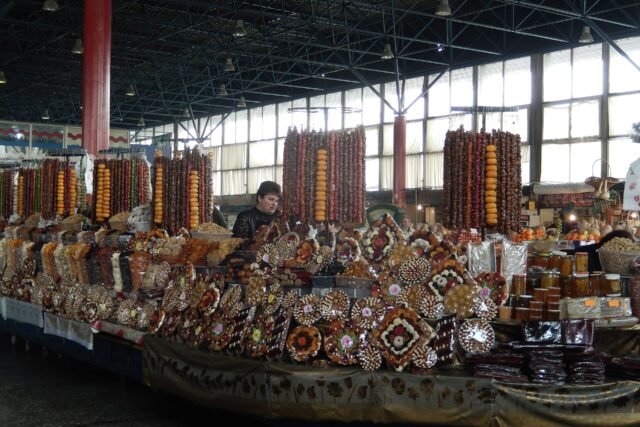
Save room. Gata is a flaky-to-dense sweet cake or bread, sometimes plain, sometimes filled with a buttery sugar-flour mixture called khoriz; every region bakes its own shape. Churchkhela and sweet sujukh are the same idea in string form: walnuts (or other nuts) threaded on a line and dipped repeatedly in thickened grape must until they set into a chewy, candle-shaped sweet.
One clarification that trips people up: sweet sujukh is not the same as sujuk, the spiced cured meat sausage. Same-sounding names, completely different foods. If you want the walnut sweet, point at the hanging brown “sausages” at any market stall and you will not go wrong. These travel home well as gifts.
The everyday table: cheese, herbs and breakfast
Beyond the headline dishes, daily eating in Armenia leans on cheese, fresh herbs and preserved vegetables. A spread of table cheeses (including a stringy, braided type), a bowl of tarragon, basil, cress and spring onions, salted and pickled vegetables, and a stack of lavash is the default start to most meals and a common breakfast in its own right. Matsun, the local set yogurt, appears at breakfast and as a sauce; honey and dried fruit turn up alongside. None of it is fussy, and much of it is naturally vegetarian.
Fruit deserves its own mention. Armenian apricots are a point of national pride, in season around midsummer, and the country claims them as its own; the Latin name for the apricot, Prunus armeniaca, nods to that history. If you visit in July or August, buy them by the bagful at any market. Pomegranates, figs, grapes and mulberries follow through autumn, and dried versions of all of them stock the market stalls year-round.
How much does a meal cost in Yerevan?
Yerevan is affordable by European standards and still very reasonable by Indian mid-range dining standards once you convert. Here are current figures, with AMD as the primary number and USD as a rough guide. Last verified: July 2026 (1 USD is roughly 370 AMD; prices move, so treat these as ballpark).
| Item | Typical price (AMD) | Roughly (USD) |
|---|---|---|
| Main course, restaurant | 1,500–8,000 | $4–22 |
| Khorovats (BBQ) plate | 3,500–8,000 | $10–22 |
| Mid-range dinner (per person, no alcohol) | 5,000–10,000 | $14–27 |
| Inexpensive restaurant meal | ~3,800 | ~$11 |
| Fast-food combo | ~2,900 | ~$8 |
| Armenian coffee | ~500–1,000 | ~$1.50–3 |
A practical rule: two people can eat a full sit-down dinner with a shared khorovats, salads, bread and soft drinks for well under 20,000 AMD in most of the city. Cards work fine in Yerevan restaurants; carry some cash for village taverns and roadside grills, which are often cash-only. For a wider breakdown of daily costs, our Yerevan travel guide covers where those numbers land across a trip.
Is Armenian food vegetarian-friendly?
Yes, more than its barbecue reputation suggests, and this matters for anyone travelling from India. Armenia has a deep meat-free tradition rooted in the Lenten (“pasuts”) calendar of the Armenian Apostolic Church, which for centuries meant weeks of cooking without meat, dairy or eggs. That heritage left the cuisine with a real bench of vegetable dishes rather than a grudging side salad.
Reliable vegetarian orders include:
- Pasuts tolma — the bean-and-grain stuffed leaves, hearty and complete.
- Spas — the warm yogurt-and-wheat soup (contains dairy, no meat).
- Lentil and bean dishes — lobio-style beans, lentil stews and soups appear widely.
- Lavash with cheese and greens — fresh bread, local cheeses, tarragon, basil and other herbs; a meal in itself.
- Ghapama — the stuffed pumpkin, sweet and filling.
- Grilled and roasted vegetables — aubergine, peppers and tomatoes done over the same coals as the khorovats.
Yerevan also has dedicated vegetarian and vegan restaurants, so a strict veg traveller is not stuck. One honest warning: ask specifically for the pasuts or meatless version of a dish, because some kitchens cook otherwise-vegetable dishes in meat stock, and a soup that looks vegetarian may not be. A short phrase learned in advance saves a lot of pointing. Our food and wine section goes deeper on veg-friendly eating.
What to drink: Areni wine, ARARAT brandy, coffee and tan
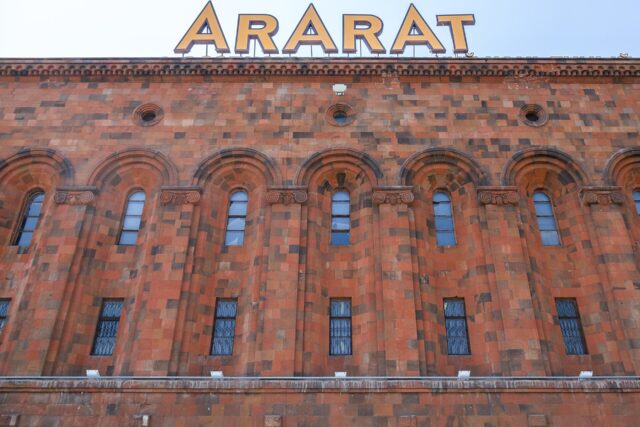
Armenia may be the oldest wine country on earth; the Areni-1 cave in Vayots Dzor holds the remains of a winery dated to around 6,100 years ago. The indigenous Areni grape makes the reds worth seeking out, and tastings at village cellars typically run a few thousand dram. ARARAT brandy, distilled by the Yerevan Brandy Company since 1887, is the country’s most famous export; a factory tour with tasting costs roughly 4,500 AMD basic up to about 10,000 AMD (~$27) for the extended flight (Last verified: July 2026, book ahead).
For everyday drinking, Armenian coffee is strong, unfiltered and served in small cups, ground fine and brewed in a narrow pot; let the grounds settle before you sip. Tan is a salted yogurt drink, thin and sour, that pairs surprisingly well with a heavy grilled meal. If you are planning tastings and cellar visits, the timing matters; the harvest and the Areni Wine Festival fall in early October, which our best time to visit Armenia guide breaks down by month.
Where and how to eat well
A few practical calls from our research. Eat khorovats where locals do, at a taverna with an open grill, not a tourist-strip terrace with photos on the menu. Take at least one meal outside Yerevan; the food near Lake Sevan (grilled trout) and in the villages on the classic day trips from Yerevan is often better and cheaper than the capital. Pace yourself: portions are large, bread is endless, and a full khorovats spread is a two-hour event, not a quick lunch. And build a food stop into your sightseeing rather than treating meals as fuel between monasteries, which is easy to do given how much there is to see across our best things to do in Armenia roundup.
Quick verdict: what to try first, and what can wait
- Order on day one: khorovats, dolma, fresh lavash with cheese and herbs, gata for dessert.
- Great for vegetarians: pasuts tolma, spas, bean and lentil dishes, ghapama.
- Try if curious: harissa, tan, an Areni red at a cellar.
- Acquired taste, don’t force it: khash (winter only, and it is a whole ritual).
Featured image: Armineaghayan (CC BY-SA 4.0) via Wikimedia Commons
Sources: Cross-check current details with UNESCO’s listing for lavash and Armenia’s official tourism board (armenia.travel). Last verified: July 2026.