Pokhindz (փոխինձ) is wheat roasted in the kernel and ground to a tan, nutty flour. It needs no oven: stirred into hot salted water it becomes khashil, a thick porridge; kneaded with honey it becomes a sweet you roll into balls and eat cold. Khavits (խավիծ) is its cousin from the pan: plain flour browned in butter and finished with syrup or milk, the dish Armenian grandmothers cook for a woman who has just given birth. Both are older than Armenian bread, both belong to St Sargis Day, and almost no restaurant in Yerevan serves either. This guide explains which is which and where a traveler can actually eat them.
Pokhindz: the flour
The Lori inventory of national dishes compiled for Armenia’s intangible-heritage register (int-heritage.am, 2024) gives the method in one line: clean wheat is roasted over fire, then ground in an erkank, the hand-turned stone quern still found in village storerooms. Tavush Media’s 2022 “Rural Life” film from the Tavush villages shows the same sequence, wheat to quern to bowl, and calls pokhindz a winter food made there “since ancient times”. Barley was used where wheat was scarce; almost everything sold today is wheat.
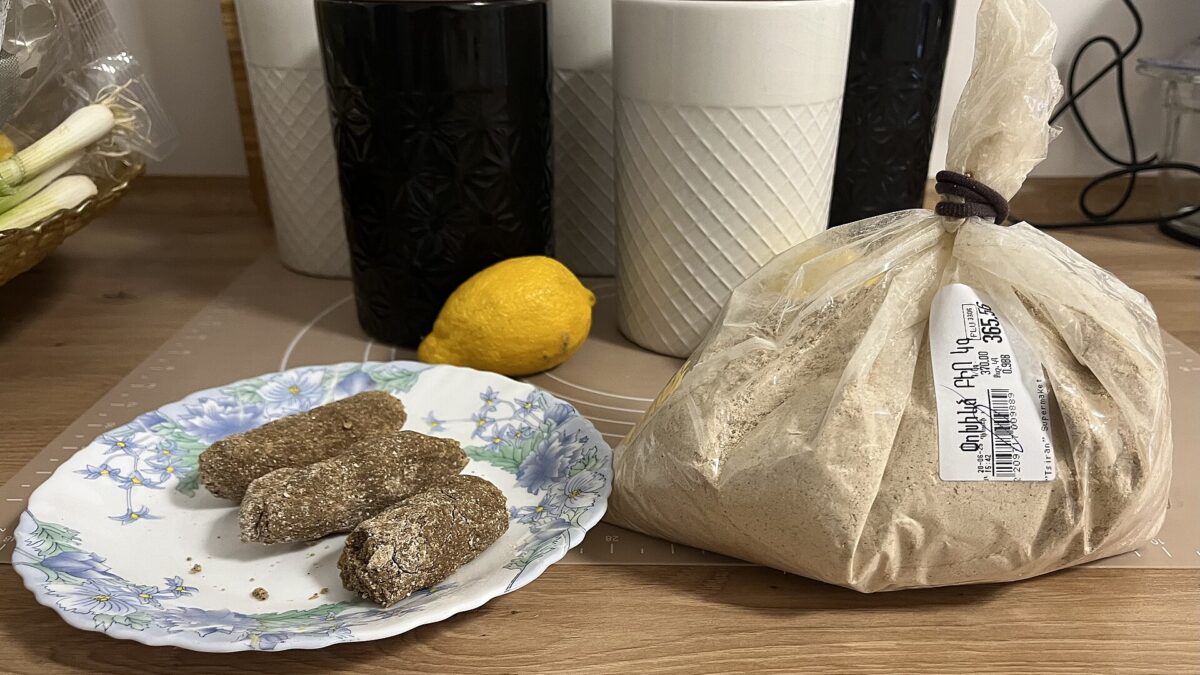
Roasting is the point. The kernels toast until brown and brittle, which cooks the starch, removes the raw-flour taste and lets the flour keep for months. It smells like toasted crust, tastes faintly sweet, and can be eaten dry by the pinch: cooked grain you could carry before anyone had a tonir. Packaged pokhindz exists (a 400 g pack from the Aror brand appears in Armenian grocery listings abroad); village-made bags are sold loose.
Khavits: the dish
Here is the distinction English sources blur. Khavits does not start with pokhindz. It starts with ordinary flour, which you roast yourself in butter until light brown, then loosen with hot sugar syrup or sweetened water, stirring until it thickens; many cooks finish with boiled milk. The nutrition site impoqrik.am (Arpi Harutyunyan, 2021) gives exactly this and ends with the rule every Armenian cook repeats: homogeneous, no lumps, so never stop stirring. Cinnamon on top is standard.
Hot, it is a spoonable paste between polenta and loose halva; cooled and pressed it cuts into squares, which is how the diaspora remembers it. Sonia Uvezian’s The Cuisine of Armenia lists it as “Khavitz, Flour Helva with Cream”: half a cup of butter, two cups of flour browned for 15 to 20 minutes, then a cup of cream with a cup of sugar dissolved in it, topped with toasted nuts. When The Armenian Kitchen blog reprinted it, reader Dorothy Arakelian noted her mother’s version had no cream, was flattened and cut into squares, and was “the fudge of that era”.
Armenian-language sources consistently describe khavits as food for a tsnndkan, a new mother: dense, easy to digest, served hot. Names overlap by region: Tavush uses “khavits” for the porridge made from pokhindz, while Shirak and Lori call that khashil. Ask what is in the pot rather than trusting the name.
Pokhindz halva and the rest of the family
| Dish | What it is | Where recorded |
|---|---|---|
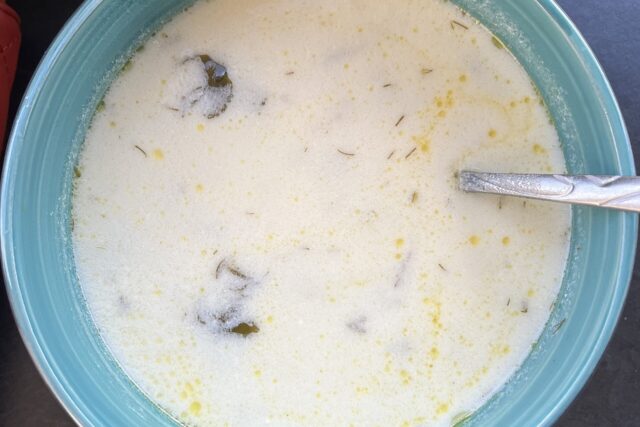
| Khashil (խաշիլ) | Pokhindz stirred into hot salted water until thick; a well of melted butter in the middle, milk poured over | Hayrenyats and Spandaryan, Artik district (Shirak); Lejan, Lori Berd (Lori); Berdavan (Tavush) |
| Pokhindz balls / shaghakh | Dry pokhindz kneaded with warm water and sugar, or honey, rolled into balls | Tumanyan community (Lori); Gyumri cooking classes |
| Dumbrak (դումբրակ) | Pokhindz and honey, hand-formed, winter only; Berdavan’s version adds jam syrup, milk and sour cream | Arevatsag, Alaverdi (Lori); Berdavan (Tavush) |
| Klondak | Pokhindz with melted butter, grape syrup or walnut-preserve syrup and walnuts, eaten cold | Older ethnographic records |
| Pokhindz halva | Market name for any pressed, sweetened pokhindz; Lori cooks enrich it with thick sour cream | Lori; Gyumri |
| Khavits (խավիծ) | Plain flour browned in butter, then syrup or milk; the postpartum dish | Nationwide |
The Tumanyan recipe is worth keeping because it has numbers: 500 g pokhindz, 200 ml boiled water cooled to warm, 100 g sugar, kneaded “until as firm as dough”, then rolled; honey instead of sugar is the older version. For where these sit on the wider sweet table, see the Armenian desserts guide.
Ritual and calendar: St Sargis, precisely
Two foods belong to St Sargis Day, and English write-ups routinely merge them.
Aghablit (աղաբլիթ), the salty cookie, is the dating ritual. On the Friday evening before the feast, unmarried young people eat a very salty biscuit, go to bed thirsty and wait to dream of whoever brings them water: that is the future spouse. The 2002 Institute of Archaeology and Ethnography volume Surb Sargis (Yerevan, eds. S. Harutyunyan and A. Kalantaryan) adds that the cup in the dream mattered: gold meant a rich spouse, silver a comfortable one, copper or clay a poor one. The church now distributes salty cookies to young people itself (AUA’s student paper, 2022).
Pokhindz is the ritual food proper, and older. The same volume states that the feast’s ritual dish is pokhindz, made two ways: shaghakh, kneaded with grape juice, honey-water or sugar-water, and pokhindz khashil eaten with butter, both found “in almost all ethnographic regions of Armenia”. The week-long Arachavorats fast before the feast was known in villages as the St Sargis fast and its last day as “khashil fast”, because khashil broke it on Friday night; eating pokhindz in the five days before was forbidden, and ritual pokhindz was roasted and ground during the fast.
Then the hoofprint. That Friday evening the eldest woman sieved pokhindz onto a tray, lit a candle beside it and set it behind the door or on the flat roof, asking the saint to strike his horse’s foot in it. St Sargis was believed to ride through every house that night on his white horse; where he accepted the offering, a hoofprint appeared in the flour. The ethnographers also record village boys pressing horseshoes into trays at night, girls leaving a morsel of kneaded pokhindz on the roof to see which house the sparrow carried it to, and elders scattering St Sargis pokhindz into the wind against summer hail, the flour standing for the blizzard the saint commands. A Western Armenian contributor to the same volume notes that Lebanese and Syrian Armenians had no salty-cookie custom at all and broke the fast with a hard halva instead.
The feast is movable: the Armenian Apostolic Church keeps it on the Saturday of the Arachavorats fast, between 18 January and 25 February. In 2026 it fell on 31 January; in 2027 it should be 23 January. By decree of Catholicos Karekin II it is also the Day of the Blessing of Youth, with a liturgy and blessing at Etchmiadzin and parish churches (Armenpress, January 2026). See Armenian public holidays and the Armenian Apostolic Church guide for context.
Regional traditions
Tavush
Tavush Media, the regional outlet in Ijevan, has covered pokhindz twice: Laura Duryan’s 2022 film on the full process, and a Berdavan recipe giving khashil as 200 to 300 g pokhindz to a liter of water, up to 5 g salt and 100 g butter, served hot with milk. Berdavan’s sweet, dumbrak, was grandmothers’ work: pokhindz, sugar, milk, sour cream.
Lori
Lori’s inventory has the most entries: khashil in Lejan, honey dumbrak in Arevatsag near Alaverdi, sugared pokhindz balls in Tumanyan. Sonia Tashjian, writing for The Armenian Kitchen, singles out the Lori habit of making the halva with thick sour cream.
Shirak and Gyumri
The Shirak inventory records pokhindz khashil in Hayrenyats and a version made with aghandz, whole roasted grain rather than flour, in Spandaryan, both in the Artik district. Gyumri treats pokhindz as a dessert and as something to teach visitors; the Smithsonian’s My Armenia project lists it with bishi and halva among the city’s sweets.
Where to taste or buy it
The honest caveat: khashil is not on Yerevan menus. It is home food, and the people most likely to make it for you are guesthouse hosts in Tavush, Lori and Shirak in winter. Ask by name: “pokhindzov khashil”. The sourced options:
- Chalet Gyumri, Gyumri (M. Khorenatsi 50/4). Karine Tumasyan’s class pairs chanakh, the clay-pot stew, with a pokhindz dessert: you grind roasted wheat in a hand stone mill, mix the flour with honey or milk, add nuts and dried fruit, and roll “ping-pong-sized balls” (My Armenia program). Absolute Armenia reports 24 hours’ notice for bookings. See the Gyumri travel guide.
- Children’s Aesthetic Center, Gyumri. Founded by Susanna Mkrtchyan in 1978 near the old central square, it runs cooking master classes that include pokhindz and halva alongside tatar-boraki and fried sorrel. Book ahead; walk-ins are not the format.
- GUM market, Yerevan (35 Movses Khorenatsi St, about 11:00 to 17:00). Ask for փոխինձ by the kilo in the dried-fruit and nut halls; stalls selling aghandz and sujukh are the likeliest. I could not confirm a specific stall, so treat it as a request, not a certainty. The Yerevan food markets guide covers the layout.
- Village shops in Lori and Tavush: ask, and expect a loose plastic bag.
- The week before St Sargis. Bakeries sell aghablit everywhere; that is also the one week pokhindz sweets turn up in town.
Make it at home
The Hayrenyats (Shirak) khashil from the heritage inventory, halved; 25 minutes.
- Boil 1 liter of water, take it off the heat, stir in half a teaspoon of salt, let it cool to hand-hot.
- Add 250 g pokhindz a spoonful at a time, stirring constantly, until it is a thick, lump-free mass.
- Return to low heat and keep stirring until it bubbles; cook 10 to 15 minutes.
- Spoon into bowls, press a hollow in each and pour in 75 g melted butter.
- Add a splash of hot milk around the edge.
- Sweet version: skip salt and butter, knead 250 g pokhindz with 100 ml warm water and 50 g honey until firm, roll into walnut-sized balls.
With only ordinary flour, make khavits: brown 2 cups of flour in half a cup of butter for 15 to 20 minutes, then stir in a cup of hot sugar syrup or sweetened milk until thick.
Practical notes
- Pokhindz keeps for months in a sealed jar, which makes it a sensible edible souvenir.
- It is wheat (or barley): not gluten-free, and neither is khavits.
- Khashil made with oil and water is a fasting dish; the butter-and-milk version is not.
Last verified: October 2026.
Verdict
Pokhindz is the clearest surviving taste of pre-bread Armenia, and khavits is the dish Armenians associate with being looked after. Neither photographs well, neither is on a tourist menu, and both are worth the detour: book the Gyumri class, or take a winter homestay in Lori or Tavush and ask for khashil at breakfast. If you are there in late January, eat the salty cookie for the story and the pokhindz for the history, and do not let anyone tell you they are the same tradition.
Frequently asked questions
What is the difference between pokhindz and khavits?
Pokhindz is a flour: wheat (sometimes barley) roasted in the kernel and then ground. Khavits is a dish: ordinary flour browned in butter in the pan and finished with syrup or milk. Porridge made from pokhindz is usually called khashil, though Tavush villages call it khavits too.
Which food is tied to St Sargis Day, the salty cookie or pokhindz?
Both, as separate customs. The salty cookie (aghablit) is the dream ritual for unmarried young people. Pokhindz is the feast’s ritual food: khashil breaks the fast, and a tray of sieved pokhindz is left behind the door or on the roof for the saint’s horse to leave a hoofprint. The 2002 Armenian Academy of Sciences volume on St Sargis documents both.
Where can I try pokhindz in Armenia?
The reliable options are cooking classes in Gyumri: Chalet Gyumri (pokhindz dessert balls alongside chanakh) and the Children’s Aesthetic Center. Otherwise ask for khashil at village guesthouses in Lori, Tavush or Shirak in winter, or buy the flour at Yerevan’s GUM market and make it yourself.
Is pokhindz gluten-free?
No. It is roasted wheat or barley flour, and both contain gluten. Khavits is made from wheat flour as well.
Featured image: Grasshalm, CC0 — via Wikimedia Commons.