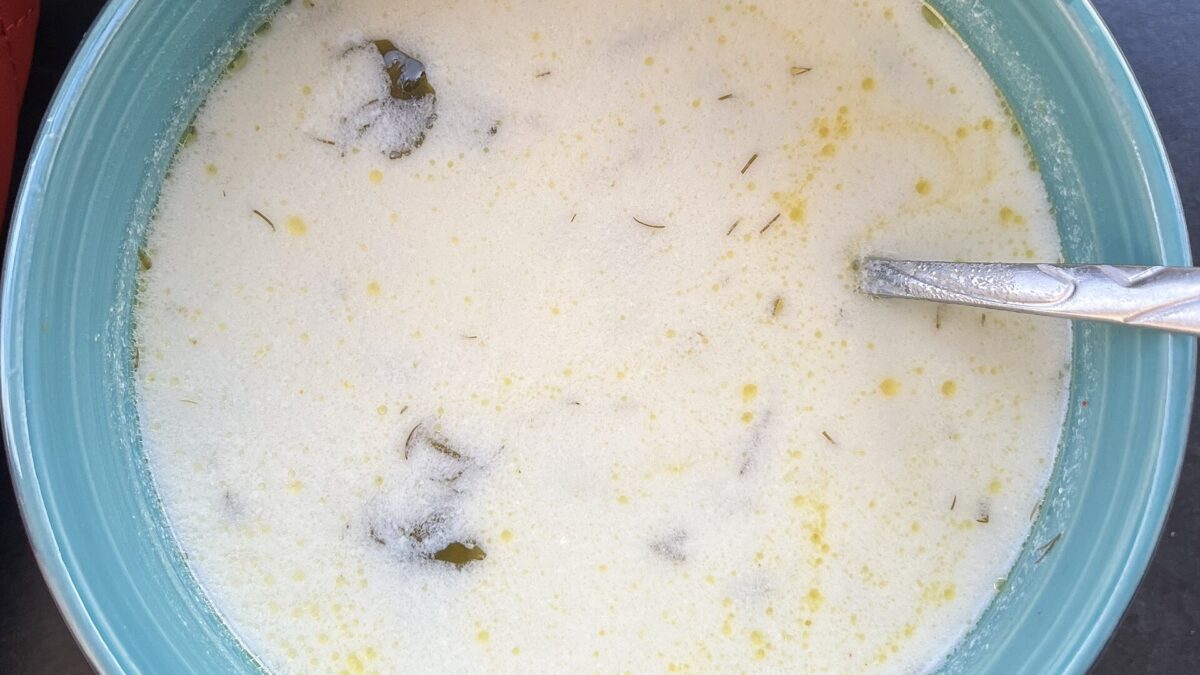
Armenian spas is a warm, tangy soup built from matsun (Armenian yogurt) and dzavar (cracked or shelled wheat groats), thickened and stabilised with a beaten egg so the yogurt doesn’t split over heat, then finished with herbs — above all dried mint. It goes by several names, most commonly tanabur (and the older tahnov abur, literally “soup made with tahn/diluted yogurt”), and it is eaten hot in winter or chilled in summer. More than a recipe, it’s Armenia’s classic settle-the-stomach comfort bowl: humble, sour-savoury, and made in home kitchens far more often than served as a restaurant showpiece.
What exactly is spas?
Spas is a yogurt-based soup, and that single fact drives everything else about it. The backbone is matsun — the cultured, mildly sour Armenian yogurt that anchors a huge part of the country’s cooking. Diluted matsun (thinned with water or with tahn, the drinkable yogurt-and-water mix) becomes the liquid; grain gives it body; egg holds it together; herbs give it its signature scent. The result sits somewhere between a thin porridge and a broth, pale and creamy, with a clean lactic tang rather than the richness of a cream soup.
The grain is what varies most from cook to cook. Traditionally it is dzavar — wheat that has been parboiled, dried and cracked or hulled, similar to what many readers know as bulgur or pearled wheat. Some households use whole shelled wheat for a chewier bite; others use short-grain rice when wheat isn’t on hand. Whatever the grain, it is usually pre-cooked until soft before it meets the yogurt, because the yogurt base itself is only gently warmed, never hard-boiled.
The core ingredients
- Matsun (yogurt): the defining ingredient; plain, live-culture yogurt, diluted to a pourable soup consistency.
- Dzavar (wheat groats): cracked or shelled wheat, pre-boiled until tender; rice is a common substitute.
- Egg: beaten and whisked into the yogurt as a stabiliser — the step that stops the soup curdling.
- Herbs: dried mint is near-universal; fresh or dried cilantro (coriander), parsley and sometimes dill are added too.
- Aromatics: onion softened in a little butter, plus salt; some cooks add a spoon of flour with the egg for extra insurance against splitting.
Why matsun sits at the centre
To understand spas you have to understand matsun, because the soup is really a vehicle for it. Matsun is Armenia’s everyday cultured yogurt, tangier and often thicker than the supermarket yogurt many travellers know, and it turns up everywhere — spooned plain alongside meals, thinned into the drink called tahn, or cooked into dishes like this one. Making spas is one of the few times matsun is deliberately heated, and doing it without breaking the yogurt is treated as a mark of a competent cook. That’s the quiet skill on display in a good bowl: not exotic ingredients, but the confidence to warm live-culture yogurt without ruining it.
It is naturally vegetarian, which is part of why it appears so often on the Armenian table. It belongs to the same meat-free “pasuts” tradition observed during Lent, alongside dishes like pasuts tolma and bean and lentil plates — a point worth knowing if you’re travelling meat-free. For more on that side of the table, see our guide to vegetarian food in Armenia.
How is spas made — and why the egg matters?
The technique that separates a good spas from a broken, grainy one is temperature control. Yogurt curdles when it is heated too fast or too hard: the proteins seize and the smooth liquid splits into watery whey and rubbery clumps. Armenian cooks solve this the same way their grandmothers did — by whisking in a raw egg (and often a little flour) to bind the proteins before any real heat goes near the pot.
A typical home method runs like this:
- Cook the dzavar or rice separately in water until tender, and set it aside.
- In a large pot, whisk the yogurt smooth, then beat in a raw egg (some add a spoonful of flour slaked in a little water) until completely uniform.
- Warm the yogurt mixture slowly over low-to-medium heat, stirring constantly in one direction and never letting it come to a hard, rolling boil — this constant motion plus the egg is what keeps it from splitting.
- Stir in the cooked grain and enough water to reach a soup consistency; season with salt.
- Soften a chopped onion in butter and stir it through, then add the herbs — dried mint most of all — near the end so their aroma stays bright.
Get those two things right — the egg going in cold and the gentle, unbroken stir — and the soup stays silky. It’s a small piece of everyday kitchen chemistry, and it explains why spas tastes reliably smooth in Armenian homes even though yogurt is notoriously temperamental over heat. Matsun’s central place here is no accident: fermented dairy runs through Armenian cooking, and spas is one of its purest expressions.
Is spas eaten hot or cold?
Both, and the season usually decides. In the cold months — and Armenian winters are genuinely cold, with Yerevan often near or below 0°C in January — spas is served piping hot as a warming, filling bowl, sometimes as a light meal in itself with bread. In summer, when the capital bakes, the same soup is chilled and served cold, closer to a savoury drinking-yogurt than a stew, which makes it refreshing rather than heavy. If you’re timing a trip around the weather, our best time to visit Armenia guide covers the seasons in detail.
This hot-or-cold flexibility is one reason spas has stayed a year-round staple rather than a seasonal one-off. The recipe barely changes; only the serving temperature does.
Why do Armenians eat spas? The comfort and health role
Ask around and you’ll hear the same thing: spas is what you eat when you want to feel better. It has a long-standing reputation as a gentle, easy-to-digest dish — the bowl people reach for to settle an upset stomach, to eat when they’re run down, or, very commonly, as a next-morning hangover remedy after a heavy night. The logic is intuitive: the yogurt is soft on the gut, the grain is filling without being greasy, and the warm, lightly sour broth is easy to get down when a richer meal would be too much.
None of this is a medical claim, and we’re not offering health advice — but the cultural role is real and consistent. Spas sits in the same emotional slot that chicken soup occupies elsewhere: nourishing, restorative, associated with being cared for at home. That reputation, more than any fancy technique, is why it endures.
Where can you try spas in Armenia?
Here’s the honest part most listicles skip: spas is primarily a home dish, not a headline restaurant plate. You are far more likely to be served it in someone’s kitchen, at a family guesthouse, or at a village homestay than to find it starring on a Yerevan tasting menu. If you stay with a host family in the regions, ask — many will happily make it, especially in winter.
That said, you can still find it out and about:
- Traditional and home-style restaurants in Yerevan and larger towns that focus on classic Armenian cooking often carry it, sometimes seasonally or on request.
- Guesthouses and homestays in Dilijan, the Lori villages, Syunik and elsewhere are the surest bet — this is exactly the kind of everyday food they cook.
- Lenten and fasting menus around religious calendars, when meat-free dishes come to the front.
Because it’s a humble everyday food rather than a premium dish, spas is inexpensive wherever you find it, and we’d steer you away from expecting a grand “spas experience” at a tourist restaurant — the best versions are the plainest, home-cooked ones. For where spas fits among the country’s better-known plates like khorovats, dolma and lavash, see our full Armenian food guide.
A quick note on names
Don’t be thrown by the different spellings on menus and in recipes. Spas, tanabur and tahnov abur all point to the same family of yogurt-and-wheat soup. Regional cooks tweak the grain, the herb balance and the thickness, so no two pots taste identical — which is part of the charm of a dish that lives in home kitchens rather than in a fixed recipe.
Spas at a glance
| Feature | Detail |
|---|---|
| Also called | Tanabur, tahnov abur |
| Base | Matsun (Armenian yogurt), diluted |
| Grain | Dzavar (cracked/shelled wheat); rice as a substitute |
| Stabiliser | Beaten egg (sometimes with a little flour) |
| Signature herb | Dried mint (plus cilantro, parsley, dill) |
| Served | Hot in winter, cold in summer |
| Diet | Vegetarian; fits the meat-free “pasuts” tradition |
| Best found | Homes, guesthouses, traditional restaurants |
Last verified: September 2026
Sources
- armenia.travel — official Armenia tourism site (Armenian cuisine and matsun-based dishes)
Frequently asked questions
What is Armenian spas soup made of?
Spas is made from matsun (Armenian yogurt) diluted to a soup consistency, dzavar (cracked or shelled wheat groats), a beaten egg to stop the yogurt curdling, and herbs — above all dried mint, plus onion softened in butter. It is naturally vegetarian.
Why do you put egg in spas?
The egg is a stabiliser. Yogurt splits into whey and clumps when heated too fast, so cooks whisk a raw egg (sometimes with a little flour) into the cold yogurt first, then warm it slowly while stirring constantly. The egg binds the proteins and keeps the soup smooth.
Is spas served hot or cold?
Both. It’s served hot in Armenia’s cold winters as a warming, filling bowl, and chilled in summer as a refreshing cold soup closer to a savoury drinking-yogurt. The recipe stays the same; only the serving temperature changes with the season.
Is spas good for an upset stomach or a hangover?
Spas has a long-standing reputation as a gentle, easy-to-digest comfort food and is a popular go-to for settling the stomach and as a next-morning hangover remedy. This is a cultural role rather than medical advice, but the soft yogurt and mild grain make it easy to eat when you’re run down.
Where can I try spas in Armenia?
Spas is mainly a home dish, so guesthouses, village homestays and family kitchens are the best places to find it, especially in winter. Some traditional home-style restaurants in Yerevan and larger towns serve it too, sometimes seasonally or on request.
What is the difference between spas, tanabur and tahnov abur?
They are different names for essentially the same yogurt-and-wheat soup. Tahnov abur means “soup made with tahn” (diluted yogurt), and tanabur is a common variant of the name. Regional cooks vary the grain, herbs and thickness, so no two versions taste exactly alike.
Featured image: Hakskdnsnsnnd, CC0 — via Wikimedia Commons.