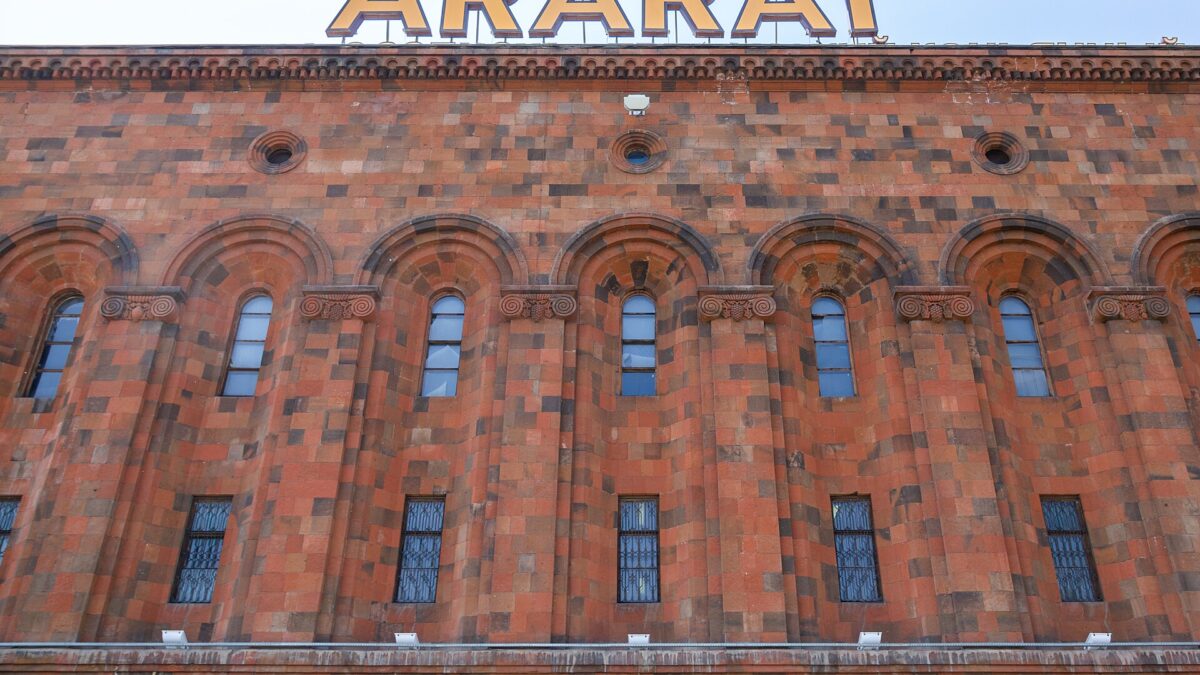
Armenian brandy is a grape spirit aged in Caucasian oak that Armenians call “cognac,” and the classic way to try it is a guided tour and tasting at the ARARAT / Yerevan Brandy Company, founded in 1887 above the Hrazdan gorge in Yerevan. Tours run about 90 minutes. Expect roughly 4,500 AMD (about $12) for a basic tasting up to around 10,000 AMD (about $27) for aged samples. Last verified: July 2026.
What is Armenian brandy, and is it actually cognac?
Armenian brandy is a distilled grape spirit, matured in oak, that locals have called “cognac” for over a century. Technically it is not cognac. Under EU and French law, only brandy made in the Cognac region of France may carry that name, so what you buy in Yerevan is labelled “brandy” for export and “cognac” (konyak) in casual Armenian speech. The style, though, was deliberately modelled on the French method.
The drink starts life close to Armenian wine, but the two diverge quickly. Where Armenian wine is fermented and bottled, brandy is distilled twice into a clear spirit, then aged for years in oak barrels that give it colour, vanilla and dried-fruit notes. The grapes come mostly from the sun-drenched Ararat valley, and the water and local Caucasian oak are part of why producers argue the result cannot be replicated elsewhere. It is bottled at a fuller strength than table wine, typically around 40 to 50 percent, so it is a spirit to sip slowly rather than a dinner pour.
Age statements matter here. A “3 Stars” is young and sharp, a 10-year Akhtamar is smoother and rounder, and 20- or 30-year expressions like Nairi and Dvin are the contemplative sipping bottles that justify the higher tasting tiers. The longer a brandy sits in oak, the softer and more caramel-and-dried-fruit it becomes, which is exactly what the extended factory tasting is designed to show you side by side. If you are mapping out where drinks fit into a trip, brandy sits alongside coffee and Areni wine in our Armenian food and drink guide.
Can you tour the ARARAT brandy factory in Yerevan?
Yes. The Yerevan Brandy Company runs guided tours of its ARARAT facility and museum, ending with a seated tasting. You walk through the history rooms, see the ageing cellars lined with oak barrels (including barrels “reserved” for world leaders and named guests), and then sit down to sample brandies of different ages with a guide talking you through each pour. The whole visit lasts roughly 90 minutes.
The tour itself is more museum than production line. You move through rooms tracing the company’s history, past shelves of vintage bottles and portraits, then down into the cool cellars where thousands of oak barrels rest in long rows. Guides make a point of the barrels dedicated to heads of state and famous visitors, a piece of theatre that lands well with the tasting still to come. It is not a working-line tour in the industrial sense, so set expectations accordingly: you are here for the history, the cellar atmosphere and the pours, not to watch distillation in action.
Tours run in several languages at set times rather than on demand, so booking ahead is essential. As of 2026, third-party operators list an English-language tour around 11:30 and a Russian tour around 15:00; times shift seasonally, so confirm when you reserve. The factory sits on Admiral Isakov Avenue on the cliff above the Hrazdan gorge, a short taxi ride west of the centre; a GG or Yandex app ride is cheap and avoids the usual taxi-tout markup. Note that the tasting is 18-plus only, though under-18s can usually still join the walking tour.
How much does the ARARAT brandy tour cost?
Price depends on which brandies you taste. Booking direct is the cheapest route; the two standard packages run roughly as follows (Last verified: July 2026):
| Package | What you taste | Approx. price |
|---|---|---|
| Basic tour + tasting | ARARAT 3 Stars + Akhtamar (10-year) | ~4,500 AMD (~$12) |
| Extended tour + tasting | Akhtamar 10-yr, Nairi 20-yr, Dvin 30-yr aged samples | ~10,000 AMD (~$27) |
Book the tour directly through the official ARARAT site for those rates. Third-party platforms bundle in hotel pickup, a city tour or a private guide, which pushes prices higher: GetYourGuide and similar operators list tasting experiences from about $29 per person and combined city-and-tasting tours from roughly $39–62. If you just want the brandy and the cellars, the direct booking is far better value. For where this fits in a wider spending plan, see our Armenia travel cost and budget guide.
The 1887 history and the Churchill legend
The distillery dates to 1887, when Armenian merchant Nerses Tairyan built the first factory on the cliff above the Hrazdan River and applied French cognac-making methods to local grapes. In 1899 the business passed to Russian industrialist Nikolay Shustov, whose brand became a supplier to the imperial court; the “ARARAT” name itself came into use around 1940 under Soviet Armenia. The company has been majority-owned by French drinks group Pernod Ricard since 1998, which is part of why the French production model still runs deep here.
Then there is the Churchill story, which every guide will tell you. The popular account: at the 1945 Yalta Conference, Stalin served Winston Churchill the aged Armenian brandy “Dvin,” Churchill loved it so much that Stalin had cases shipped to him regularly, and Churchill’s fondness supposedly helped free an exiled master-blender, Margar Sedrakyan. It is a great story, and the International Churchill Society notes the Yalta connection.
Treat the details as lore rather than settled fact. Churchill scholars have looked for the paper trail and come up short: researcher Richard Langworth found no record of shipments of Armenian brandy to Churchill at his or Stalin’s request, and the “cases sent every month” claim in particular looks embellished. That Churchill drank and enjoyed it at Yalta is plausible; the rest is a well-polished marketing legend. We would enjoy the tale over a glass of Dvin without repeating it as history.
The Sedrakyan strand deserves the same caution. The master blender was a real figure central to Dvin, but the neat story that Churchill personally intervened to end his Soviet exile has never been documented, and it fits a little too tidily with the brand’s image. None of this makes the brandy less good. It just means the factory’s version of its own past is best enjoyed as heritage storytelling, the same way you would take any distillery’s founder myths with a smile.
ARARAT vs NOY: which factory should you visit?
You will notice two brandy factories facing each other across the gorge, and the naming confuses almost everyone. Both trace back to the same Shustov-era distillery. After the Soviet collapse the operation split in two: the Yerevan Brandy Company, which owns the ARARAT brand (and went to Pernod Ricard in 1998), and the separate NOY factory next door, per Wikipedia’s factory history.
ARARAT is the internationally known name, the bigger-budget museum, and the tour most visitors mean when they say “the brandy factory.” NOY offers its own tour with wine and vodka tastings alongside the brandy, and some reviewers on Tripadvisor actually prefer its lower-key, less commercial feel. Our call: if it is your first visit and you want the classic experience with the famous aged bottles and the Churchill-barrel showmanship, do ARARAT. If you have already done ARARAT, want vodka and wine folded into the same visit, or prefer a quieter tour, NOY is the genuine alternative rather than a downgrade. Doing both back to back is possible but overkill for most trips, and the tasting fatigue is real once you have worked through several aged spirits before lunch.
Is the ARARAT brandy tour worth it?
For anyone who enjoys spirits, yes. It is one of the more substantial paid experiences in the capital, the cellars are genuinely atmospheric, and even the extended tasting at around 10,000 AMD undercuts what a comparable distillery tour costs in Western Europe. It pairs naturally with a half-day in the centre, so slot it into a wider Yerevan itinerary rather than treating it as a standalone trip.
Two honest caveats. First, if you do not drink or dislike strong spirits, the walking tour alone has limited payoff, and you cannot taste under 18. Second, the guiding leans heavily on the Churchill legend and national pride, which is charming but light on hard production detail. Go for the atmosphere, the history and the aged pours, keep a pinch of scepticism about the anecdotes, and you will have a good couple of hours. If you are still choosing between experiences, weigh it against the other options in our best things to do in Armenia roundup and the wider food and wine category.
Prices, tour times and package contents change. Last verified: July 2026 against official and third-party booking pages; reconfirm on the day.
Featured image: Vyacheslav Argenberg (CC BY 4.0) via Wikimedia Commons