Yerevan’s food markets — led by the covered GUM Market near the city centre — are where you buy Armenia’s dried apricots, figs and peaches, walnuts, spices, local cheeses, honey, pickles and the walnut-and-grape-must sweet called sujukh. They are cash-only in Armenian dram, vendors hand out samples freely, and friendly bargaining is expected. GUM is the big one; several smaller covered halls and farmers’ markets fill in around the city.
If you have already read our Armenian food guide and worked out what to eat, the markets are the next stop — this is where the raw ingredients, the edible souvenirs and the best prices live. Below is how each market works, what to buy, how sampling and bargaining actually go, and what you can realistically carry home.
What is GUM Market and where is it?
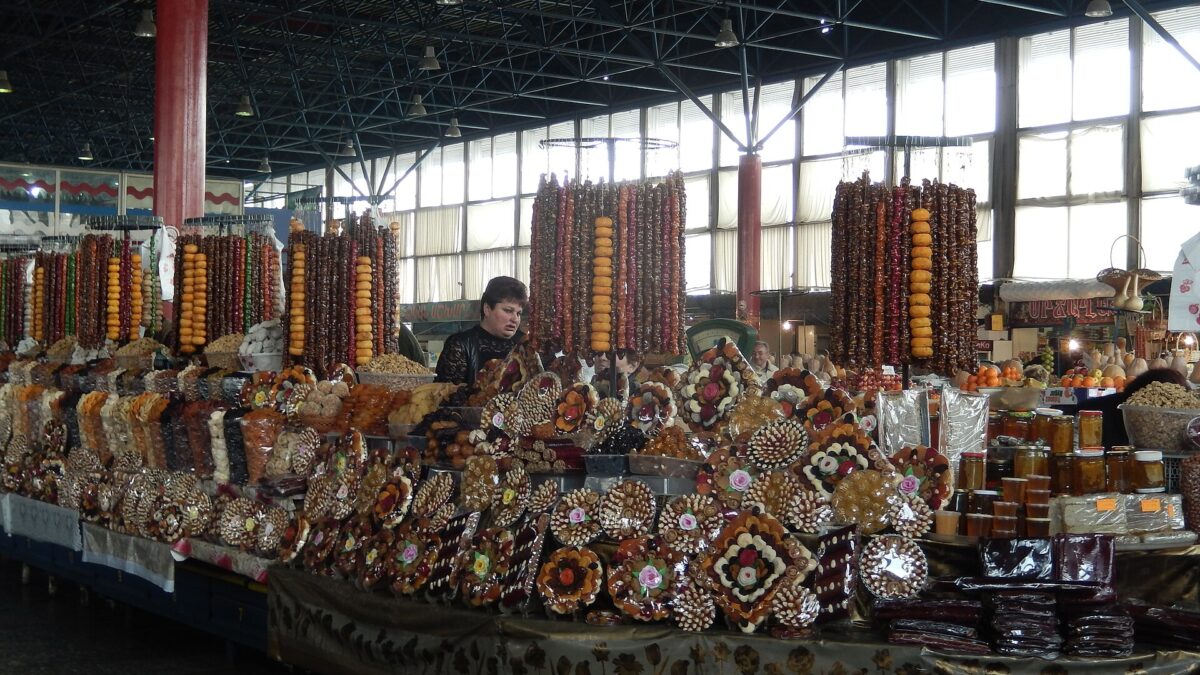
GUM Market (Armenians say “GUM shuka”) is Yerevan’s main covered food market: a large hall packed with produce stalls, dried-fruit and nut mountains, cheese counters, spice sellers, honey, pickles and fresh herbs. It sits in the centre on Movses Khorenatsi Street, a short walk from Tigran Mets Avenue and roughly 15 minutes on foot from Republic Square. Confirm the exact spot on a map before you go, as street names in the area are easy to confuse.
Inside, the layout is roughly by category. The front and central aisles are the visual set-piece: waist-high pyramids of dried apricots, sun-dried and sugared figs, dried peaches and plums, glossy walnut halves, raisins, and ropes of sujukh and churchkhela hanging like candles from the stalls. Deeper in you find cheese vendors, jars of honey and pickled vegetables, sacks of spices and dried herbs, and a fresh-produce section with seasonal fruit and greens.
The smaller covered halls and farmers’ markets
GUM is not the only option. Yerevan has other covered and open markets worth knowing:
- Pak Shuka — the historic covered market hall on Mashtots Avenue, an architectural landmark. Its interior use has changed over the years, so treat it as a look-and-maybe-buy stop rather than a guaranteed full market, and check its current state locally.
- Neighbourhood and farmers’ markets — smaller produce markets sit near residential districts and transport hubs (for example around the Kilikia and Komitas areas). These are less touristy, more about daily shopping, and good for fresh fruit and vegetables at local prices.
- Supermarkets and specialist shops — for a quick, fixed-price version of the same dried fruit and sweets, chains and dedicated souvenir-food shops around the centre sell packaged sets. You pay more and miss the theatre, but it is fast and card-friendly.
For a wider read on the capital’s neighbourhoods and how the market fits into a day of sightseeing, see our Yerevan travel guide.
What should you buy at Yerevan’s food markets?
The market’s specialities are the things Armenia does exceptionally well and that travel home reasonably well:
- Dried apricots — the signature buy. Apricot is a national fruit and the dried version ranges from bright-orange sulphured pieces to darker, chewier sun-dried ones. Taste both; the darker, uglier ones are often the more intense.
- Other dried fruit and fruit leather — figs, peaches, plums, persimmon, and sheets of tangy fruit leather (t’tu lavash).
- Walnuts and other nuts — sold shelled or in the shell, by weight.
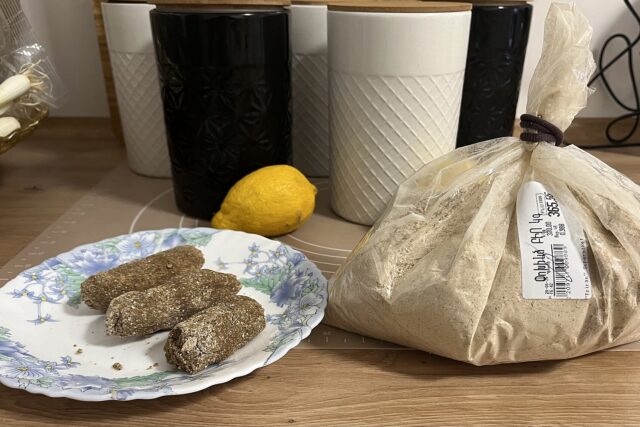
- Sujukh (sweet sujukh) and churchkhela — strings of walnuts dipped repeatedly in thickened grape must until they set into a firm, chewy sweet. This is the dessert version and is completely different from the spiced cured meat also called sujuk. If you want the full story of how it is made, we cover it in the food guide.
- Local cheeses — brined string cheese (chechil), lori, motal and herbed cheeses. Vendors will cut a sliver to taste.
- Spices and dried herbs — from local blends to saffron-coloured mixes; buy small amounts and smell before you commit.
- Honey, pickles and preserves — mountain honey, pickled vegetables (tourshi) and fruit preserves in jars.
Pair a market visit with an Areni wine tasting elsewhere in the country and you have covered most of Armenia’s edible identity in two stops.
How do you buy — weight, prices and cash?
Almost everything at the market is sold by weight, per kilogram. Point at what you want, say how much (half a kilo, “kes kilo”, is a common ask), and the vendor weighs and bags it. There are no fixed printed prices on most stalls, which is exactly why sampling and a quick price question matter.
Bring cash in Armenian dram. Card readers are rare at market stalls even though Yerevan is otherwise card-friendly, and the roughly 370–400 AMD to the US dollar exchange rate (2026, treat as approximate) means small notes are handy. There are ATMs and exchange offices around the centre if you run short.
On price: expect ranges, not fixed tags. Premium dried apricots, good walnuts and quality sujukh sit at the higher end of the dried-goods scale, while raisins and bulk nuts are cheaper per kilo. We deliberately do not quote per-stall prices here because they move with season, quality and how well you negotiate — ask two or three sellers and you will quickly learn the going rate on the day. For how market spending fits a wider trip, see our Armenia budget guide.
Sampling and bargaining etiquette
Sampling is part of the culture, not a favour you are extracting. Vendors will offer you a dried apricot, a piece of fruit leather, a sliver of cheese or a bite of sujukh, and it is normal to try before buying. A few unwritten rules:
- Taste, then buy from the person who let you taste — grazing the whole aisle and buying nothing is poor form.
- Bargaining is expected but gentle — this is not a hard-haggle bazaar. Ask the price, offer a little less or ask for a round-number deal on a larger quantity, and settle with a smile. Buying more usually earns a better per-kilo rate.
- Be friendly and unhurried — a few words of Armenian help; “barev” (hello) and “shnorhakalut’yun” (thank you) go a long way.
- Check the weight and the bag — confirm the total before you hand over cash, and ask for vacuum-sealing on cheese or dried fruit if you plan to fly home.
When is the best time to go?
Go in the morning for the fullest stalls, the freshest produce and the calmest atmosphere; by late afternoon some sellers thin out. Markets are busiest and most abundant in autumn (September–October), when the harvest, fresh walnuts and new-season sujukh arrive — which also happens to be the best all-round month to visit Armenia. Weekends are livelier and more crowded than weekdays. The covered halls stay open year-round and are a good rainy-day or hot-afternoon stop since they are shaded indoors.
Can you take dried fruit, sujukh and cheese home?
Dried fruit, nuts, sujukh and churchkhela are the most travel-friendly souvenirs: shelf-stable, light and hard to damage. That said, food import rules are set by your destination country, not Armenia, and they vary a lot:
- Dried fruit and nuts — usually allowed in reasonable personal quantities, but some countries (Australia, New Zealand, the US) require declaration and may restrict certain items. Declare food if in doubt.
- Cheese and any meat products (including meat sujuk) — often restricted or banned, especially into the EU, UK, US and Australia. Do not assume cheese will clear customs.
- Fresh fruit, honey and plant material — frequently controlled; check before buying to carry home.
Always check your own country’s customs and biosecurity rules before you buy edible souvenirs, and keep quantities to genuine personal use. When unsure, declare it at the border — declaring costs nothing; failing to declare can mean fines.
Practical tips before you go
- Bring a reusable bag or two for your haul; you will buy more than you planned.
- Carry small dram notes — vendors do not always have change for large bills.
- Buy cheese and vacuum-sealable items last, on the day you leave the city, if you can.
- Set a rough budget and a couple of target items so the abundance does not overwhelm you.
- Photograph respectfully — most vendors are happy for a photo, but ask first.
Last verified: September 2026. Prices, opening patterns and exchange rates are approximate and change — reconfirm on the ground.
Sources
- armenia.travel — official tourism portal of Armenia (food, markets and destination information)
- Your destination country’s official customs / biosecurity authority — for current food import rules (check before buying edible souvenirs)
Frequently asked questions
Where is GUM Market in Yerevan?
GUM Market is in central Yerevan on Movses Khorenatsi Street, near Tigran Mets Avenue and about a 15-minute walk from Republic Square. It is the city’s main covered food market. Confirm the exact location on a map before you set out, as nearby street names are easy to mix up.
Do I need cash at Yerevan's food markets?
Yes. Bring cash in Armenian dram (AMD). Most market stalls do not take cards even though Yerevan is otherwise card-friendly. The exchange rate in 2026 is roughly 370–400 AMD to the US dollar (approximate), and small notes are useful because vendors may lack change for large bills.
Is bargaining expected at Armenian markets?
Yes, but gently. This is not a hard-haggle bazaar. Ask the price, try a sample, and either offer a little less or ask for a round-number deal on a larger quantity. Buying more usually earns a better per-kilo rate. Keep it friendly and buy from the vendor who let you taste.
What is the difference between sweet sujukh and meat sujuk?
Sweet sujukh (and churchkhela) is a dessert: strings of walnuts dipped repeatedly in thickened grape must until firm and chewy. Meat sujuk is a separate spiced, cured sausage. They share a similar-sounding name but are entirely different products — at the market you want the sweet, walnut version.
Can I take dried fruit and cheese home from Armenia?
Dried fruit, nuts, sujukh and churchkhela are shelf-stable and usually travel well, though some countries require you to declare them. Cheese and any meat products (including meat sujuk) are often restricted or banned into the EU, UK, US and Australia. Check your own country’s customs rules before buying, keep to personal quantities, and declare food if unsure.
When is the best time to visit the markets?
Go in the morning for the fullest stalls and freshest produce. Autumn (September–October) is peak season, when the harvest, fresh walnuts and new-season sujukh arrive. The covered halls open year-round and make a good rainy-day or hot-afternoon stop.
Featured image: Armineaghayan, CC BY-SA 4.0 — via Wikimedia Commons.