The Armenian desserts worth seeking out are gata (a buttery, crumb-filled coffee cake), churchkhela or “sweet sujukh” (walnuts threaded on string and dipped in thickened grape juice), pakhlava (the local baklava), alani (dried peaches stuffed with sugared walnuts), and the country’s famous dried apricots and fruit leather. Most are sold cheaply at bakeries and Yerevan’s markets rather than in fancy dessert shops. This is a practical, research-led rundown of what each sweet actually is, which ones reward a detour, and where to buy them.
Armenian sweets lean on three ingredients the country grows or makes in abundance: walnuts, grapes, and fruit dried under a hot summer sun. That is why so many of them are variations on the same idea rather than the cream-heavy cakes you might expect. Pair them with an Armenian coffee, and you have the standard end to a meal. For the savoury side of the table, see our full Armenian food guide.
What are traditional Armenian desserts?
Traditional Armenian desserts are mostly pastries and preserved fruit rather than iced cakes. The core group is gata, pakhlava, nazook, churchkhela/sweet sujukh, alani, halva, gozinakh-style nut brittle, and a wide range of dried fruit. Several are tied to the calendar: churchkhela and alani are made at the September grape and fruit harvest, while spiced rice pudding (anush apur) appears at Christmas, garnished with dried fruit and nuts, per armenia.travel.
None of these are especially sweet by Western standards. Honey, grape must, and fruit do the sweetening; refined sugar and chocolate barely feature. If you arrive expecting dense chocolate desserts, adjust your expectations. The pleasure here is nuttier and more restrained. A useful mental model: many Armenian sweets began as ways to preserve a bumper harvest, so texture is often chewy, dry or brittle rather than soft and creamy. That is a feature, not a flaw. It also means most of them keep for weeks and survive a suitcase, which is why they make better souvenirs than the fresh cakes in a Yerevan patisserie window.
What is gata, and where is the best one?
Gata is a rich, slightly sweet pastry, somewhere between a coffee cake and a filled bread. A buttery dough is wrapped around a crumbly filling called khoriz, made from flour, butter, sugar and sometimes yogurt or a splash of cognac, then baked until golden and often scored with a decorative pattern on top. It is the Armenian sweet you will meet most often, sold at bakeries, roadside stalls, and every monastery car park.
Here is the editorial call worth making: the gata sold at Garni and Geghard is the one to buy. Geghard village is where the pastry’s popularity took root alongside the monastery, and local bakers use milk from their own farms, which gives it a taste distinct from the mass-produced version, according to armenia.travel. Women sell fresh rounds from tables right outside Geghard. Buy one warm, eat it in the car, and skip the vacuum-packed supermarket kind if you can.
A close relative is nazook (nazuk), which layers flaky dough with a butter-sugar-flour-vanilla filling, usually with walnut, rolled into a swirl. Iranian-Armenian bakers in the south favour the walnut-heavy style, as Tasting Table notes. Treat gata and nazook as cousins; if you like one, try the other.
What is churchkhela (sweet sujukh)?
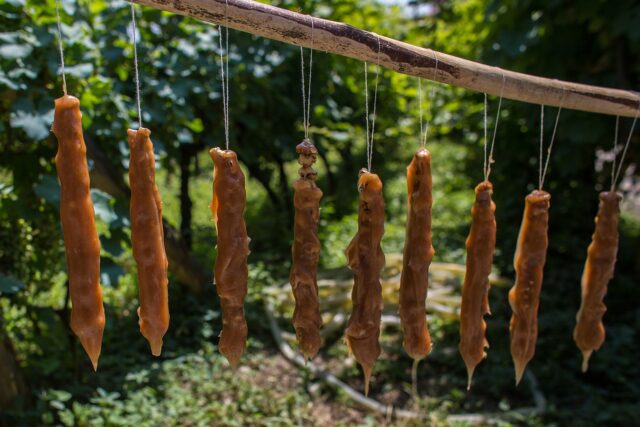
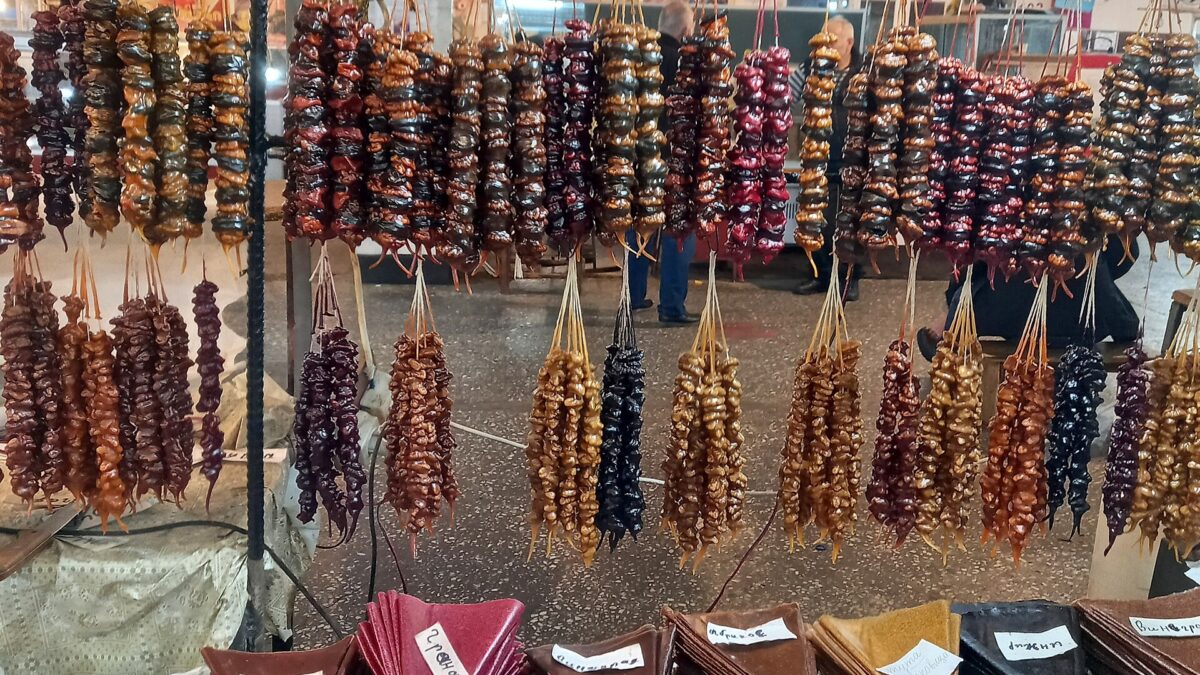
Churchkhela, known in Armenia as sweet sujukh or sharots, is a candle-shaped sweet made by threading shelled walnuts onto a string and repeatedly dipping them into grape (or mulberry) juice that has been thickened with flour, then drying the result for up to two weeks. The finished piece is chewy, mildly sweet, and studded with whole nuts. Locals call it “Armenian Snickers,” but manage that expectation: it is chewy and fruity, not chocolatey, and the texture surprises first-timers.
Two things worth knowing. First, do not confuse it with meat sujuk, a spiced dry sausage; the sweet version shares only the name. Second, it is genuinely handmade and seasonal, dipped three to five times over several hours during the autumn harvest before its two-week air-dry, as described in Absolute Armenia’s recipe. The best strings come from the markets around September and October. It travels well and makes a sturdy souvenir.
What is pakhlava, halva and Armenian nut brittle?
Armenian pakhlava (paklava) is the regional take on baklava: thin phyllo layered with chopped walnuts or pistachios and sweetened with honey or fragrant syrup. The Gavar area, near Lake Sevan, is singled out for a well-known version by armenia.travel. It is denser and less syrup-soaked than some Middle Eastern styles.
Halva is a dense sweet paste built from ground sesame or wheat flour with sugar, nuts and spices, cut into blocks and sold by weight. Gozinakh, a glossy honey-and-walnut brittle cut into diamonds, is shared across the Caucasus and served especially around New Year and Christmas, per Wikipedia. You will also see sari burma, nutty honey-soaked coils made from finely shredded kadaif (kataifi) dough, most often at Western Armenian restaurants, and ponchik, a sugar-dusted filled doughnut that Armenian children adore and that turns up at street kiosks across the country. Of this group, pakhlava travels best and is the safest crowd-pleaser to bring home; halva and gozinakh are worth a taste at the counter but are intense, so buy small.
What is alani and the Armenian dried-fruit tradition?
Alani are sun-dried, pitted fruit, classically peaches, hand-stuffed with crushed walnuts blended with sugar, cinnamon and cardamom, as detailed on Wikipedia. Figs, plums, apricots, persimmons and prunes get the same treatment. They are one of the most distinctive things you can bring home.
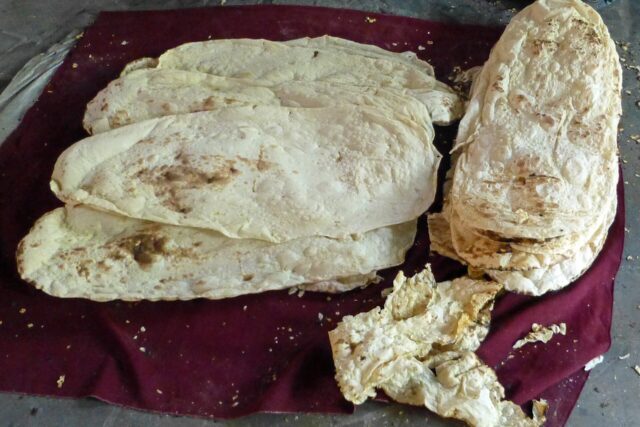
Dried fruit is arguably the real Armenian sweet tradition. The country’s apricots are a point of national pride, and the summer harvest is preserved every way imaginable: dried into chir, pulped and spread into fruit leather called ttu lavash (t’tu lavash), boiled into kompot drinks, or set in syrup as murabba, as armenia.travel explains. Stalls piled with amber apricots, dark prunes and walnut-stuffed figs are a Yerevan sight in their own right, and vendors will hand you slivers to taste as you browse. Add local honey, sold in jars at the same markets, and you have a spread that predates every bakery in town. If you buy dried fruit to take home, favour the plainer sun-dried apricots and figs over the brightly coloured candied kind; the natural ones are darker and less photogenic but taste far more of the fruit.
Where can you buy Armenian sweets?
The single best stop is the GUM Market in Yerevan, at 35 Movses Khorenatsi Street, behind Saint Gregory the Illuminator Cathedral. Its front hall holds the capital’s largest spread of dried and candied fruit, nuts, spices and sujukh; the market runs roughly 11:00 to 17:00 daily, and the nearest metro is Zoravar Andranik, per Wander-Lush. Vendors expect you to taste before buying, so sample a slice of alani and a bite of sujukh before committing. A metro ride to get there is 100 AMD.
Beyond GUM, ordinary bakeries and supermarkets across Yerevan sell gata, nazook and pakhlava daily, and the stalls outside Geghard and Garni are the place for fresh, farm-milk gata. A slice of gata or a doughnut is an inexpensive snack; expect to spend only a few hundred to a few thousand AMD, in the same range as the 500 to 1,000 AMD you would pay for a coffee. Dried fruit, alani and churchkhela are sold by weight, so buy a small amount first. Last verified: July 2026 (prices are approximate and can change).
Most of these sweets happen to be meat-free, which makes them easy travel snacks; for the wider picture see our guide to vegetarian food in Armenia. If we had to pick three to try in one trip: farm-fresh gata at Geghard, a string of sweet sujukh from GUM Market, and a handful of Armenian apricots. Those three cover the whole logic of Armenian sweets, walnuts, grapes and dried fruit, in three bites.
Featured image: Helen Owl (CC BY-SA 4.0) via Wikimedia Commons