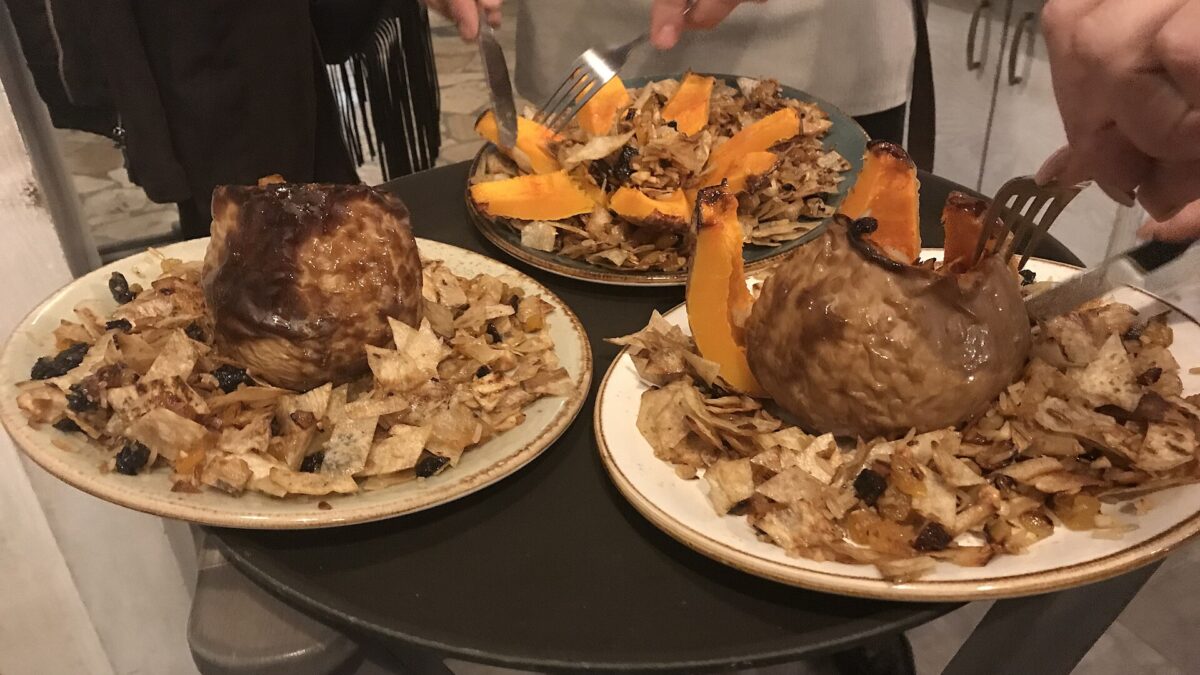
Ghapama is a whole pumpkin hollowed out, packed with rice, dried fruit (apricots, raisins, prunes), chopped nuts, honey and cinnamon, then baked until the shell is soft and the filling is fragrant. It is carried to the table whole and cut open in front of everyone, so the first thing guests see is steam and a mound of spiced rice spilling out. Armenians treat it as a celebration dish rather than everyday food, and it is closely tied to a much-loved folk song, “Hey Jan Ghapama,” that is sung at weddings and gatherings.
If you are planning your eating around the seasons, ghapama is autumn food by nature: it needs a good hard pumpkin, so it comes into its own from late September onward and through the New Year and holiday stretch. Here is what it actually is, why it matters, and the realistic ways a visitor gets to eat it.
What is ghapama?
Ghapama (ղապամա) is a stuffed and baked pumpkin. A whole pumpkin is cut open at the top, the seeds and stringy centre are scooped out, and the cavity is filled, most classically, with rice mixed with dried fruit and nuts, sweetened with honey and warmed with cinnamon. The lid goes back on and the whole thing bakes slowly until the flesh is tender enough to eat with a spoon straight from the shell.
Traditionally the baking happened in a tonir, the sunken clay oven Armenians also use for lavash, which surrounds the pumpkin with even, radiant heat. A modern home or restaurant oven does the same job, and the long, gentle bake is the point either way: rush it and the pumpkin walls stay firm instead of turning spoonable.
The dish is essentially a self-contained oven and serving bowl in one. As it bakes, the rice absorbs moisture and sweetness from the pumpkin walls, and the dried fruit plumps up. When it is brought out and the top is lifted, the pumpkin is sliced into wedges so each person gets both the soft orange flesh and a scoop of the filling. That theatrical open-at-the-table moment is a big part of why it turns up at feasts rather than weeknight dinners.
What goes inside
The filling is where households differ, but the festive sweet version is the one most travellers will meet. Typical components:
- Rice — the base, sometimes par-cooked before it goes in.
- Dried fruit — apricots (Armenia’s signature fruit), raisins and prunes are standard; some cooks add dried figs or cornel.
- Nuts — walnuts and almonds are common.
- Honey and cinnamon — the sweet, warming backbone; some cooks also add a little butter.
The result sits somewhere between a main and a dessert. It is naturally meat-free in this form, which matters if you keep a vegetarian diet — see our guide to vegetarian food in Armenia for how the meat-free “pasuts” tradition works more broadly.
Sweet version vs savoury version
There isn’t one fixed recipe. The most widely served ghapama is the sweet, dessert-leaning one described above. But savoury versions exist too, where the pumpkin is filled with rice and meat (or a mix of rice, meat and less sugar) to make it more of a main course. Some families sit in between, keeping the dried fruit but cutting the honey back so it reads as a side dish rather than a pudding.
For a visitor, the practical takeaway is simple: ask what is in it. If you want the celebratory sweet one, say so; if you would rather have it as a savoury main, that version is out there but less common on restaurant menus.
Is ghapama the national dish of Armenia?
You will see ghapama called “the national dish,” and it is genuinely beloved, but that label oversells its place at the table. The everyday favourite is khorovats (Armenian barbecue), and staples like lavash, dolma and various soups appear far more often in daily life. Ghapama is a festive, occasion dish — something made for a wedding, a holiday table or New Year, not a Tuesday dinner.
That distinction is worth keeping straight. Ghapama’s fame rests less on how often people eat it and more on its role at celebrations and, above all, on the song attached to it.
How it differs from dolma and other stuffed dishes
Armenian cuisine is full of stuffed things, so it helps to place ghapama among them. Dolma (or tolma) wraps a rice-and-herb, often meat, filling in grape or cabbage leaves, or packs it into small vegetables like peppers and tomatoes; portions are individual and it is an everyday dish. Ghapama flips the scale: one large pumpkin is the vessel, the filling leans sweet with fruit and honey rather than savoury and herby, and the whole thing is meant to be opened and shared at once. Where dolma is a plate of neat parcels, ghapama is a centrepiece.
The song: “Hey Jan Ghapama”
Part of the reason nearly every Armenian knows ghapama is a joyful folk song usually known as “Hey Jan Ghapama.” It is a celebration and wedding song built around the dish: the lyrics call the members of the family — relatives arriving one after another — to gather round and share the ghapama. The repeated, sing-along refrain of “hey jan, hey jan, ghapama” turns the food into the centre of a communal moment.
The song’s whole point is togetherness. It frames ghapama as the thing that brings the extended family to one table, which is exactly how the dish functions at real celebrations. If you attend an Armenian wedding or a big holiday meal and a stuffed pumpkin appears, do not be surprised if the song appears with it.
When and where can you try ghapama?
Ghapama is easier to read about than to stumble upon, because it is seasonal and occasion-driven rather than a menu regular. Here is the honest picture for a traveller:
- Season: autumn into winter. Pumpkins are ready from around late September, and the dish is especially associated with the New Year and holiday period. Visiting in autumn — widely considered Armenia’s best travel window — gives you the best odds. See our best time to visit Armenia guide for the wider seasonal case.
- Restaurants: traditional Armenian restaurants in Yerevan that lean into national cuisine are your most reliable bet, particularly in autumn and around the holidays. Because a whole pumpkin takes time to bake, some places make it to order or on set days — it is worth calling ahead or asking rather than expecting it on demand.
- On request / pre-order: at family-style and village-style venues you can sometimes order ghapama in advance for a group, which suits the way the dish is meant to be shared.
- Festivals and celebrations: harvest-season and food events, weddings and holiday tables are where ghapama most naturally appears, often alongside the song.
If you want to build a food-focused trip around dishes like this, pair it with our wider Armenian food guide and, for the sweet end of the table, our Armenian desserts guide. Ghapama sits comfortably between the two.
A note on eating it
Because it is served in the shell, ghapama is a sharing dish by design — order it for a table, not as a solo plate. Take some of the soft pumpkin flesh along with the rice filling in each spoonful; that combination of mild squash, sweet fruit and warm spice is the whole idea. And if you are on the fence about the sweetness, it pairs surprisingly well with the crisp, dry indigenous wines around Areni; our Armenian wine guide covers what to look for.
Why ghapama is worth seeking out
Plenty of stuffed-vegetable dishes exist across the region, but ghapama’s mix of a whole baked pumpkin, a fruit-and-nut rice filling, a cut-open-at-the-table ritual and its own famous song makes it distinctly Armenian and distinctly festive. It rewards a bit of planning: come in autumn, eat it with a group, and treat it as the celebration food it is rather than a quick lunch. Do that and you get not just a good meal but a small window into how Armenians gather.
Sources
- Armenia Travel (armenia.travel) — official national tourism portal, Armenian cuisine and culture.
Last verified: September 2026
Frequently asked questions
What is ghapama made of?
A whole pumpkin is hollowed out and filled, most classically, with rice, dried fruit (apricots, raisins, prunes), chopped nuts, honey and cinnamon, then baked whole until the flesh is soft. The lid goes back on for baking, and the pumpkin is cut open at the table and shared.
Is ghapama sweet or savoury?
Both versions exist. The best-known festive ghapama is sweet and dessert-like, built on honey, cinnamon and dried fruit. Savoury versions swap in meat and cut the sugar to make it more of a main course, but those are less common on restaurant menus.
Is ghapama vegetarian?
The classic sweet version, rice with dried fruit and nuts, contains no meat, so it fits a vegetarian diet. Savoury versions can include meat, so ask what is in it before ordering if that matters to you.
What is the song 'Hey Jan Ghapama' about?
It is a joyful Armenian folk and celebration song built around the dish. The lyrics call the members of the family to gather and share the ghapama, with a sing-along refrain, framing the food as the centre of a communal, festive moment.
Is ghapama the national dish of Armenia?
It is often called that, but it is more accurately a beloved festive dish rather than an everyday staple. Khorovats (Armenian barbecue) and everyday items like lavash and dolma feature far more often in daily life.
When and where can I try ghapama in Armenia?
It is seasonal, at its best in autumn and around the New Year and holidays when pumpkins are ready. Traditional Armenian restaurants in Yerevan are the most reliable option, often made to order or by pre-arrangement, and it also appears at weddings, holiday tables and harvest-season events.
Featured image: Benoît Prieur, CC0 — via Wikimedia Commons.