A traditional Armenian breakfast is savoury, not sweet. Instead of cereal or pastries, the morning table is a spread you assemble yourself: soft flatbread (lavash), a plate of local cheeses, a bunch of fresh herbs, sliced tomatoes and cucumbers, butter with honey, and a bowl of matsun (thick soured yogurt). Eggs often join in, and Armenian coffee closes the meal. On winter weekends, a small but devoted crowd swaps all of this for khash, a hearty broth eaten at dawn.
If you are staying in a guesthouse, breakfast is frequently the best meal of the day. Below is what actually lands on the table, region by region and cafe by cafe, so you know what to expect and what to ask for.
What does a typical Armenian breakfast look like?
Think of it as a build-your-own plate rather than a single dish. You tear off a piece of lavash, add cheese and greens, maybe a slice of tomato, and eat it by hand. Nothing is fried into a fixed “breakfast plate” the way it is in the UK or US. The components rotate with the season and the household, but the core stays remarkably consistent from a village kitchen to a Yerevan cafe.
The usual elements:
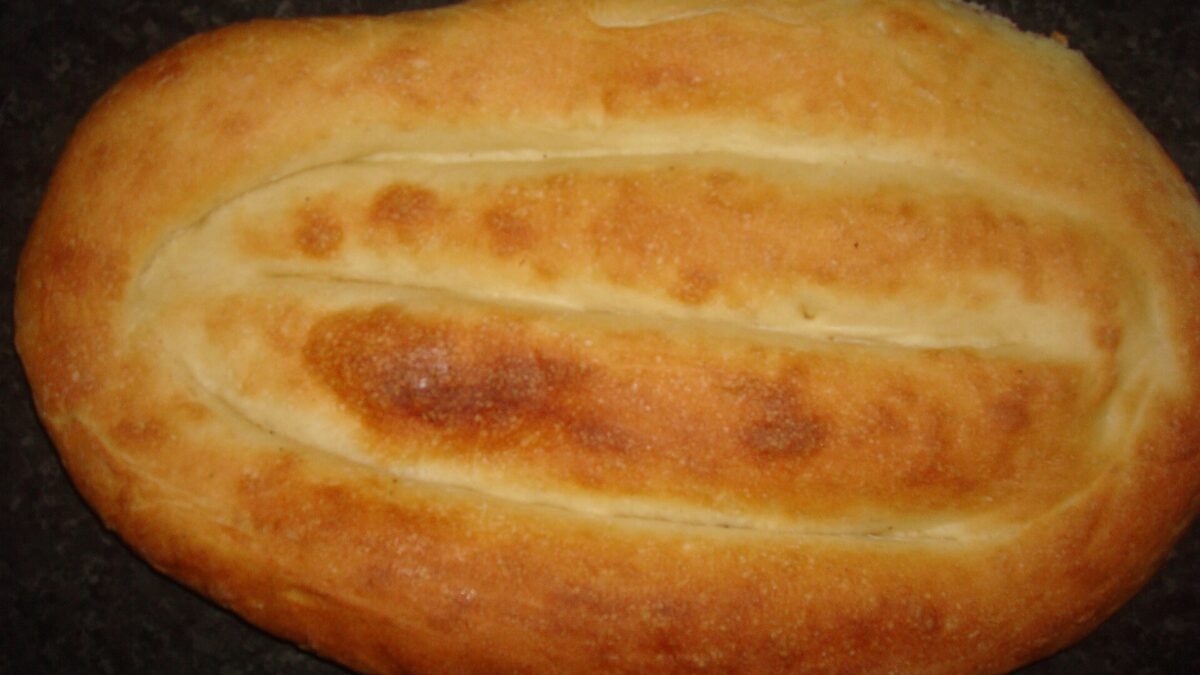
- Lavash — the thin, soft tonir-baked flatbread that anchors almost every Armenian meal. It was added to UNESCO’s list of intangible cultural heritage in 2014, and at breakfast it doubles as plate, wrap and utensil.
- Cheese — commonly a firm brined chanakh, the milder lori, or pull-apart string cheese (chechil), sometimes sprinkled with nigella seeds.
- Fresh herbs — a whole bundle of them: tarragon, basil, cilantro, dill, green onion. Armenians eat herbs raw, by the handful, wrapped in lavash with cheese.
- Vegetables — sliced tomatoes and cucumbers, olives, sometimes pickles (tourshi).
- Matsun — a tangy, cultured yogurt eaten plain or with honey. It is a fixture of the Armenian table and turns up at breakfast constantly.
- Butter and honey — plus homemade jams and fruit preserves (apricot, sour cherry, fig, even walnut) spooned over bread.
- Eggs — most often fried with tomato (a dish locals call pomidori dzu, literally “tomato eggs”) or as a simple omelette.
- Cured meats — on a fuller table you may find basturma (air-dried cured beef coated in a spiced paste) or sujuk (a dense, spiced sausage), sliced thin.
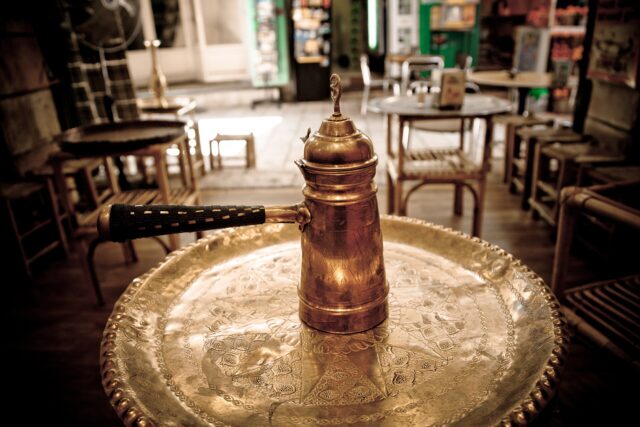
To finish, most people drink Armenian coffee — strong, unfiltered, brewed in a small pot and served in a demitasse. Tea is common too, and in summer a glass of tan (matsun thinned with water and salt) is poured alongside.
Village spreads vs Yerevan cafes
In a village or a family guesthouse, the spread leans homemade: cheese from the household’s own milk, matsun cultured in the kitchen, preserves put up the previous autumn, herbs cut that morning, and warm lavash. It is generous and unhurried, and it is where you will taste the difference between mass-market cheese and the real thing.
In Yerevan, the same savoury logic underpins a modern cafe brunch, but the presentation shifts. You will see plated cheese boards, shakshuka-style eggs, granola and pancakes appearing on menus aimed at a younger crowd and visitors, alongside the traditional herb-and-cheese plate. If you want the authentic version in the capital, look for cafes that specifically advertise a “village” or “traditional” breakfast rather than a Western brunch menu.
What is khash, and why do Armenians eat it for breakfast?
Khash is the most storied Armenian breakfast of all, and it is nothing like the light herb-and-cheese table. It is a rich, cloudy broth made by slowly simmering cow’s feet (and sometimes tripe) for many hours until the liquid turns gelatinous. It is served plain and unsalted; you season it yourself at the table.
What makes khash a ritual rather than just a soup is how and when it is eaten:
- It is a winter food, eaten roughly from November to April. The old logic is that the heavy, warming broth suits cold months, and it was historically a peasant dish using the animal parts nothing else wanted.
- It is eaten early — often at or before dawn, on a weekend, as the centrepiece of a long, social morning.
- It comes with a fixed cast: mounds of dried lavash to crumble into the bowl, a great deal of raw garlic mashed into the broth, salt, and radishes or fresh herbs on the side.
- Vodka is part of the tradition, poured in toasts throughout the meal, even at breakfast. Khash is as much a bonding session among friends and family as it is a meal.
Be honest with yourself before you sign up: khash is an acquired taste, and its aroma and texture are not for everyone. But being invited to a khash morning is a genuine window into Armenian social life, and worth saying yes to if the chance comes up in winter.
Where do travellers get a real Armenian breakfast?
Your setting matters more than any single dish. Here is where the good mornings happen:
- Guesthouses and homestays — the single best bet. Family-run stays in Dilijan, around Lake Sevan, in the south near Goris, and in villages across the country routinely put out a homemade spread that outshines any hotel buffet. If breakfast is included, it is usually a highlight.
- Yerevan cafes and brunch spots — for a modern take with good coffee, or a traditional plate if you choose a spot that offers one. The capital’s cafe scene is where the old spread meets contemporary brunch.
- Khash houses in winter — dedicated khash restaurants open early in the cold season, mostly serving locals. Ask a host or a local to point you to one, and go with an Armenian if you can.
- Markets and bakeries — for lavash straight from a tonir, plus cheese, greens and preserves to build your own picnic breakfast.
One practical note for vegetarian travellers: the standard breakfast is naturally meat-friendly to skip, since cheese, herbs, eggs, matsun, bread and preserves carry the meal. Cured meats and khash are the exceptions, and both are easy to leave off. See our guide to vegetarian food in Armenia for more.
How breakfast changes with the season and the region
Armenian breakfast is not fixed; it tracks the calendar and the countryside closely. Understanding that rhythm helps you know what you will actually be served depending on when and where you travel.
By season: summer mornings lean fresh and light, with ripe tomatoes, cucumbers, apricots and other stone fruit at their peak, plus tan poured cold to cut the heat. Winter pushes toward warm, filling food: khash on weekends, and in some households harissa, a slow-cooked porridge of wheat and meat that is often eaten early. Autumn is when the year’s preserves and jams first hit the table, made from the harvest just gathered.
By region: in the countryside the dairy does the heavy lifting, because many families keep their own animals, so the cheese and matsun are made on site and taste noticeably better than shop-bought versions. In and around Yerevan the range widens to whatever the cafe or bakery stocks, and imported and processed cheeses creep in alongside the traditional ones. If cheese quality matters to you, a rural guesthouse will almost always beat a city hotel.
One thing that surprises many visitors: breakfast is rarely rushed. A weekend morning, especially one built around khash or a big guesthouse spread, can stretch for well over an hour, with coffee, conversation and second helpings. It is treated as time to sit with people, not fuel to grab on the way out the door.
How Armenian breakfast compares to a Western one
| Element | Typical Armenian breakfast | Typical Western breakfast |
|---|---|---|
| Overall flavour | Savoury, herb- and dairy-forward | Often sweet (cereal, pastries, jam on toast) |
| Bread | Lavash, torn and used to wrap | Sliced loaf or rolls |
| Dairy | Brined cheeses, matsun yogurt | Milk, butter, mild cheese |
| Greens | Raw herbs eaten by the handful | Rarely present |
| Eggs | Fried with tomato, or omelette | Fried, scrambled, poached |
| Drink | Armenian coffee, tea, tan | Coffee, juice, tea |
For the wider picture of what Armenians eat across the day, read our Armenian food guide, and for the ritual behind that little cup at the end of the meal, our piece on Armenian coffee. To understand why the bread on the table matters so much, see our story on lavash and its UNESCO status.
A few honest tips
- Say yes to a guesthouse breakfast. If a homestay offers it, take it. A homemade spread of village cheese, matsun and fresh lavash is the most reliably excellent meal you will eat in Armenia.
- Don’t expect khash in summer. It is a cold-weather ritual, roughly November to April. Turning up in July and asking for khash will get you a puzzled look.
- Eat the herbs. The bundle of tarragon and basil is not garnish. Wrapping cheese and greens in lavash is the point of the meal.
- Pace the coffee. Armenian coffee is small but strong, and the grounds settle at the bottom, so don’t drink the last sip.
Last verified: September 2026
Sources
- armenia.travel — Armenia’s official national tourism portal (food and culinary heritage)
- UNESCO — lavash inscribed on the Representative List of the Intangible Cultural Heritage of Humanity (2014)
Frequently asked questions
What do Armenians eat for breakfast?
A savoury spread rather than a sweet one: lavash flatbread, local cheeses like chanakh, lori and string cheese, a bundle of fresh herbs, sliced tomatoes and cucumbers, olives, butter with honey and jam, and matsun (soured yogurt). Eggs are common, often fried with tomato, and Armenian coffee finishes the meal.
Is Armenian breakfast sweet or savoury?
Overwhelmingly savoury. Cereal and pastries are not the norm. The table centres on cheese, herbs, vegetables, yogurt and bread, with honey, jam and preserves as the only sweet touches alongside the coffee.
What is khash and when is it eaten?
Khash is a rich broth made by simmering cow’s feet (and sometimes tripe) for hours. It is a winter weekend ritual, eaten early in the morning from roughly November to April, seasoned at the table with lots of garlic, salt and dried lavash, and traditionally accompanied by vodka toasts. It is a social occasion as much as a meal, and an acquired taste.
Where is the best place to try a traditional Armenian breakfast?
Family-run guesthouses and homestays, where a homemade spread of village cheese, matsun, fresh lavash and preserves is usually the highlight of the stay. In Yerevan, cafes offer both a modern brunch and, at some spots, a traditional herb-and-cheese plate.
What is matsun?
Matsun is Armenian cultured yogurt, thick and tangy, eaten plain or with honey at breakfast. Thinned with water and salt it becomes tan, a refreshing summer drink served with meals.
Can vegetarians eat a traditional Armenian breakfast?
Yes, easily. The standard breakfast of cheese, herbs, eggs, matsun, bread, olives and preserves is naturally meat-free. Only the optional cured meats (basturma and sujuk) and the winter khash broth contain meat, and both are simple to skip.
Featured image: Narek Avetisyan /Narek75/, CC BY-SA 4.0 — via Wikimedia Commons.