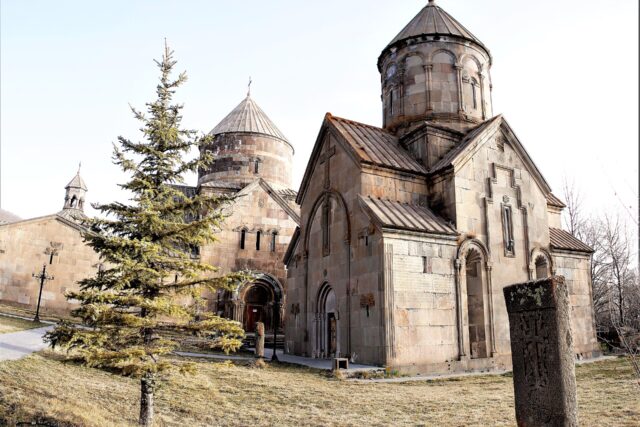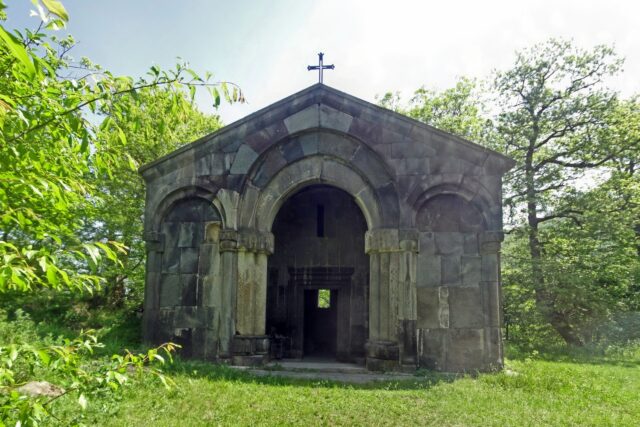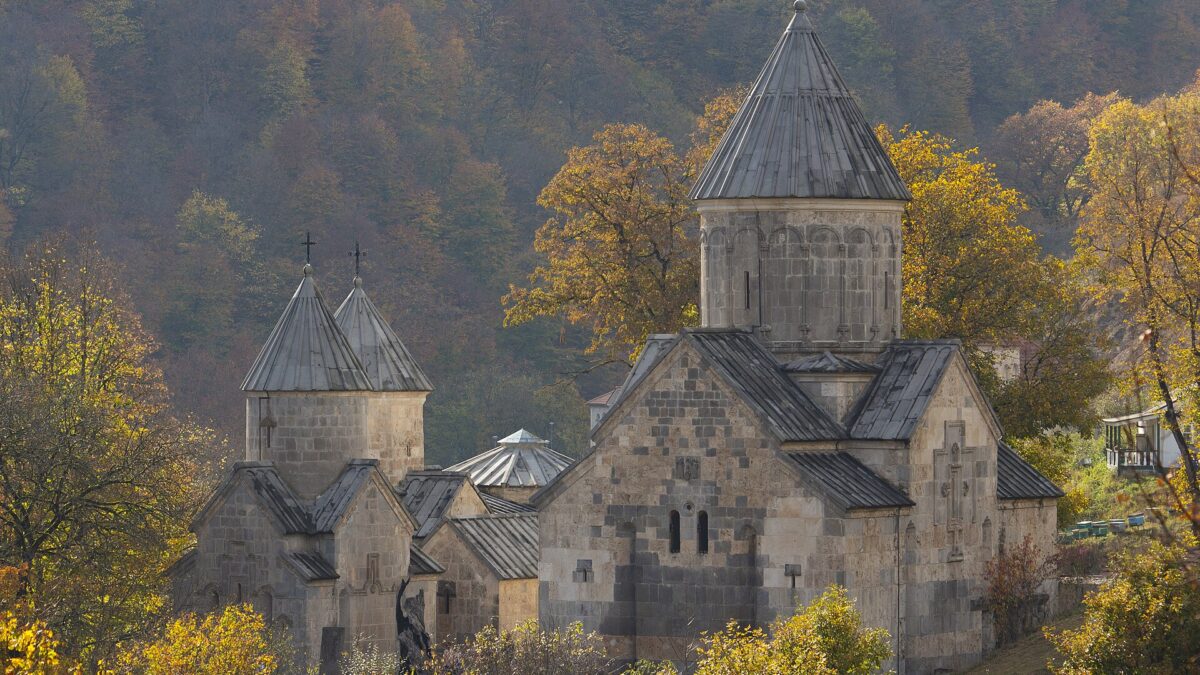
Dilijan is a forested resort town in Dilijan National Park in Armenia’s Tavush province, often called “Armenian Switzerland” for its wooded hills and cooler mountain air. About 1.5 to 2 hours north of Yerevan, it is a nature base for forest hikes, the restored 13th-century Haghartsin Monastery, and Parz Lake rather than a town of big-ticket sights.
That distinction matters. People who arrive expecting a compact old town with a headline attraction sometimes leave underwhelmed. People who come for the forest, the trails, and a slower pace tend to rate it as one of the best breaks from the dry lowlands around the capital. Set your expectations to “green mountains and monasteries in the trees,” and Dilijan delivers.
Below is what the town is actually good for, the two monasteries worth your time, the hikes that give the area its reputation, how to get here from Yerevan, and where a stop fits in a wider Armenia trip. Last verified: July 2026.
What is there to do in Dilijan?
Dilijan’s appeal is the landscape and what sits inside it. The town itself is small, backed by beech and hornbeam forest, and the things worth doing spread out into the surrounding national park rather than clustering on a single main street.
The short list most visitors build a day around:
- Haghartsin Monastery — a 13th-century complex, beautifully restored, standing in forest a short drive northeast of town.
- Goshavank — a medieval monastery in Gosh village, quieter and less visited than Haghartsin.
- Parz Lake (“Clear Lake”) — a small forest lake set up for picnics and boating, and the trailhead for the area’s signature walk.
- Forest hiking — day trails through beech woods, plus a stretch of the long-distance Transcaucasian Trail.
- Sharambeyan Street — a restored old-town lane of craft workshops, the closest Dilijan gets to a traditional “town centre” sight.
Notice what is not on that list: there is no single must-see landmark that anchors the day the way Tatev’s cable car or Khor Virap’s Ararat view does elsewhere. Dilijan works as an experience, not a checklist. If you need a marquee monument to feel a trip was worth it, weight your time toward the monasteries and treat the forest as the reason to linger. For a wider set of options across the country, see our roundup of the best things to do in Armenia.
Haghartsin and Goshavank — which monasteries should you see?
Haghartsin Monastery is the one to prioritise. Founded in the medieval period and given its main surviving form in the 13th century, it was carefully restored in recent years, which is why its stonework looks cleaner and more complete than many Armenian complexes. Its setting in dense forest, rather than on an exposed hilltop, gives it a very different mood from the country’s cliff-edge monasteries.
Goshavank, in the village of Gosh a little further out, is the natural pairing. It is named after Mkhitar Gosh, the medieval scholar associated with the site, and it sees far fewer visitors than Haghartsin. If Haghartsin is the restored showpiece, Goshavank is the quieter, more lived-in counterpart — worth the extra distance if you have a car or are already walking the trail that ends nearby. A useful practical point: neither monastery sits in the town itself, so both need either a taxi, a tour, or a walk to reach. Factor that into your day rather than assuming you can stroll to them from a café in Dilijan.
Both are free to enter, as most Armenian monasteries are, and both reward modest dress and quiet conduct as working religious sites. If monasteries are the main reason you are travelling in Armenia, our guide to the best monasteries in Armenia puts these two in context against Tatev, Geghard, Khor Virap, and Noravank.
Is Parz Lake worth it?
Parz Lake — the name translates as “Clear Lake” — is a small lake ringed by forest, developed as a low-key recreation spot with picnic areas and boat rentals. On its own it is pleasant rather than spectacular; it is a place to sit, eat, and let children mess about on the water, not a scenic wonder.
Its real value is as a starting point. The lake sits above the town along a rough access road, and reaching it already takes you up into the good forest scenery; it is also the trailhead for the most popular walk in the area. Our honest take: go to Parz Lake if you plan to walk from it or want an easy, relaxed couple of hours; skip a dedicated trip if you are only passing through and short on time, because the lake alone will not justify the detour. In peak summer and at weekends it draws local families, so it is livelier than tranquil — pleasant, but not the wilderness escape some descriptions imply.
What are the best hikes around Dilijan?
Hiking is the strongest reason to give Dilijan more than a quick monastery stop. The forest here is the payoff — shaded beech woods that stay walkable through the summer heat that bakes the lowlands.
The signature route runs from Parz Lake to Goshavank, roughly 7 km through beech forest, ending at the Goshavank monastery. It can be extended to about 10 km by continuing to Lake Gosh, a smaller and wilder lake beyond the village. Because it finishes at a monastery rather than looping back, it pairs sightseeing and walking in one line — plan your transport for a one-way finish rather than a return to the lake.
Two other options round out the area:
- The Dilijan to Haghartsin “Nature Pilgrimage” trail, which links the town to the monastery on foot through the forest instead of by road.
- Sections of the Transcaucasian Trail, the long-distance route that runs through the region and can be sampled as a day walk or joined for a longer multi-day trek.
These are forest and hill trails, so footing can be soft or muddy after rain, water runs higher in spring, and shoulder-season timing matters more here than on the country’s open lowland routes. Late spring through early autumn is the practical window; check our guide to the best time to visit Armenia before you commit to hiking dates.
How do you get to Dilijan from Yerevan?
The direct answer: catch a marshrutka (shared minibus) from Yerevan bound for Dilijan or Ijevan, pay the driver in cash, and expect a ride of roughly 1.5 to 2 hours over the Sevan pass. Fares run about 1,200–1,700 AMD (roughly USD 3–4.50). Minibuses generally run every 60 to 90 minutes.
The one thing to confirm on the ground is which station you leave from. Dilijan departures are most often cited from the Gai (Northern) bus station in northeastern Yerevan, the same hub used for Sevan, Ijevan, and Vanadzor. Sources disagree on the exact departure point, though, so verify the current station and rough departure times locally — at your hotel, or by asking at the station the day before — rather than trusting a single online listing.
| Option | Rough cost | Time | Notes |
|---|---|---|---|
| Marshrutka (minibus) | ~1,200–1,700 AMD | 1.5–2 hr | Gai/Northern station (confirm locally); leaves ~every 60–90 min, pay cash |
| Shared taxi | ~1.5–2× the minibus fare | ~1.5 hr | Leaves when full; faster and more comfortable |
| Day tour | ~USD 25–50 per person | Full day | Usually combines Dilijan with Lake Sevan; easiest for the monasteries |
Fares are approximate and volatile — treat them as ranges, not fixed prices. Last verified: July 2026. If you want a car-free plan that strings several sights together, our day trips from Yerevan guide lays out the logistics for the whole northern route.
Where does Dilijan fit in an Armenia trip?
Dilijan pairs naturally with Lake Sevan. The road from Yerevan climbs over the Sevan pass, so the two sit on the same axis — most organised day tours run them together, and independent travellers can do the same by stopping at Sevan on the way. That combination is the most efficient way to see both in a single push from the capital.
How long should you actually give it? Our recommendation:
- A day trip is enough if your goal is Haghartsin, a look at Parz Lake, and a taste of the forest — especially bundled with Lake Sevan.
- An overnight (or two nights) is the better call if you want to hike properly. The Parz Lake to Goshavank walk, an unhurried monastery visit, and time to enjoy the cool air add up to more than a day comfortably holds, and Dilijan has hotels and guesthouses that make staying easy.
Be honest with yourself about what you enjoy. Travellers chasing dramatic landmarks and big monasteries usually prefer a day trip and their time better spent in the south around Tatev and Noravank. Travellers who value forests, walking, and a slower rhythm are the ones who wish they had booked a second night. Dilijan is a mood as much as a destination — and knowing that in advance is the difference between a stop that clicks and one that disappoints.
Featured image: Aleksey Chalabyan (Xelgen) (CC BY-SA 4.0) via Wikimedia Commons
Sources: For the official picture, consult Armenia’s official tourism board (armenia.travel). Last verified: July 2026.