Five days in Armenia works best like this: Day 1 in Yerevan; Day 2 the Garni-Geghard pairing plus Khor Virap; Day 3 Lake Sevan and Dilijan in the north; Day 4 a southern run to Noravank and the Areni wine villages (or the long haul to Tatev); Day 5 Echmiadzin, then back to the capital. It is enough for the classic highlights, not the whole country.
That shape assumes Yerevan as your base for all five nights, with day trips fanning out and back. It saves you packing and unpacking, and Armenia is small enough that almost everything on the tourist trail sits within a two-hour drive of the capital. Below is the day-by-day plan with real travel times, transport choices, rough costs, and honest pacing calls. Last verified: July 2026 — reconfirm volatile prices and border advisories the week you travel.
The 5-day Armenia itinerary at a glance
| Day | Area | Highlights | Getting there |
|---|---|---|---|
| 1 | Yerevan | Republic Square, Cascade, Genocide Memorial, ARARAT brandy | On foot + metro/GG taxi |
| 2 | East + south of Yerevan | Garni Temple, Symphony of Stones, Geghard, Khor Virap (Ararat view) | Day-tour or hired car (best); marshrutka possible but awkward |
| 3 | North (Gegharkunik + Tavush) | Sevanavank, Lake Sevan, Dilijan, Haghartsin | Marshrutka from Gai/Northern, or day-tour |
| 4 | South (Vayots Dzor) | Noravank, Areni wine village and cave; or Wings of Tatev | Day-tour or hired car |
| 5 | West + Yerevan | Echmiadzin Cathedral, Zvartnots, return to city | Marshrutka from Sasuntsi Davit area, or taxi |
Day 1: Find your feet in Yerevan
Start slow in the capital. Yerevan is walkable at the centre, built in pink-and-apricot tuff stone around Republic Square, with the Cascade complex climbing the hillside to the north and a cafe culture that runs late. A first day here also lets jet lag settle before the driving days.
Anchor the morning on Republic Square and the History Museum, then work up to the Cascade and its open-air sculpture garden. In the afternoon, Tsitsernakaberd, the Armenian Genocide Memorial and Museum, is free; the outdoor memorial with its eternal flame is open any time, while the museum runs roughly Tuesday to Sunday, closed Mondays. Close the day with a tour and tasting at the Yerevan Brandy Company, home of ARARAT, from around 4,500 AMD basic up to about 10,000 AMD (roughly USD 27) for older samples — book ahead.
Getting around is cheap: a city ride on GG or Yandex Go runs roughly 500–2,000 AMD, and a single metro or bus fare is 100 AMD. Always book taxis in the app rather than street-hailing. For the full district-by-district breakdown, see our Yerevan travel guide.
Day 2: Garni, the Symphony of Stones, Geghard and Khor Virap
This is the big monastery day, and it packs in three of the country’s signatures. Garni and Geghard sit about 40 km east of Yerevan and 10 km apart; Khor Virap lies about 35–40 km south, so doing all four in one day means a fair amount of ground. Run it Garni to Symphony of Stones to Geghard, then swing south to Khor Virap.
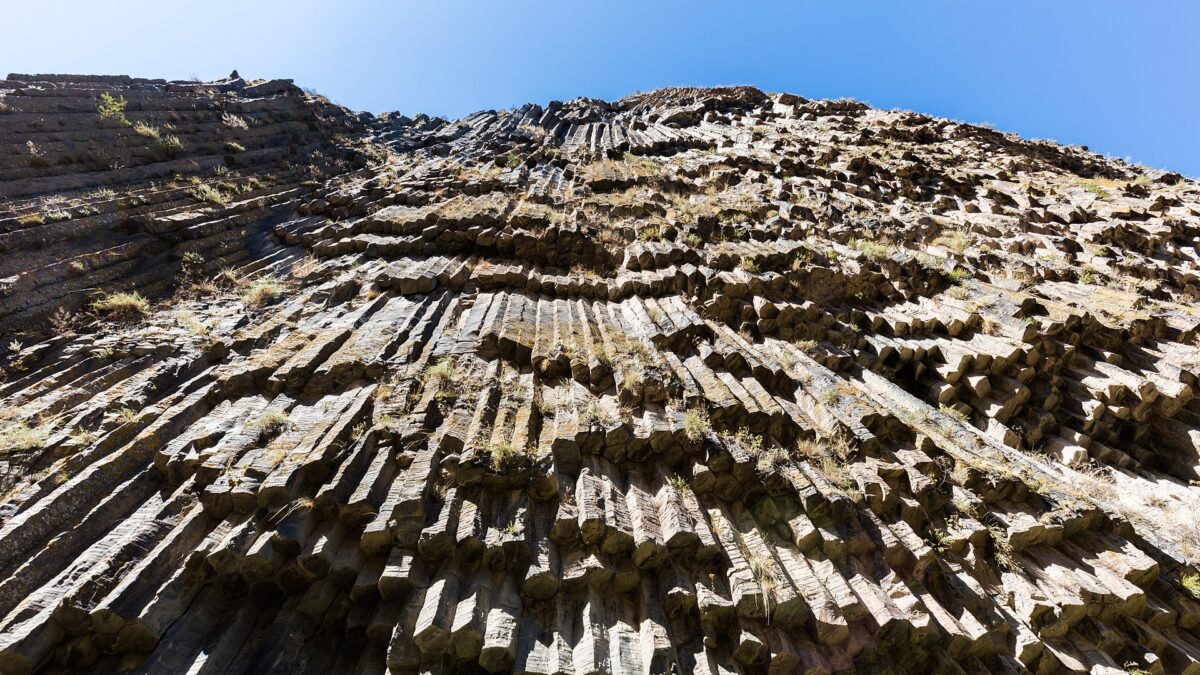
Garni is the only standing Greco-Roman temple in the former USSR, a 1st-century survivor above a gorge; entry is 1,500 AMD (roughly USD 4). Down in that gorge, the Symphony of Stones — a wall of hexagonal basalt columns — is a free natural formation and worth the short detour. Geghard, partly hewn into the rock, is UNESCO-listed and free to enter. Then Khor Virap: also free, and famous less for the church than for the view of Mount Ararat rising some 20 km away across the Turkish border. That peak is clearest early morning and in the October–April window; summer haze often swallows it, so temper expectations in July and August.
Honest transport call: public transport technically reaches all of this, but it fights you. Marshrutkas to Garni and Geghard (roughly 300–600 AMD) leave from the informal Gai statue stop, and many terminate in Garni village about 4 km short of Geghard, leaving you to grab a taxi for the last leg. Khor Virap marshrutkas from the Sasuntsi Davit area (around 400 AMD) run only a few times a day with awkward returns. Stitching all four together by minibus in one day is stressful. A day-tour (roughly USD 25–50) or a hired car with driver is the sane choice here. More on the trade-offs in our guide to the best monasteries in Armenia.
Day 3: Lake Sevan and Dilijan
Head north for a change of scenery — high-altitude lake, then forest. Lake Sevan sits about 65 km northeast of Yerevan, roughly an hour away, and pairs naturally with Dilijan an hour further on. Sevanavank, a 9th-century monastery, crowns a peninsula (once an island, before Soviet-era water levels dropped) with a short stair climb and wide blue views; entry is free.
From the lake, carry on through the Dilijan tunnel into Dilijan National Park, the wooded region locals call Armenian Switzerland. Haghartsin Monastery, restored and set in thick forest, is the standout, with Parz Lake nearby for an easy stop. Swimming in Sevan is realistically a July–August affair — the water sits around 20–22°C at best and the beaches are seasonal.
Transport is more forgiving today. Marshrutkas to Sevan leave roughly hourly from the Gai/Northern station (about 800–1,500 AMD, 45 minutes to 1.5 hours); Sevanavank is a short taxi from Sevan town. Dilijan marshrutkas run from the same station every 60–90 minutes (about 1,200–1,700 AMD). Doing both by minibus in a day is possible but tight, so a day-tour or hired car buys you breathing room. See our dedicated Lake Sevan guide for timing and swimming details.
Day 4: Choose your south — Noravank and Areni, or Tatev
Day 4 forces a genuine decision, and the two options are very different in pace.
Option A: Noravank and the Areni wine country (the easier day)
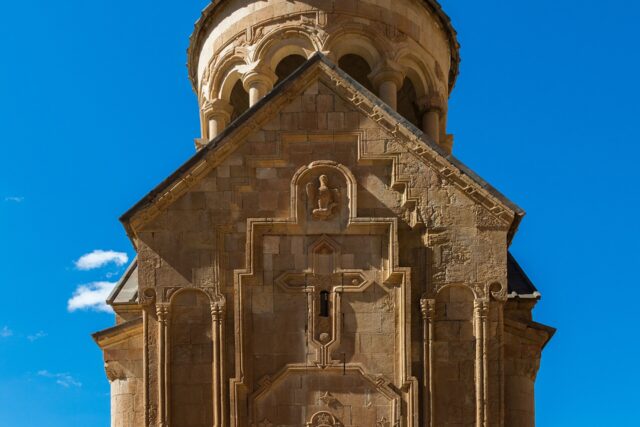
Noravank, a 13th-century monastery about 120 km southeast in Vayots Dzor, sits inside a gorge of red cliffs — its famous two-storey church wears a narrow external stone stair. Entry is free. On the way, Areni is the indigenous-grape wine village whose Areni-1 cave holds the world’s oldest known winery, some 6,100 years old, along with a 5,500-year-old leather shoe. Tastings at cellars like Hin Areni or Trinity typically cost a few thousand AMD, and the Areni Wine Festival lands in early October. This is a manageable day out and the one we’d pick for a first trip.
Option B: Wings of Tatev (spectacular, but a long day)
Tatev is roughly 250 km and 4-plus hours south of Yerevan, so be clear-eyed: this is a full, long day or better done as an overnight in Goris. The reward is the Wings of Tatev, the world’s longest reversible cable car at 5.7 km, running about 11–12 minutes each way to the medieval monastery. Round-trip tickets run roughly 6,500–9,000 AMD (about USD 18–25) — sources differ, so confirm current pricing on the official site, tatever.am, which also lists seasonal hours and the usual Monday closure outside peak summer. Public transport is impractical for a Tatev day trip; take an organised day-tour or hire a car. If you’d rather not spend a whole day in a vehicle, go with Option A.
Day 5: Echmiadzin, then back to Yerevan
Close the loop to the west. Echmiadzin Cathedral in Vagharshapat, about 20 km from Yerevan, is the Mother See of the Armenian Apostolic Church, built AD 301–303 and tied to Armenia being the first nation to adopt Christianity as its state religion. One freshness note worth knowing: it reopened and was re-consecrated on 29 September 2024 after a six-year restoration, so guides still calling it “closed for renovation” are out of date. Entry is free; dress modestly. Pair it with the nearby ruins of Zvartnots on the way back.
Marshrutkas to Echmiadzin run from the Sasuntsi Davit area and it is an easy half-day, which leaves the afternoon for whatever Yerevan you skipped on Day 1 — the Vernissage market, Matenadaran manuscript museum, or simply a long lunch of khorovats before flying out.
The Yerevan-based version, and how to adapt
The plan above already assumes a single Yerevan base — five nights in the capital, day trips out and back — which is how most first-timers should run it. It keeps costs and logistics simple, since Yerevan has the widest hotel range: hostel dorms from about 5,000 AMD, a basic hotel around 6,900 AMD, a 3-star near 17,000 AMD (roughly USD 48).
To adapt: if you want less driving, cut Day 4’s Tatev entirely and keep the gentler Noravank–Areni day. If you’d rather go deeper north, spend a night in Dilijan and turn Day 3 into two unhurried days. Travelling in winter shifts the maths — Sevan and mountain roads are cold and grey, but Khor Virap’s Ararat view is at its clearest. Our full menu of options, with transport for each, is in the day trips from Yerevan guide.
Getting around: marshrutka, day-tour or hired car?
Three honest choices. Marshrutkas (minibuses) are cheapest and fine for straightforward runs like Sevan and Dilijan, but they leave when full, take cash, and stumble on multi-stop days like Garni–Geghard–Khor Virap. Organised day-tours (roughly USD 25–50 per person) remove the guesswork and make sense on Days 2 and 4. A hired car or driver costs more but wins on flexibility, especially for the south. Self-drive rental runs about USD 25–40 a day for an economy car; main roads are paved, side roads less so. For the full comparison, see how to get around Armenia.
Whatever you choose, book taxis through GG or Yandex Go rather than street-hailing, and carry AMD cash once you leave Yerevan — the countryside is largely card-free.
Featured image: Diego Delso (CC BY-SA 4.0) via Wikimedia Commons