Yeghegnadzor is the provincial capital of Vayots Dzor, a small town roughly 120 km and about two hours southeast of Yerevan on the main highway toward Syunik and the Iranian border. It is not a destination in its own right, but it is the most sensible base for exploring one of Armenia’s most rewarding regions: red-rock canyons, indigenous-grape wineries, and a cluster of medieval monasteries and fortresses that sit within a short drive of the town center.
If you are building a southern loop or want more than a rushed day trip from the capital, one or two nights here puts Noravank, the Areni wine villages, Smbataberd fortress, the Gladzor university site and the Selim caravanserai all within reach. Here is how to use the town, what the region actually offers, and an honest read on whether you should stay.
Where is Yeghegnadzor and why use it as a base?
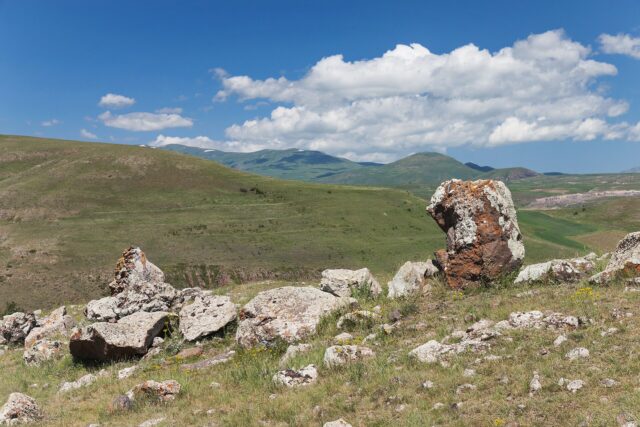
Yeghegnadzor sits in the Vayots Dzor province of southern Armenia, in a landscape of dry mountains, river gorges and vineyards. The main north-south highway runs right past it, which is exactly why it works as a base: nearly every marshrutka and shared taxi heading to Goris, Sisian, Kapan or Jermuk passes through, and the region’s headline sights fan out from the town in different directions.
Stay in Yerevan and the Vayots Dzor sights become a long there-and-back day, usually bundled with Khor Virap on a full-day tour. Stay in or near Yeghegnadzor and you can visit Noravank in soft morning light before the tour buses arrive, taste wine in Areni without watching the clock, and still have time for a fortress hike. The trade-off is that the town itself is modest, which we will get to.
How do you get to Yeghegnadzor from Yerevan?
The town is about 120 km southeast of Yerevan, roughly a two-hour drive on a mostly good paved highway. Public transport uses the southbound services from Yerevan’s Kilikia Central Bus Station (Admiral Isakov Avenue, near Sasuntsi Davit metro), the same hub that serves Goris, Sisian and Jermuk. Marshrutkas and shared taxis heading south will drop you at Yeghegnadzor; you pay the driver in cash, and departures generally leave when full rather than on a fixed timetable.
Fares are approximate and change, so confirm at the station on the day. As a reference point, the full run to Goris costs roughly 2,500–3,500 AMD, and Yeghegnadzor is well short of Goris, so expect to pay less. If you want to actually reach the sights scattered around the region, a car makes far more sense here than public transport, which only follows the main highway. See our guide on getting around Armenia for marshrutka, taxi-app and car-rental details.
What can you see from Yeghegnadzor?
The appeal of a Yeghegnadzor stay is the density of worthwhile stops within a short drive. Here are the main ones.
Noravank Monastery
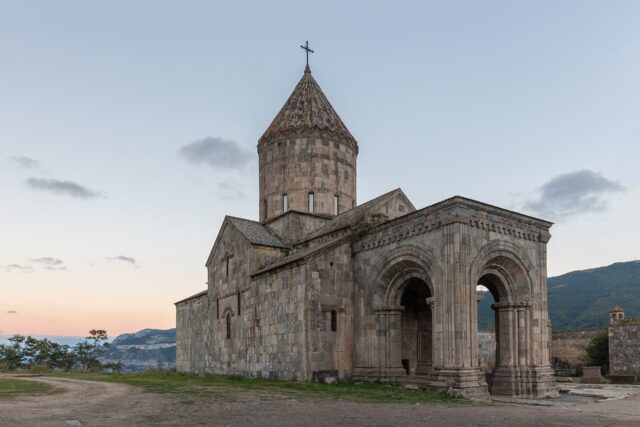
Noravank is the region’s star: a 13th-century monastery set at the head of a dramatic red-cliff gorge, about 120 km southeast of Yerevan and a short drive from Yeghegnadzor. Its best-known church has an external stone staircase running up the facade to the upper chapel. Entry is free. The approach road through the narrow crimson canyon is half the experience, and the site photographs best in the low light of morning or late afternoon when the cliffs glow. We cover the visit in detail in our Noravank and Areni guide.
Areni: the wine village
Just off the highway sits Areni, the village behind Armenia’s best-known indigenous red grape, also called Areni. Several wineries and family cellars offer tastings here, from established names to small producers pouring from the barrel; prices vary and are usually a few thousand dram for a flight. The village is also home to the Areni-1 cave, where archaeologists found what is regarded as the world’s oldest known winery, dated to around 6,100 years old, along with the oldest known leather shoe at roughly 5,500 years. If you can time it, the Areni Wine Festival falls in early October. For the wider story of Armenian wine, see our Areni wine guide.
Smbataberd fortress and Tsakhats Kar
Above the village of Yeghegis, northeast of Yeghegnadzor, a rugged ridge carries the ruined hilltop fortress of Smbataberd, whose long stone walls follow the spine of the hill with steep drops on either side. It is a walk rather than a drive-up, and reaching the trailhead usually needs a sturdy vehicle or a local driver. Nearby is the medieval monastery of Tsakhats Kar. Pair them with the quiet Yeghegis valley, which also holds a small medieval Jewish cemetery, for a half-day away from the highway crowds.
Gladzor medieval university site
Near the village of Vernashen, a short drive from Yeghegnadzor, is the site associated with Gladzor, one of Armenia’s important medieval centres of learning, remembered as a university of its era. A small museum in a village church interprets the site. It is a modest, scholarly stop rather than a blockbuster, but it rounds out a sense of why this valley mattered in the Middle Ages.
The Selim (Vardenyats) caravanserai
North of Yeghegnadzor, the road climbs to the high Selim Pass (also called the Vardenyats Pass) toward Lake Sevan, and near the top stands a well-preserved medieval stone caravanserai built to shelter travellers and their animals on this old trade route across the mountains. The dark, vaulted interior is atmospheric, and the views over the switchbacks are the reward for the climb. Note that the pass can be snowbound and closed in winter, so it is a warmer-season detour.
Jermuk spa town
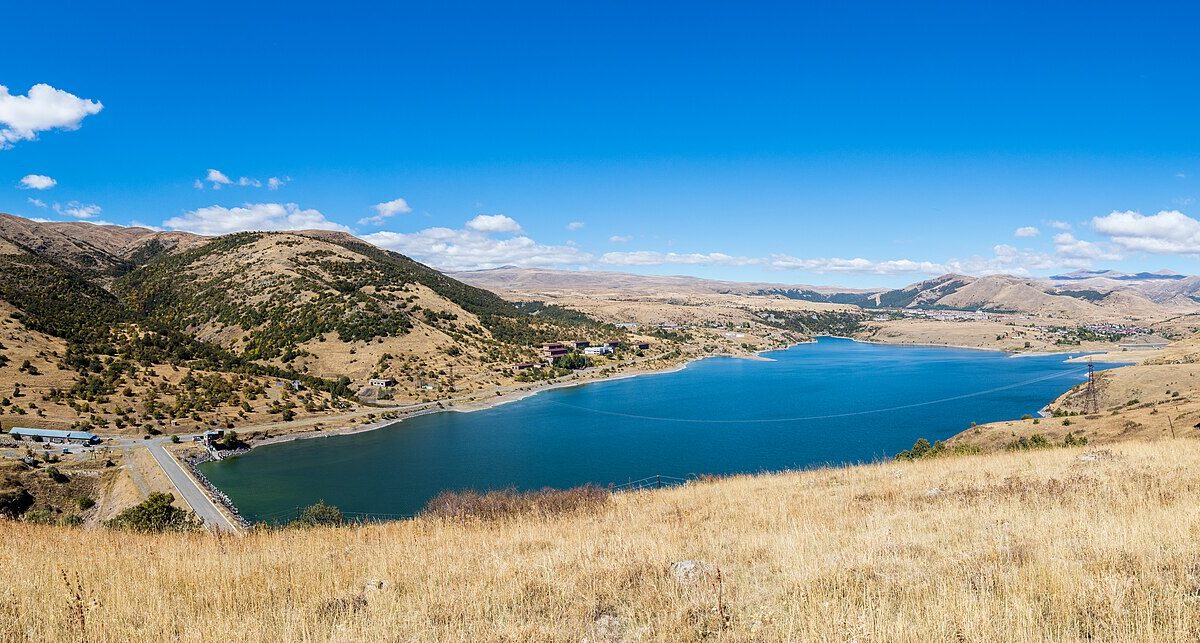
Further southeast and up into the mountains, Jermuk is Armenia’s best-known spa town, famous for its mineral water and its waterfall. It is a destination in its own right and works either as a day trip from Yeghegnadzor or as your next overnight stop heading south. See our Jermuk guide for the springs, the waterfall and what is open.
An honest take on the town itself
Let us be straight: Yeghegnadzor is a workaday provincial town, not a charming old quarter to wander for its own sake. You will find guesthouses, a handful of places to eat, shops for supplies and a bus stop on the highway. That is genuinely the point. You are not staying for the town; you are staying because it is the practical hub from which everything in Vayots Dzor is close. If you want scenery on your doorstep, some visitors prefer a guesthouse in a nearby village or in the Areni area instead. But for logistics, laundry, an ATM and an early start toward Noravank, the town does the job. Dining leans toward simple Armenian home cooking rather than a restaurant scene, so treat evenings as a place to refuel and rest, not a night out; ask your guesthouse, since some cook hearty local meals on request and it is often the best food in town.
Countryside Armenia is largely cash-based, so carry Armenian dram; do not assume rural guesthouses or small wineries take cards. Cards are reliable mainly in Yerevan.
When is the best time to visit Vayots Dzor?
Autumn is the standout, and September is arguably the single best month in Armenia: dry, mild, with turning colours and the grape harvest in full swing, which suits wine country perfectly. Late spring, from about late April into June, is also excellent, with green hills and wildflowers. Summer works for the sights but can be hot and hazy, with August the hottest month and afternoon storms possible in the mountains. Winter is cold, and high routes like the Selim Pass can close with snow, so plan around it if you are visiting between roughly December and March.
How many days do you need?
One full day and a night lets you cover Noravank plus an Areni tasting comfortably. Two nights is the sweet spot if you also want the Smbataberd hike, the Gladzor site and the Selim caravanserai, or a run up to Jermuk. If you are only interested in Noravank and Areni and are short on time, they slot neatly into a longer day trip from the capital instead, often combined with Khor Virap; our day trips from Yerevan guide lays out that option, and best monasteries in Armenia puts Noravank in context with the country’s other great sites.
What nobody tells you
Two practical notes. First, most of Vayots Dzor’s best sights are not on the marshrutka route: the highway will get you to the town and to the Areni turnoff, but Smbataberd, Tsakhats Kar, the Gladzor site and the Selim caravanserai realistically need your own car or a hired local driver. Budget for that or you will end up stuck on the main road. Second, go early to Noravank. It is a fixture on Yerevan day tours, and the narrow canyon and small church get busy by late morning; arriving soon after it opens buys you the gorge almost to yourself and far better photographs.
Last verified: September 2026. Prices, transport frequencies and mountain-pass conditions change; confirm time-sensitive details before you travel.
Sources
- armenia.travel — official Armenia tourism portal (regions, sights, seasons)
Frequently asked questions
Is Yeghegnadzor worth staying in?
As a sight in itself, no. It is a modest provincial town without an old quarter to wander. As a base, yes: it puts Noravank, the Areni wineries, Smbataberd, the Gladzor site, the Selim caravanserai and Jermuk all within a short drive, and it has guesthouses, food, shops and an ATM.
How do I get from Yerevan to Yeghegnadzor?
It is about 120 km and roughly two hours southeast of Yerevan. Southbound marshrutkas and shared taxis toward Goris, Sisian and Jermuk leave from Kilikia Central Bus Station and pass through Yeghegnadzor; pay the driver in cash and expect them to leave when full. A rental car is far more useful for reaching the sights off the main highway.
Do I need a car in Vayots Dzor?
For Noravank and the Areni turnoff, not strictly, since they are near the highway. But Smbataberd fortress, Tsakhats Kar, the Gladzor site and the Selim caravanserai are off the marshrutka route and realistically need your own vehicle or a hired local driver.
What is the best time to visit for the wine?
September, during the grape harvest, is ideal: dry, mild, and with autumn colour. The Areni Wine Festival is held in early October. Late spring is also very pleasant, while winter can close the high Selim Pass with snow.
What is the Areni-1 cave?
It is an archaeological site near Areni village where researchers found what is considered the world’s oldest known winery, dated to around 6,100 years old, along with the oldest known leather shoe at roughly 5,500 years.
Can I see Noravank as a day trip from Yerevan instead?
Yes. Noravank and Areni are commonly combined with Khor Virap on a full-day trip from the capital. Basing yourself in Yeghegnadzor mainly helps if you also want the fortresses, the Selim pass or Jermuk, or prefer an early, crowd-free arrival at Noravank.
Featured image: Diego Delso, CC BY-SA 4.0 — via Wikimedia Commons.